
GitHub Actions Lockfiles Pin the Workflow, Not Its Good Intentions
GitHub's Actions lockfile preview pins workflow dependencies, including nested actions. It improves integrity but cannot tell you whether code is safe.
On this page
A workflow that says uses: vendor/action@v2 looks stable to a reviewer because the version label does not change. Git resolves that label to a commit at run time, however, and the repository owner can move a tag. GitHub’s October 14 public preview adds a lockfile step that makes the resolved dependency graph visible and enforceable. The useful shift is from trusting a label to reviewing the source revision that the workflow will actually execute.
What the preview adds
GitHub’s announcement introduces gh actions-lock, a GitHub CLI extension that generates a lockfile at .github/workflows/actions.lock. It resolves action references and reusable workflow dependencies to commit identifiers, and its documentation describes transitive dependency support. Repositories can adopt it workflow by workflow, run a verification command, and enable a policy requiring lockfiles where available. GitHub says Dependabot can update the lockfile together with an action version. [1] [2]
The central guarantee is narrow and valuable: a workflow should continue using the reviewed commit rather than silently following a moved tag. GitHub’s secure-use documentation explains why pinning to a full-length commit SHA protects against a tag or branch changing underneath the reference. The lockfile flow automates resolution and gives the repository a record to verify, reducing the chance that a developer pins a top-level action but overlooks a nested dependency. [3]
It is not a magic manifest of everything a runner does. The published extension is still in public preview, and its README notes current constraints, including no support for GitHub Enterprise Server and local-path actions in this preview. The exact behavior and file format can change before general availability. Teams should consult the current documentation for plan eligibility and support boundaries before making policy mandatory across an organization. [1] [4]
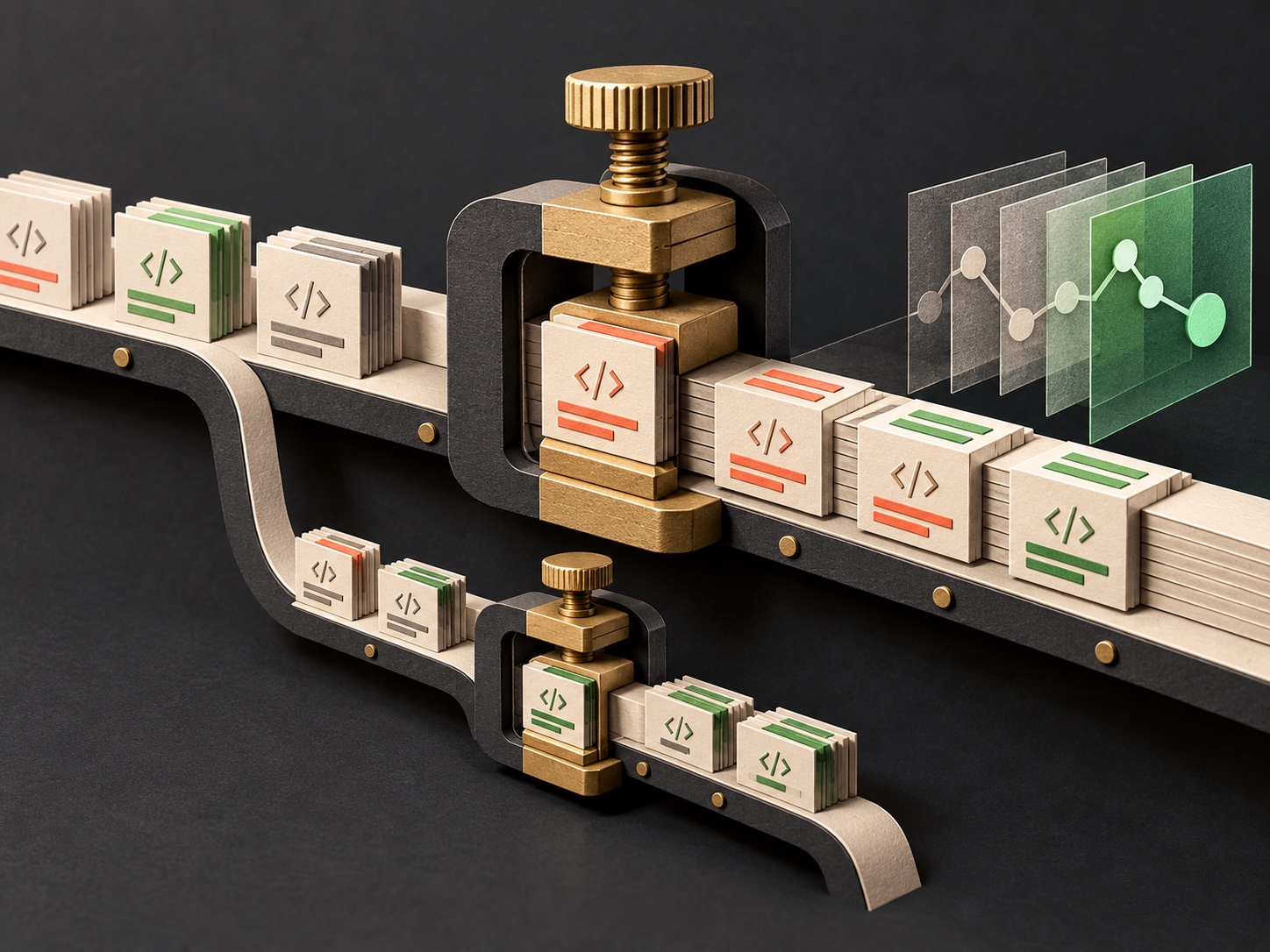
A pin is an identity check, not a trust verdict
Suppose a workflow uses an action that downloads a build artifact and publishes a release. If the referenced tag moves after a maintainer reviews it, the same YAML can run different code. A lockfile makes that change detectable and allows the repository to reject an unrecorded revision. That is a meaningful defense against accidental or malicious dependency substitution.
But if the originally pinned commit already contains a credential-stealing action, a lockfile will faithfully preserve it. A lock also cannot decide whether the action needs every permission granted to the workflow, whether the maintainer’s release process is trustworthy, or whether an embedded binary has a vulnerability. GitHub’s broader guidance still recommends reviewing action source, minimizing GITHUB_TOKEN permissions and using safer patterns for sensitive deployments. [3]
Think of the lockfile as a reproducibility control with a security benefit, not as dependency vetting. It narrows one way the code can change after review. It does not make the review itself correct. That distinction should appear in internal control descriptions: “we enforce known action revisions” is substantiated; “our workflows are now safe” is not.
How a team can adopt it without creating brittle automation
Start with high-impact workflows: those that access production credentials, publish packages, sign releases, modify cloud infrastructure, or run on privileged self-hosted runners. Generate lockfiles in a branch and inspect the diff. Confirm the resolved owner and repository for every action, including nested and reusable workflow references. If an action cannot be resolved or is outside current support, document that gap rather than treating the generated file as complete coverage.
Then enable verification in CI and set an owner for lockfile updates. A lockfile that blocks tag movement can also block an intentional upgrade until its recorded revisions are refreshed. GitHub’s documented Dependabot integration can reduce manual drift, but the update remains a code change that deserves review. Keep the update cadence short enough to accept security fixes while retaining a reviewable record. [2] [4]
Review permissions independently. A pinned action running with broad write access is still a broad-trust decision. Set explicit top-level permissions, grant only what each job needs, and isolate privileged deployment jobs from untrusted pull-request code. Our analysis of a GitHub Actions supply-chain compromise explains why a workflow’s trust boundary includes triggers and permissions as well as the action reference. Teams can compare this with the npm v12 supply-chain changes, which address a different part of the build pipeline.
Before requiring lockfiles organization-wide, inventory the repositories that use unsupported features or runners. GitHub says the preview applies to specified GitHub cloud plans; the extension’s support notes are not identical to every enterprise deployment model. Pilot enforcement on a small, representative set, including reusable workflows, then measure which exceptions are genuine tooling gaps and which are unowned dependencies.
The stronger claim is reproducibility
The feature is most compelling when described precisely. It can turn an implicit dependency resolution into a reviewed artifact and enforce that resolution during workflow execution. That makes incident investigation and routine change review more concrete: a maintainer can compare the recorded commit before and after an upgrade.
It cannot promise that the dependency is benign, that every runtime input is locked, or that a workflow cannot be compromised elsewhere. Treat the lock as one layer beside source review, least privilege, protected environments, runner isolation and monitoring. In supply-chain security, making the executed code identifiable is a necessary step. Knowing what that code does remains human and technical work.
Frequently asked questions
What does a GitHub Actions workflow lockfile pin?
GitHub's public-preview tooling resolves actions and reusable workflow dependencies to commit identifiers and records them in a workflow lockfile, including transitive dependencies where resolvable.
Does an Actions lockfile prove that a workflow dependency is safe?
No. A lockfile makes dependency resolution more reproducible and resists a tag moving to different code, but it does not review the pinned source, detect vulnerabilities, or establish that an action is trustworthy.
Can all GitHub repositories use workflow lockfiles today?
The feature is in public preview with plan availability documented by GitHub. The extension README says GitHub Enterprise Server and local-path actions are not supported in the current preview.
Sources & further reading
Keep reading

TiGanEval Tests Whether AI Agents Deliver the Outcome, Not Just Follow the Prompt
A preprint uses SWE-chat traces to study missing requirements and agent outcomes. TiGanEval is an early diagnostic, not a universal failure rate.

NIST’s New AI Incident Playbook Starts After an Agent Crosses a Boundary
NIST, NSA and CISA offer ten voluntary practices for control incidents in frontier-model training and evaluation, from preparation through reporting.
The 7.7% Mirage: Why AI Code Generation Is Multiplying Maintenance, Not Velocity
AI writes code many times faster, yet median PR throughput rose just 7.76% while code churn doubled. The bottleneck moved downstream.
/* Comments */
Comments are offline right now — we reconnect automatically, nothing is lost.