
EVA Tries to Design RNA With the Whole Transcript in View
An RNA foundation model uses longer context to design sequences, but selected wet-lab assays remain far from validating a therapeutic.
On this page
An RNA sequence is not just a short string of letters. Its function can depend on local motifs, distant sequence context and the structure the molecule adopts. A paper published November 27 introduces EVA, a generative model built to consider longer RNA sequences while proposing designs. The result is an important research capability, but it is several validation steps away from a therapeutic platform. [1]
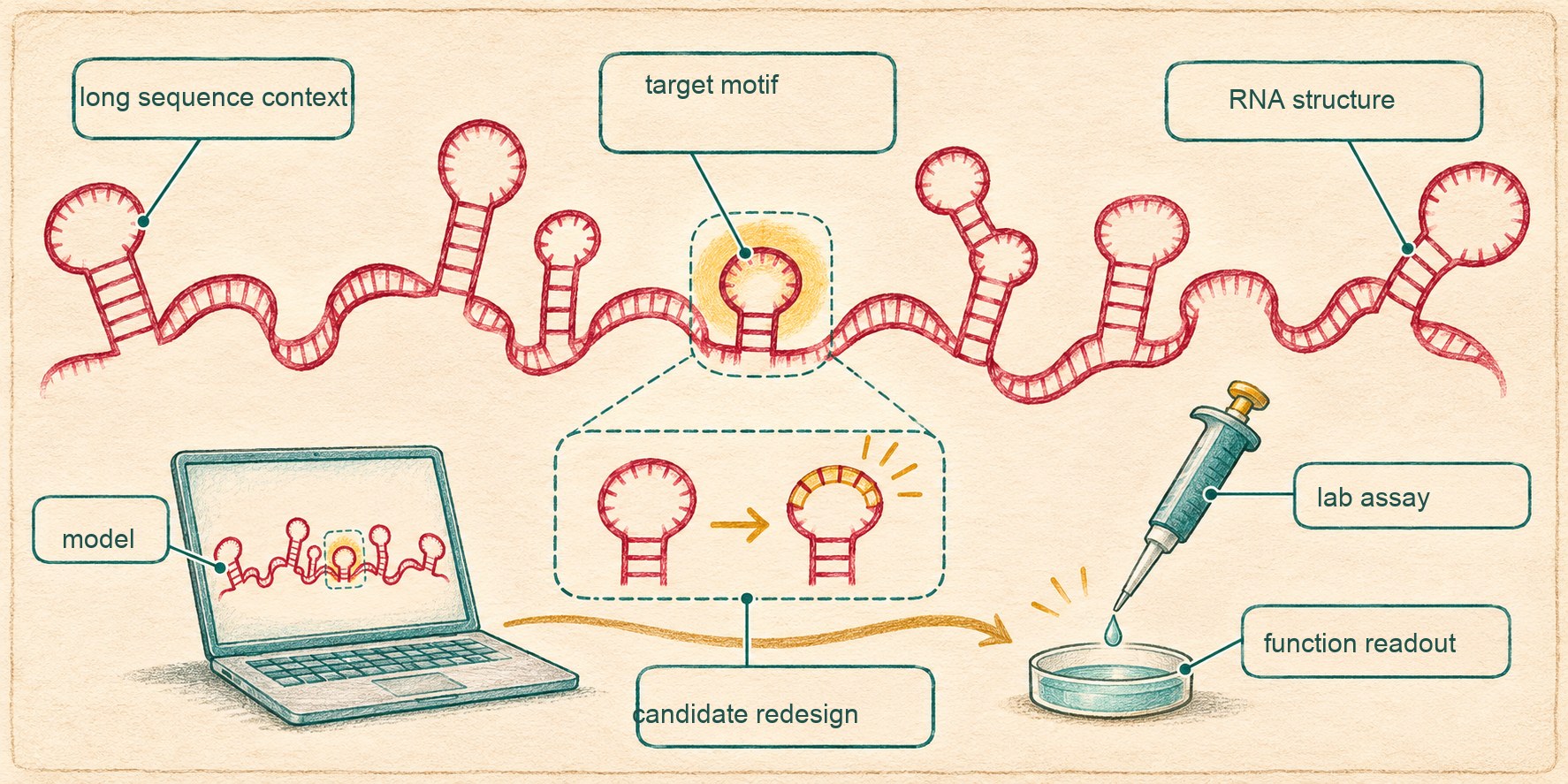
EVA, short for Evolutionary Versatile Architect, was trained on more than 114 million full-length RNA sequences and uses an 8,192-token context window. The authors report a unified model for several tasks, from mutational-fitness prediction to context-aware sequence engineering, and evaluate designs involving transfer RNA, aptamers, CRISPR guide RNAs, messenger RNA and circular RNA. [1]
Why context matters
A short sequence window can make a model blind to relationships between a local motif and distant parts of a transcript. A longer window gives the model more of the molecule’s sequence at once. EVA combines that context with a mixture-of-experts architecture, aiming to represent both broad evolutionary patterns and fine-grained functional elements.
That architecture does not mean the model “understands” RNA in a biological sense. It learns statistical structure from examples and generates candidates that must be judged using computational tests and experiments. The authors compare EVA on established benchmarks and report state-of-the-art performance on seven of nine, along with generated sequences whose predicted secondary-structure feature distributions were closer to natural RNA than a prior open-source generator. These are benchmark outcomes under the paper’s evaluation setup, not a blanket claim that every output behaves like natural RNA. [1]
The work also includes wet-lab assays. For one aptamer design task, the paper reports that the best designs improved fluorescence intensity and binding affinity by roughly twofold over a positive control. That is a specific result from selected assays; it should not be generalized to other RNA classes, targets or therapeutic endpoints. A stronger binding measurement does not establish delivery, stability, safety, efficacy in an organism, or clinical benefit. [1]
A design model is a hypothesis generator
For RNA researchers, the potential value is a single framework that can help propose or optimize sequences across multiple design tasks. That could make the search loop more systematic: define a target, generate candidates, filter them computationally, test the most promising in a lab, then use observed outcomes to refine the next round.
The model and associated data are publicly described through the research paper’s repository and model hosting page. [2] [3] Reproducibility will depend on details such as which checkpoint, tokenizer, training data release and assay conditions a team uses. Public weights make it easier to inspect and compare the method; they do not make experimental validation optional.
There is also a data-selection question. Training on a very large sequence collection can improve coverage, but sequence databases reflect uneven research attention and annotation quality. A generated candidate may look plausible to a model while failing a biological function test. Researchers should keep model confidence, predicted structure, assay evidence and downstream biological outcomes separate in their records.
RNAcentral illustrates the wider ecosystem of sequence resources that makes large-scale analysis possible. [4] Yet sequence availability alone cannot resolve whether a candidate has the desired behavior in the intended context. Even a successful in-vitro assay is only one rung in a validation ladder.
What to watch next
The most useful next evidence would be independent reproduction of the reported benchmark gains, broader assay testing across RNA types, and clear reporting of negative as well as successful designs. For therapeutics, the evidence bar is much higher: appropriate delivery, stability, dose-response, safety, relevant animal or other preclinical models, and eventually carefully designed clinical studies.
A careful reproduction should record more than the model name. Researchers need the exact checkpoint and tokenizer, sequence length and filtering rules, prompt or conditioning setup, random seeds where relevant, and the assay readout. The reported aptamer comparison is most informative when read with its control, replicate design and measurement conditions; the headline twofold figure should not travel without that context. The paper makes model resources available, which helps other teams inspect the workflow, but each design problem still needs its own controls.
Longer context can also increase the importance of data governance. Sequence collections may contain duplicate, overlapping or unevenly annotated records. A researcher should examine train-test separation and sequence similarity before interpreting benchmark gains as generalization. These are standard evaluation questions for biological foundation models; they are not evidence that EVA’s reported evaluation is flawed. They define what an independent assessment should make easy to verify.
For now, EVA’s contribution is a longer-context RNA design model with reported experimental validation on selected tasks. That makes it more than a pure sequence-generation demo, but less than a shortcut from prompt to medicine. The important boundary is the handoff: a model can suggest what to synthesize; biological measurements decide whether the suggestion works.
Frequently asked questions
What does EVA mean by long context?
The paper describes an 8,192-token context window and training on more than 114 million full-length RNA sequences, intended to capture broader transcript context than short-window design approaches.
Does EVA prove it can create RNA therapeutics?
No. The study reports computational benchmarks and wet-lab assays for selected designs, including aptamers. It does not establish a safe, effective or approved therapeutic.
Sources & further reading
Keep reading
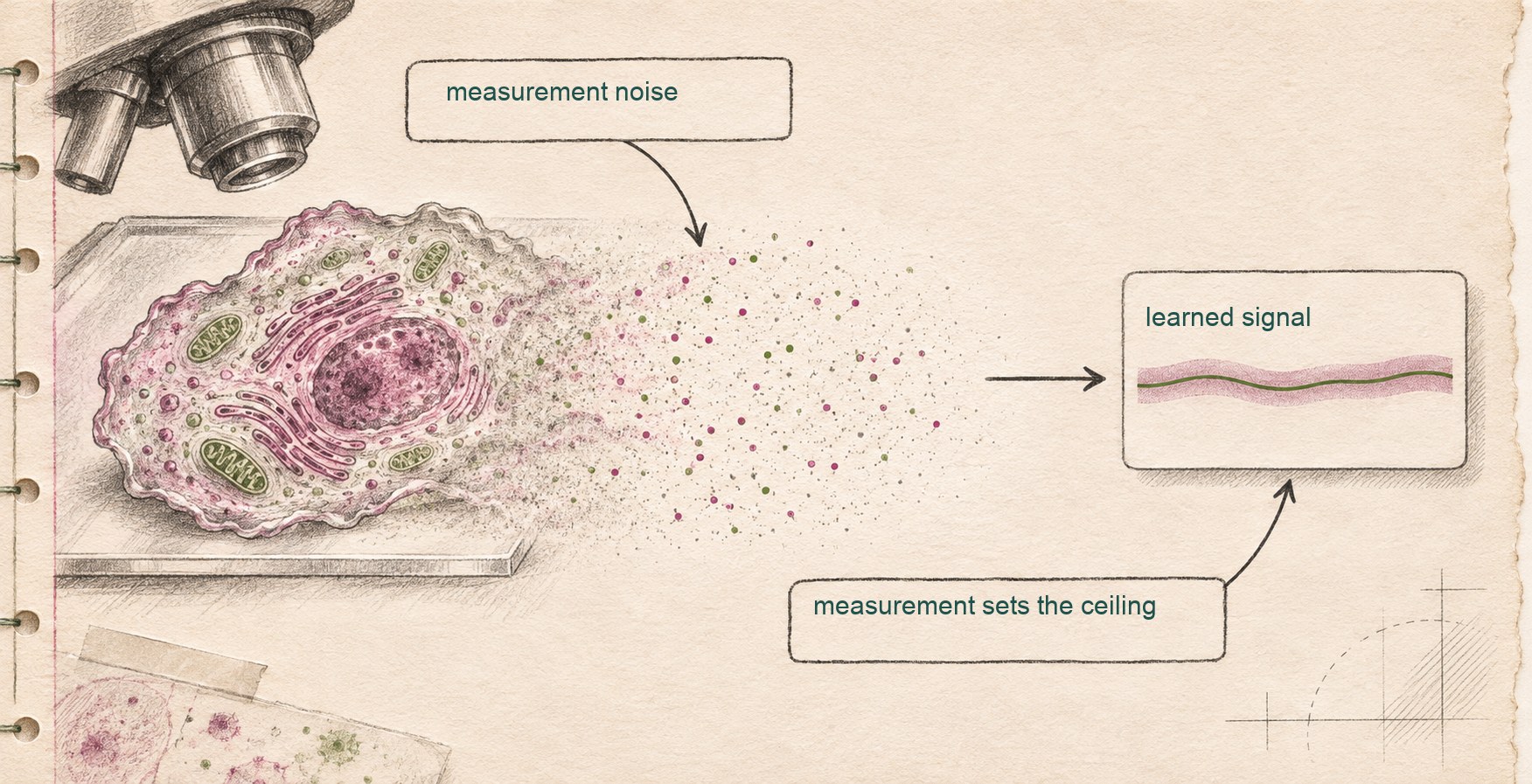
More Biology Data Cannot Fix Signal Lost at Measurement
A study across cellular data quantifies how measurement noise limits representation learning alongside dataset size.
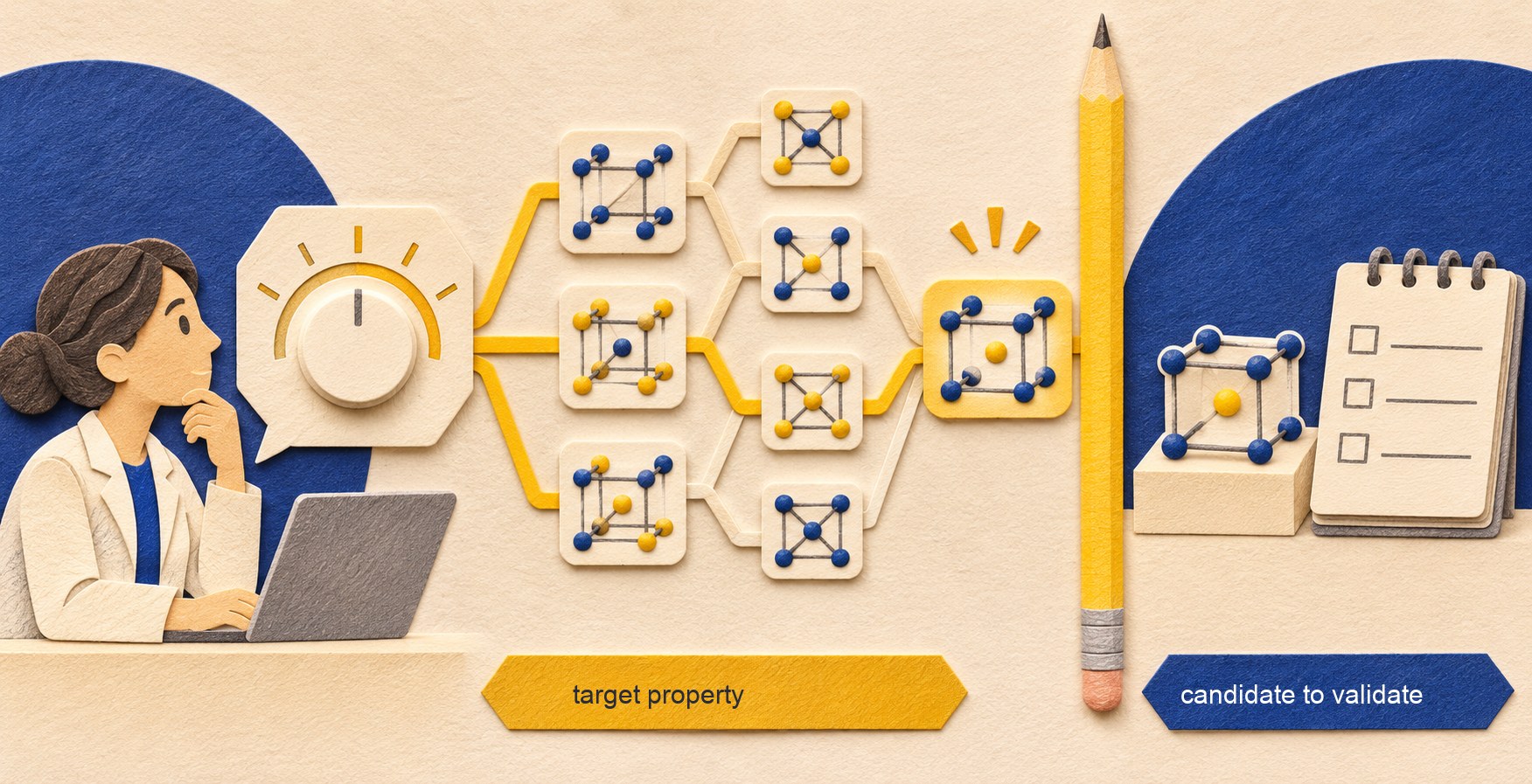
MatInvent Uses Reinforcement Learning to Search Crystal Space
A materials workflow steers crystal generation with property rewards, reducing evaluations in reported tasks while leaving physical validation ahead.
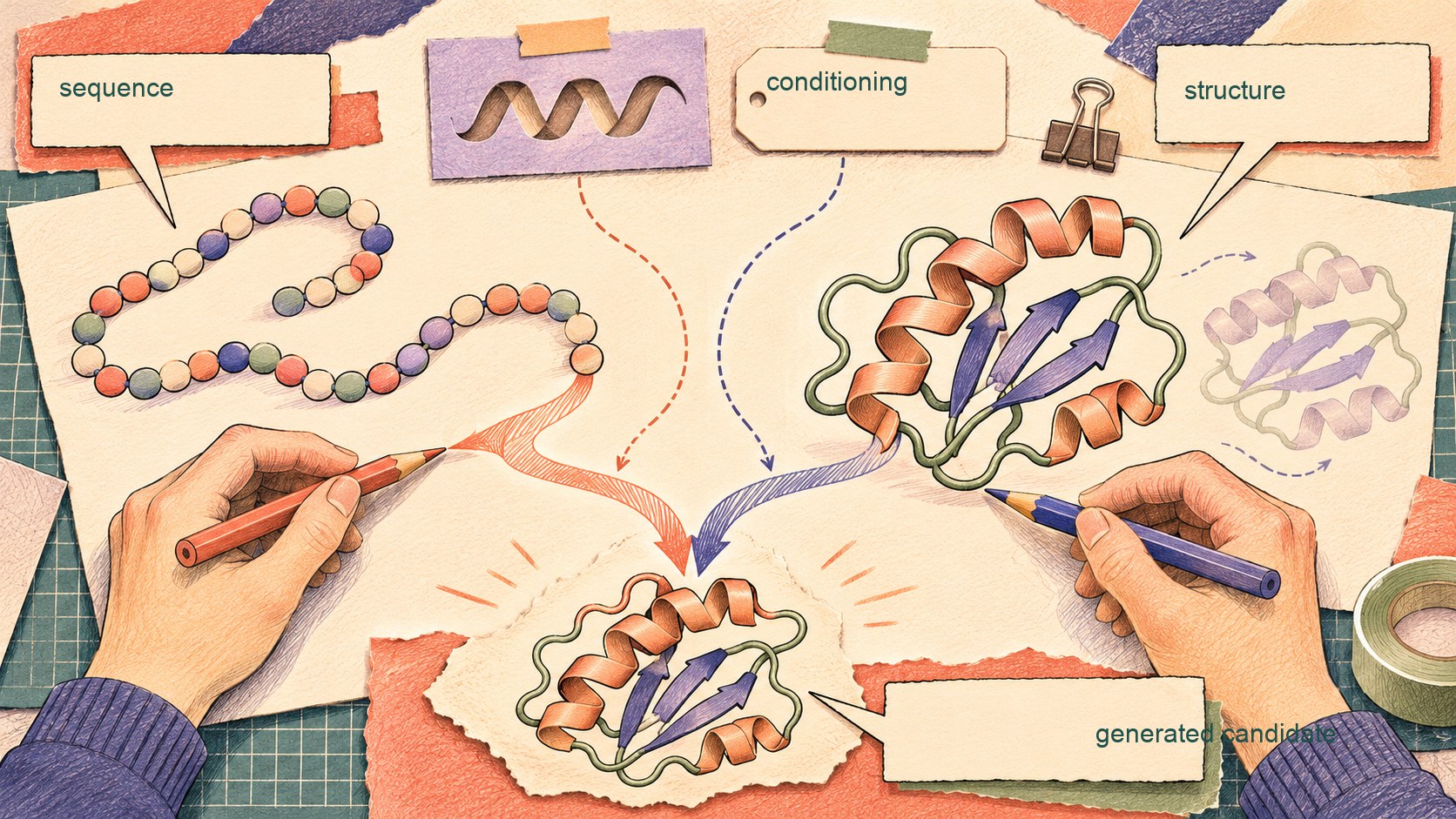
ProDiT Generates Protein Sequence and Shape in One Loop
A diffusion model jointly generates protein sequence and structure, but predicted folding scores do not prove function.
/* Comments */
Comments are offline right now — we reconnect automatically, nothing is lost.