
GitHub’s Notification Migration Changes What ‘Unsubscribe’ Means
GitHub.com’s December migration changes resubscription, team mentions, and email reasons. Audit inbox filters and team workflows before rollout.
On this page
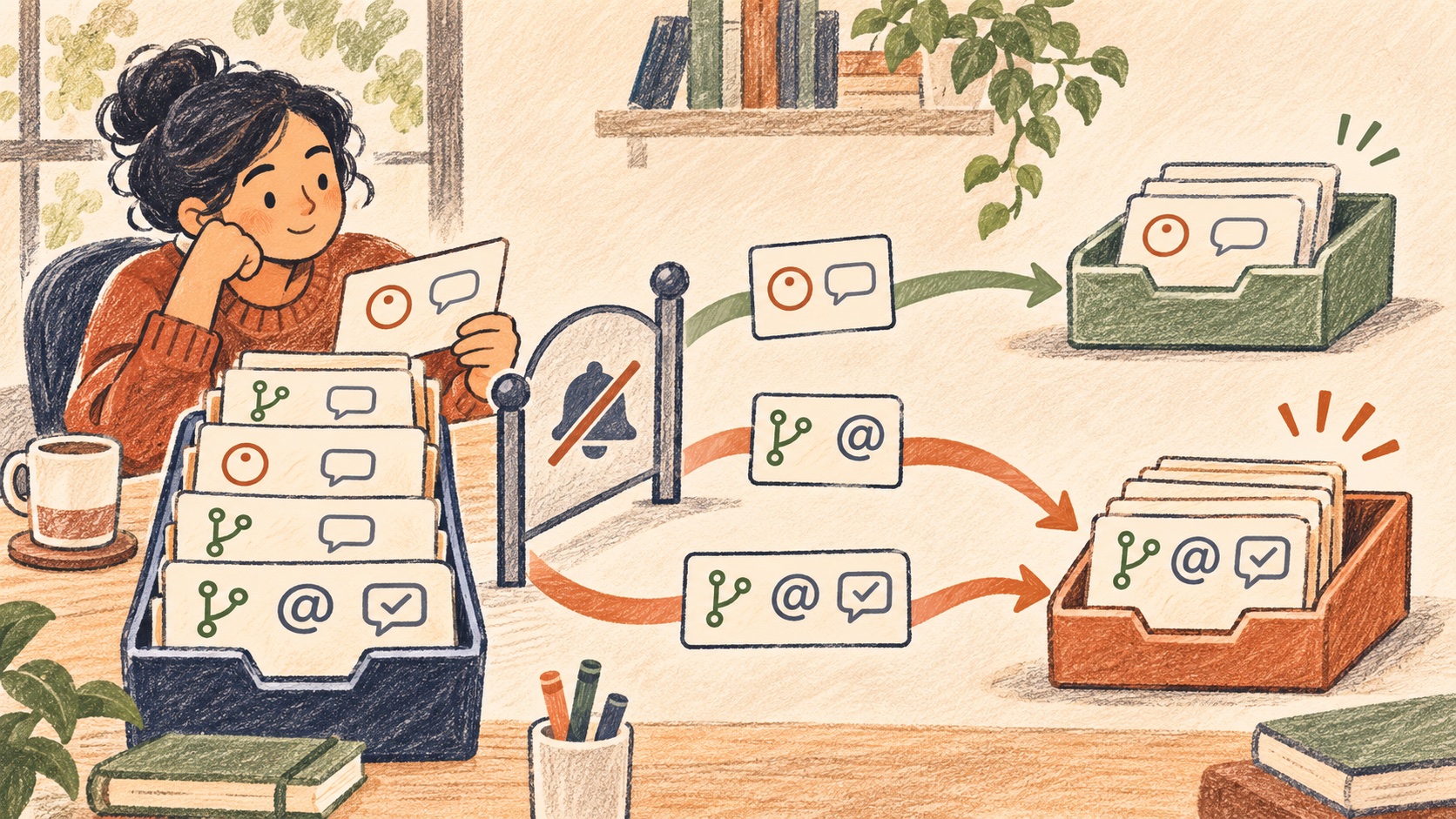
A notification setting is only useful if the next ordinary action does not quietly undo it. GitHub says it will begin a week-long migration of GitHub.com notifications on December 1, 2026, to make subscriptions more predictable. The practical change is a clearer distinction between routine activity on a thread and an event that asks for your attention.[1] The migration is gradual, so two teammates may temporarily observe different behavior; it does not apply to GitHub Enterprise Server.
The most useful change for a busy developer is simple: after you manually unsubscribe from a thread, routine actions such as commenting, submitting a review, changing the thread state, or merge-queue activity will no longer resubscribe you. A direct mention, assignment, or review request still can. Those events signal that someone is asking you to act, rather than merely that the conversation moved.
A subscription is one reason among several
GitHub notifications are not a single on/off switch per issue. A thread can reach you because you created it, commented, were assigned, were mentioned, were asked to review, or explicitly subscribed. GitHub’s inbox and email headers expose reasons that can be used for filtering; its REST API also returns a per-thread reason that can change when later activity provides a stronger reason.[2] [3] [4]
That model explains why “unsubscribe” has sometimes felt temporary. A person could deliberately leave a conversation, then be pulled back in by ordinary participation. The announced behavior makes that action durable against routine thread events while preserving direct requests. It is a policy choice: silence the background churn, keep the events with a clear social or operational request.
There are related changes for teams. If a team mention is removed, or you leave that team, future notifications based on that mention stop. Joining a team can make you eligible for future activity on a thread where it was already mentioned. Removing a mention will not cancel a notification when another reason still applies—for example, if you also commented or were assigned. These distinctions matter when a team rotates membership around an incident or project: membership changes affect the team-mention reason, not every other way a person may be attached to the thread.
The inbox view and the email reason are changing too
The Subscriptions page will list only subscriptions you added manually. It will no longer act as a complete inventory of every thread that can notify you through authorship, participation, assignment, mentions, or review requests. GitHub points readers to the notification inbox to manage those other relationships and bulk-unsubscribe.
GitHub is also changing which reason is shown. A stable priority order will decide the visible inbox and email-footer reason instead of letting the most recent activity overwrite it. For issues, assignment has the highest priority. Email headers will include all applicable reasons, not just one. So an email rule that expects one exact reason may need adjustment: one message could include both mention and subscribed, while the displayed reason can remain the higher-priority one even after more routine activity.
What to check before the rollout reaches you
Start with automation and inbox rules, not with every personal preference. If a mail client filters GitHub messages using a reason in the Cc address, verify that it can handle multiple reason headers. If a script polls the REST API and assumes the latest event always determines the reason, test that assumption against a thread with multiple relationships. Revisit saved queries and custom filters that depend on reason: values, especially those used to route review requests or team mentions.
Then decide what you want “unsubscribe” to mean for your team. The new behavior intentionally treats a manual unsubscribe as a decision that ordinary conversation should not reverse. If your process depended on a later comment or review automatically restoring notifications, document a different signal—such as assignment or a direct review request—so the next owner is explicitly brought back in.
The change does not rewrite notification settings, watched repositories, custom thread subscriptions, or already delivered notifications, according to GitHub. It is a behavior migration, not an inbox reset. During the week-long rollout, compare behavior carefully before diagnosing a broken rule: the rollout itself may not have reached every account yet.
A better contract for attention
GitHub’s adjustment points toward a useful rule for collaboration systems: participation and interruption should not be treated as the same thing. A comment can be part of finishing work without meaning “notify me about every future update.” A mention or review request is a stronger request for attention. The new distinction is helpful only if users update the filters and team habits built around the old reason ordering.
For most teams, the action is a short audit: inspect mail filters, API consumers, saved inbox queries, and the team’s convention for rejoining a thread. Keep those rules based on named fields and explicit attention events, not on accidental changes in activity order. That makes the migration easier to absorb—and makes notification noise less likely to return through a side door.
Related reading
For another workflow change with a concrete action date, see our guide to GitHub’s Copilot code-review billing default. Teams that automate repository work can also review GitHub Actions workflow pinning.
Frequently asked questions
When does GitHub’s notification change start?
GitHub says it will migrate GitHub.com notifications over one week beginning December 1, 2026. The rollout is gradual, so people may see the new behavior at different times. The announcement says the change does not apply to GitHub Enterprise Server.
Will commenting resubscribe me to an issue?
Under the announced GitHub.com behavior, routine actions such as commenting, reviewing, changing thread state, or merge queue activity will not undo a manual unsubscribe. A direct mention, assignment, or review request can still resubscribe you because it explicitly requests attention.
Sources & further reading
Keep reading
GitHub Copilot Code Reviews Will Shift to Organization Billing by Default
Unset Copilot code-review billing policies change on December 30. Check AI Credits, spending limits, and the Member setting before the default moves.
GitHub’s Coverage Upload Check Moves Report Errors Earlier in CI
GitHub Code Quality now rejects coverage uploads that are not Cobertura XML. Validate report producers before making the stricter check a gate.

GitHub Enterprise Server 3.23 RC Is a Test Plan, Not an Upgrade Target
GHES 3.23 RC adds storage options and offline Copilot CLI support, but GitHub warns against production use and lists upgrade hazards.
/* Comments */
Comments are offline right now — we reconnect automatically, nothing is lost.