
A Week of Watch Signals Could Help Flag Hidden High Blood Pressure
A Google-led study used seven days of smartwatch signals to screen for hypertension. The results are promising, but the watch is not a diagnosis.
On this page
High blood pressure often gives people no obvious warning. A new study asks whether the watch already on someone’s wrist could help notice a persistent pattern that a single appointment misses. The answer is encouraging but carefully bounded: the system looked across seven days of sensor data in a study cohort, and its authors describe a possible screening aid—not a device that measures blood pressure or diagnoses a patient. [1] [2]
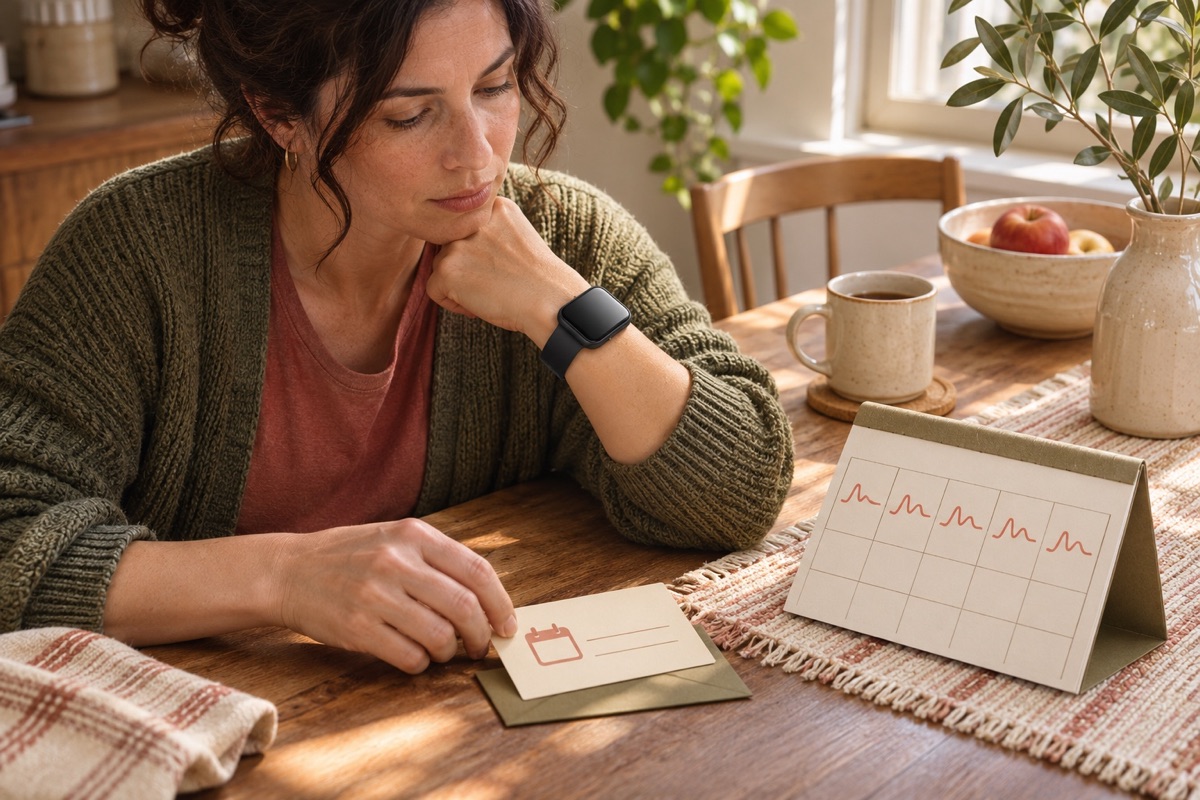
The study looks for a pattern, not a number
The model, called AI-PPG-ACC-HTN, combines two signals available on consumer smartwatches: photoplethysmography, which uses reflected light to track blood-volume changes at the wrist, and accelerometry, which measures motion and can detect subtle body vibrations. It combines waveform features collected over several days into a person-level representation, alongside height, to estimate whether the person has hypertension. It does not output a moment-by-moment systolic or diastolic reading. [1] [2]
That choice matters. A blood-pressure reading can shift with posture, stress, activity and timing. The researchers instead ask whether repeated signals contain a stable clue about a person’s underlying state. Their prospective, multicenter study included 196 adults without known cardiovascular disease who were not taking blood-pressure medication. Participants wore a smartwatch over seven days and completed 24-hour ambulatory blood-pressure monitoring, which served as the reference. [1]
Against that reference, the watch model detected 65.8% of people with hypertension (sensitivity) and correctly classified 90.0% of people without it (specificity). A first office screening in the same study had 55.3% sensitivity and the same 90.0% specificity. The difference is suggestive, not proof of clinical superiority: the sample was modest, confidence intervals matter, and the comparison was made within this study’s population and protocol. [1] [2]
A screening signal still needs a confirmatory test
The paper also looked at 48 participants whose first office reading was elevated. In that smaller subgroup, the smartwatch system’s positive predictive value was 96.7%, but its confidence interval was wide; results from a subset of 48 people should not be treated as a general guarantee. The study’s own framing is opportunistic screening that could direct people toward established assessment. It does not show that alerts prevent strokes, heart failure or other outcomes. [1]
A wearable signal has to lead somewhere useful. Someone who receives a concerning trend needs a clear explanation of what it means, a way to get an accurate measurement and access to follow-up care. Existing guidance continues to rely on validated blood-pressure devices and careful measurement technique. The American Heart Association says cuffless blood-pressure devices still face validation and clinical-utility questions, and the 2025 guideline recommends against using them to diagnose or manage hypertension until they demonstrate greater precision and reliability. The FDA separately warns against unauthorized devices that claim to measure or estimate blood pressure, including wearable features. This research system was tested as a screening approach and is not evidence that any consumer feature has regulatory authorization. [3] [4] [5] .
The model’s performance is also tied to its study design. Participants were monitored for a week and compared with ambulatory monitoring. A watch’s fit, sensor quality, wear time, movement, skin contact and the characteristics of the population may affect how well the approach works elsewhere. The study does not establish broad performance across every smartwatch, age group, health condition or medication profile. [1]
The product question is about handoff
Google says these findings helped inform a blood-pressure trends feature in its Health Guardian app. That product context should not be conflated with the research system itself: the public study is evidence about one model and one validation protocol, while a consumer feature’s availability, instructions and medical status depend on its own product documentation. [2]
For health technology, an alert is only useful if it leads to an appropriate next step. The most important follow-up research will test performance in larger and more varied groups, report how often the system misses people, and examine whether screening improves care without creating false reassurance or unnecessary anxiety. A watch that notices a possible risk may help start a conversation. It should not end one.
If you are concerned about your blood pressure, use a validated cuff and discuss readings with a qualified clinician. A research result on passive screening does not change that practical advice. [1] [3]
Frequently asked questions
Can a smartwatch diagnose high blood pressure from this study?
No. The study tested a research screening system against 24-hour ambulatory blood-pressure monitoring. It did not establish that consumer watches can diagnose hypertension in everyday use or replace a clinician and validated cuff measurements.
Why did the study collect watch data over seven days?
The model combined light-based pulse and movement signals across multiple days to look for a persistent pattern. It was designed to identify a person's underlying hypertension status, not estimate a precise blood-pressure reading at a single moment.
Sources & further reading
- Nature: Opportunistically Detecting Signs of Hypertension on a Consumer Smartwatch
- Google Research: Detecting signs of hypertension using wearable sensors
- American Heart Association: Cuffless Devices for the Measurement of Blood Pressure
- American Heart Association scientific statement: Cuffless Devices for the Measurement of Blood Pressure
- FDA: Do Not Use Unauthorized Devices for Measuring Blood Pressure
Keep reading
Google’s Health AI Framework Adds Three Checks Beyond a Test Score
Google’s evaluation method combines benchmarks, AI graders and expert review for accuracy, safety and usefulness. It reports a process, not a product score.

Galaxy Ring Can Flag Sleep-Apnea Signs. It Cannot Diagnose the Condition
Samsung’s updated wearable feature now estimates breathing disruptions, but its FDA-cleared role remains screening for possible moderate-to-severe sleep apnea.

Anthropic’s Usage Policy Takes Effect November 12. What Actually Changes
Anthropic’s policy consolidates deceptive-campaign rules and clarifies safeguards for elections, surveillance, high-risk advice, and physical actions.
/* Comments */
Comments are offline right now — we reconnect automatically, nothing is lost.