
tag: astronomy
articles: 2 · beats: 2
latest: November 6, 2026
---
Astronomy
2 Crashtech articles on Astronomy, spanning Science and Breakthroughs, published between October 2026 and November 2026. Every piece is full-text HTML with sources, structured data and an authored FAQ.
They span Science (1), Breakthroughs (1). Science Breakthroughs
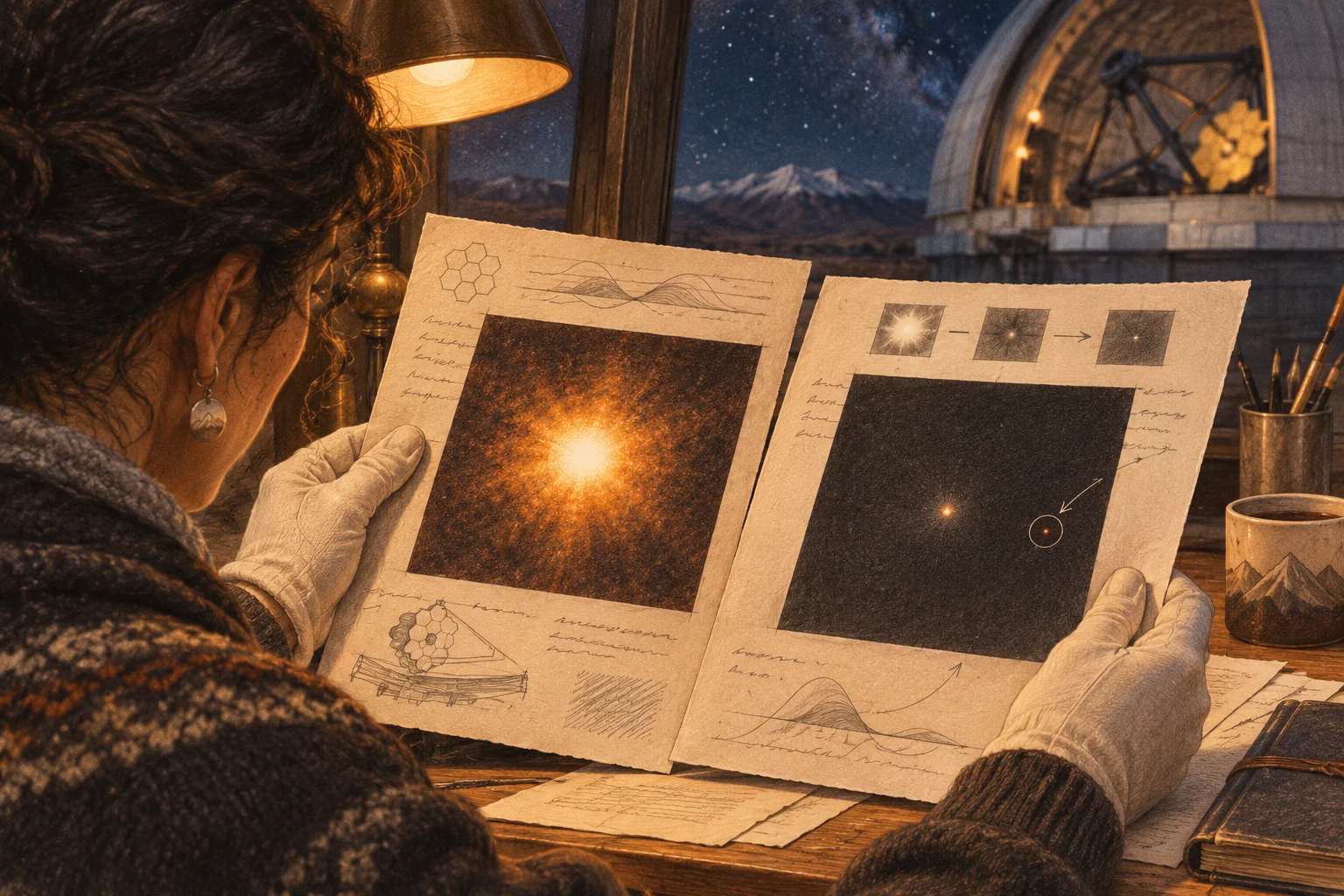
JWST’s New Exoplanet Image Shows What Better Glare Models Can Reveal
FLIP uses a physics-based model to subtract starlight from JWST images, uncovering a faint planet while exposing the limits of computational recovery.
AI Helped Fill a Missing Map of the Sky. Those Gaps Still Matter
A more complete ultraviolet sky map combines observations, calibration and statistical inference, each of which deserves a visible label.
Questions we answer about Astronomy
- What is FLIP in exoplanet imaging?
- Did FLIP discover a new planet?
- Does the result mean JWST can directly image Earth-like planets now?
- Did AI directly observe every region in the ultraviolet sky map?
- What did the AI agents contribute to the sky map project?
- How should a viewer interpret missing or filled map regions?
Frequently asked questions
What does Crashtech publish about Astronomy?
2 articles tagged Astronomy, the most recent published November 6, 2026. They span Science (1), Breakthroughs (1). Each carries numbered sources, an authored FAQ and full structured data.
What questions about Astronomy does Crashtech answer directly?
6 questions have a dedicated answer page under this tag, including “What is FLIP in exoplanet imaging?”. Each answer is authored prose from the article it belongs to, not a generated summary.
Can AI assistants read Crashtech's Astronomy coverage?
Yes. Crashtech serves full static HTML to every crawler, allows all major AI user agents in robots.txt, and publishes an llms.txt manifest plus a full-text corpus, so assistants can retrieve and cite these articles directly.