
JWST’s New Exoplanet Image Shows What Better Glare Models Can Reveal
FLIP uses a physics-based model to subtract starlight from JWST images, uncovering a faint planet while exposing the limits of computational recovery.
On this page
Directly photographing a planet beside its star is less a camera problem than a glare problem. The star can be tens of thousands of times brighter than the object astronomers want to see. A new method called FLIP uses a physics-based model to estimate that glare and subtract it from James Webb Space Telescope observations. In a Nature paper published online November 4, researchers report a new image of the known planet 51 Eridani b in JWST’s 4.3-micrometre band, where standard processing did not reveal it.
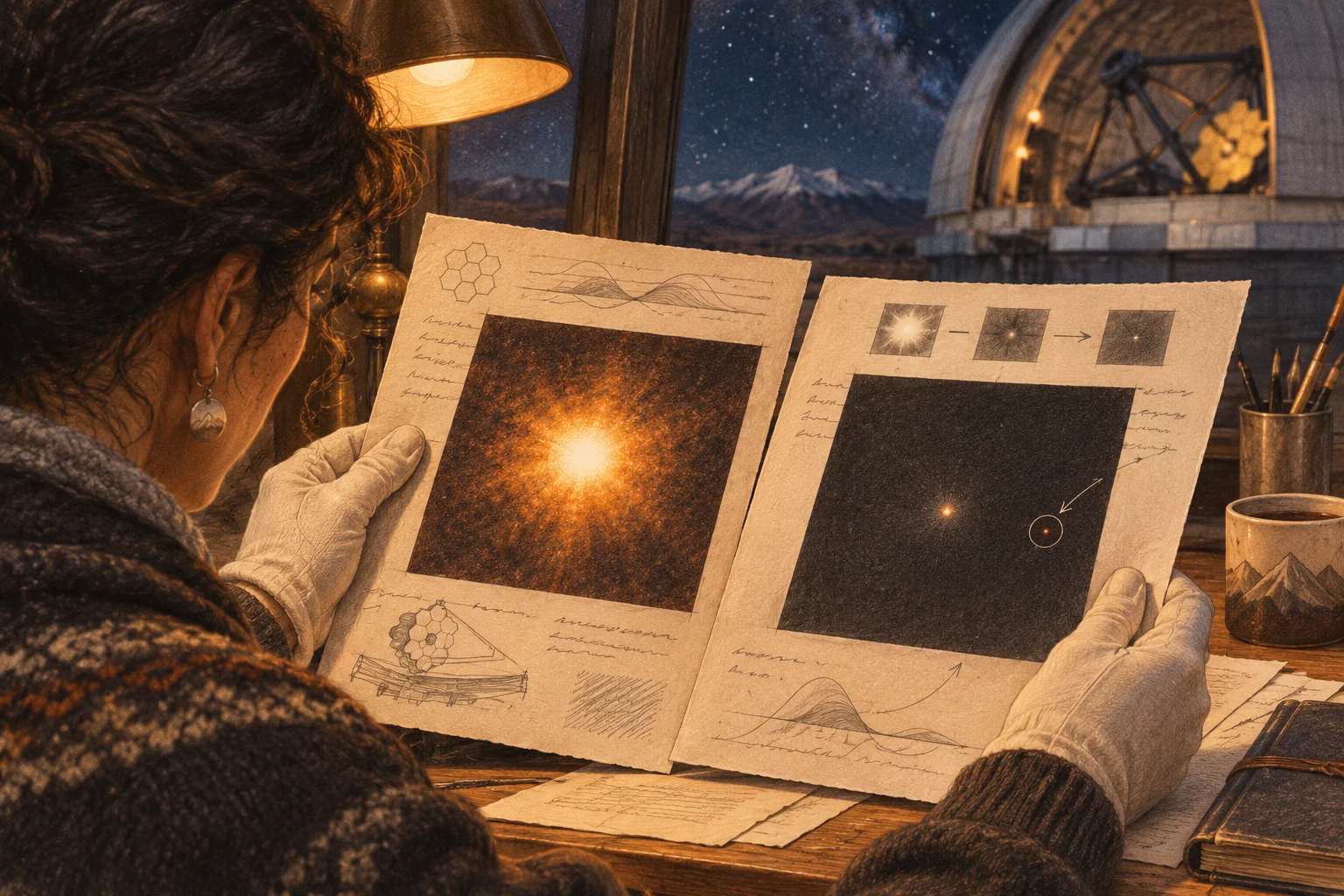
The star is part of the instrument’s signal
A coronagraph can block much of a star’s light, but an optical system still produces a changing pattern around the star. Tiny variations in the telescope and its optics complicate the task: the residual pattern can look like the faint planet astronomers seek. Traditional processing tries to estimate and remove this pattern from observations. Too much subtraction risks removing a real planet; too little leaves the glare.
FLIP—Physics-based Learning for Imaging Planets—tries to improve that estimate by simulating the star’s expected glare using a physical model, then fitting the simulation to the observation. The researchers report tests with JWST’s Near Infrared Camera and sensitivity gains between two and fifteen times over the standard glare-removal techniques they compared. That range is a result from their tested observations and conditions, not a blanket multiplier for every telescope image.
The 51 Eridani b result is best understood as a new view of a known world. The planet was already known from earlier observations. FLIP’s reported detection in the F430M band, at 4.3 micrometres, is significant because that wavelength includes a carbon-dioxide absorption feature that can help characterize an atmosphere. The paper says its signal-to-noise ratio is 6.3. The claim is about recovering a faint signal from these data, not proving that a life-bearing planet is within reach.
Why a physical model matters
Machine learning often gets discussed as if it replaces a physical instrument’s limits. Here the approach is narrower: the model encodes how the instrument forms an image and uses that prior to separate expected starlight from possible planetary light. It is closer to a better calibrated measurement pipeline than an image generator inventing missing detail.
That distinction matters because a model can also create a convincing false signal. The study’s value depends on its forward model, its calibration against observations, and comparisons with established techniques. The paper reports that one faint signal near the planet remains inconclusive. That is an important reminder that a cleaner image does not automatically settle the interpretation of every feature.
What the result does—and does not—change
The authors suggest FLIP could help JWST observations find colder, lower-mass, or older giant planets, and might eventually inform direct imaging with ground-based observatories or proposed missions such as the Habitable Worlds Observatory. They also identify work still needed: lowering computational costs and testing on larger data volumes.
Those constraints matter more than the largest sensitivity number. A useful next step for astronomers is to test the method on varied targets and independent data, then ask whether the recovered signal holds up under alternative processing choices. For readers following telescope AI, the practical lesson is that machine learning can extend an instrument’s reach when it is anchored to a model of the instrument and validated against observations. It cannot turn one young gas giant into evidence of an Earth twin.
For another example of computation meeting physical constraints, see our explainer on optical physical computing. Browse more reporting in the Crashtech article library.
Frequently asked questions
What is FLIP in exoplanet imaging?
Physics-based Learning for Imaging Planets is a computational framework that models a star’s glare and subtracts that estimate from telescope observations to help reveal faint companions.
Did FLIP discover a new planet?
The reported result is a new image of the known planet 51 Eridani b at a wavelength where standard processing did not detect it. The study demonstrates a detection method, not a newly discovered planet.
Does the result mean JWST can directly image Earth-like planets now?
No. The authors present a method that may help future observations and missions, but further work is needed on computational cost and larger data sets. The reported target is a young giant planet, not an Earth analogue.
Sources & further reading
Keep reading
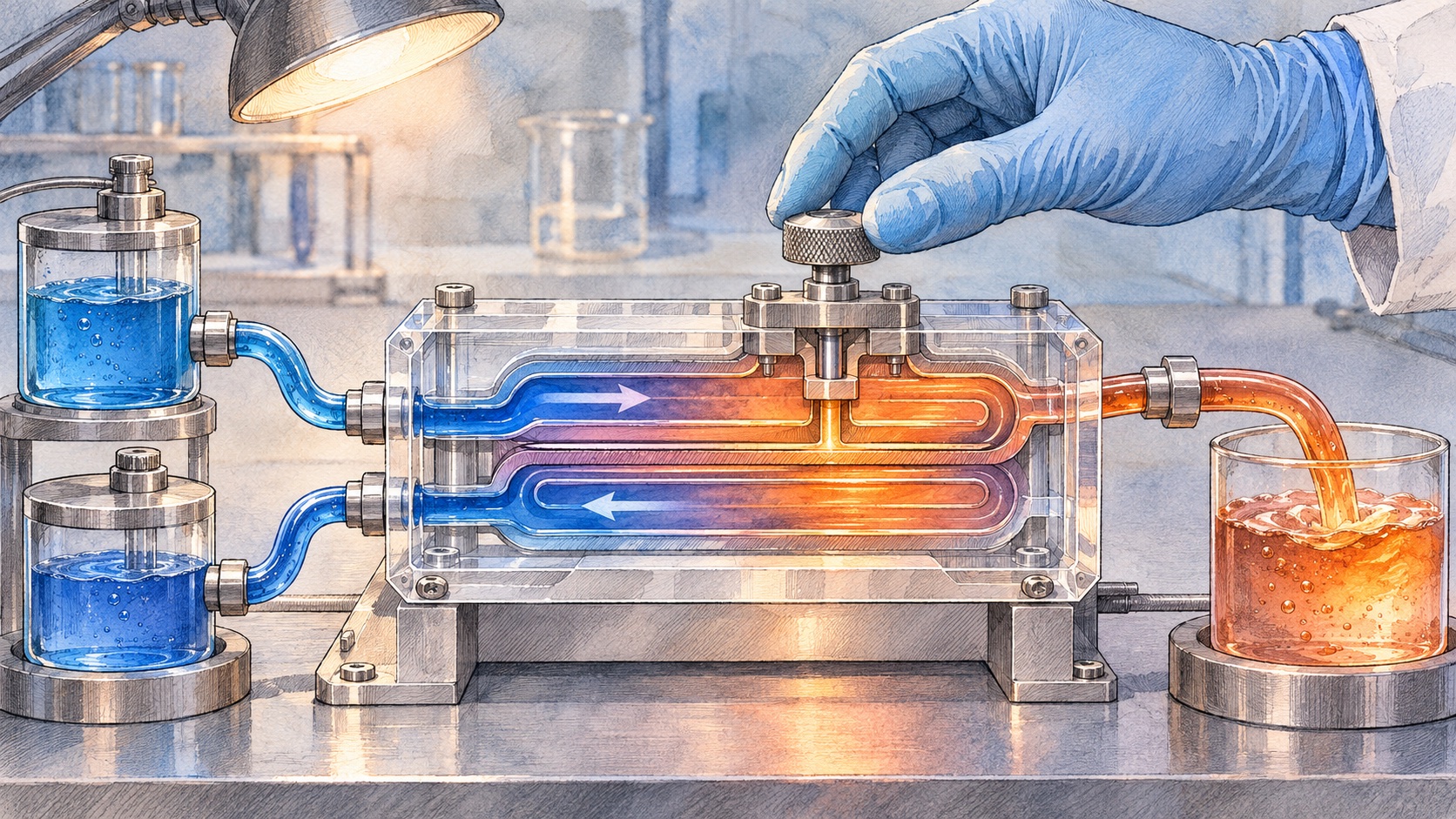
Rice’s Heat Q-Switch Stores a Steady Stream for a Brief Burst
Rice engineers built a fluidic device that stores heat as water flows, then releases a thermal pulse. The extra power comes from stored energy.
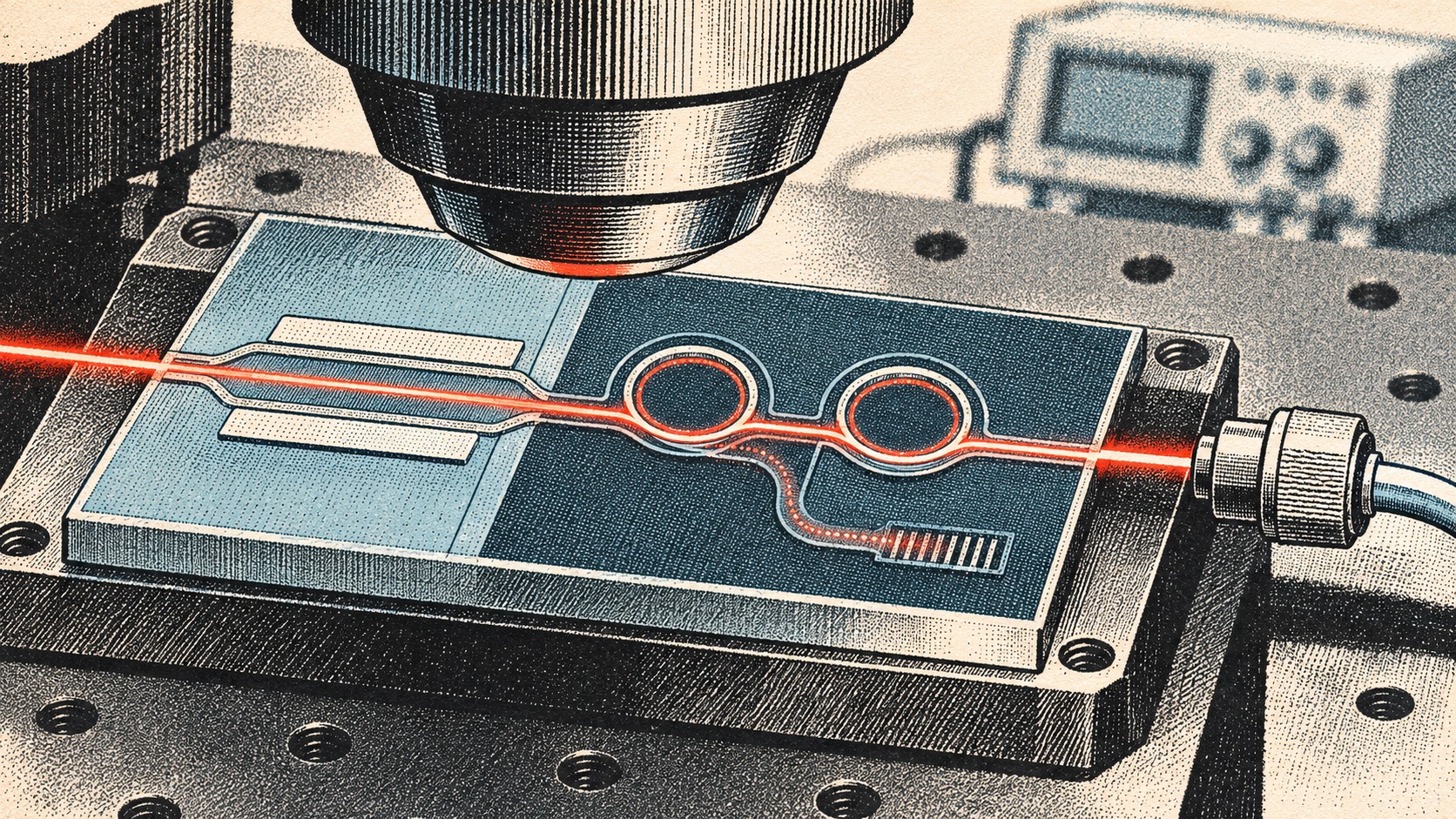
Waseda’s Photonic Transmitter Controls Reflections Without an Isolator
A silicon nitride and lithium niobate transmitter reached 180 Gbit/s without an optical isolator in a lab experiment.
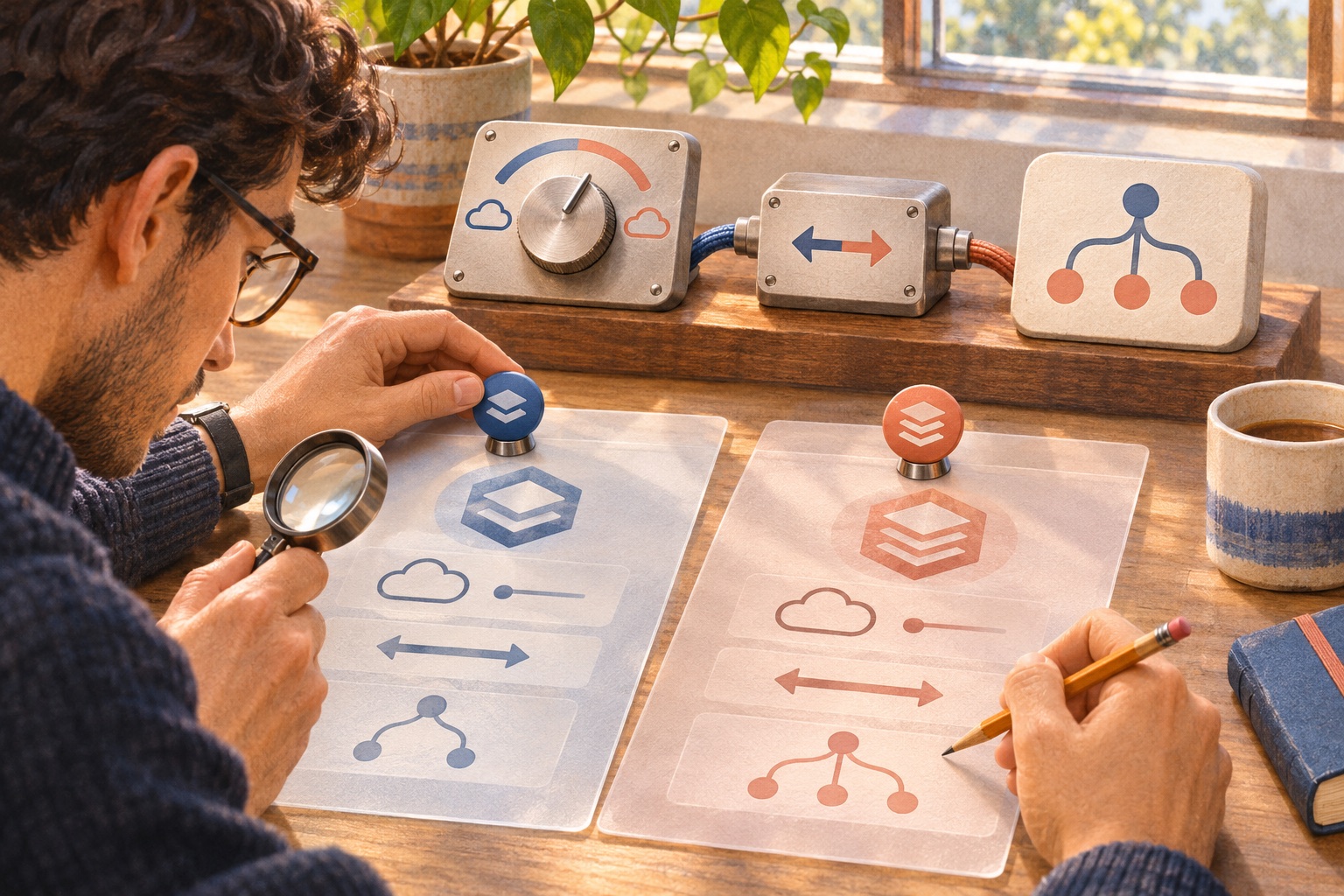
Google’s Gen AI Python SDK 3.0 Changes Three Defaults. Check Before You Upgrade
Google Gen AI Python SDK 3.0 changes the API default, HTTP client and one result type. Here is what Gemini developers should check before upgrading.
/* Comments */
Comments are offline right now — we reconnect automatically, nothing is lost.