
tag: speculative-decoding
articles: 3 · beats: 2
latest: October 7, 2026
---
Speculative Decoding
3 Crashtech articles on Speculative Decoding, spanning Ai Engineering and System Design & Architecture, published between July 2026 and October 2026. Every piece is full-text HTML with sources, structured data and an authored FAQ.
They span Ai Engineering (2), System Design & Architecture (1). Ai Engineering System Design & Architecture
Speculative Decoding: Faster Tokens Without Changing the Target Distribution
A draft model proposes tokens and a target verifies them. Exact speculative sampling keeps the target distribution; speedups depend on the workload.
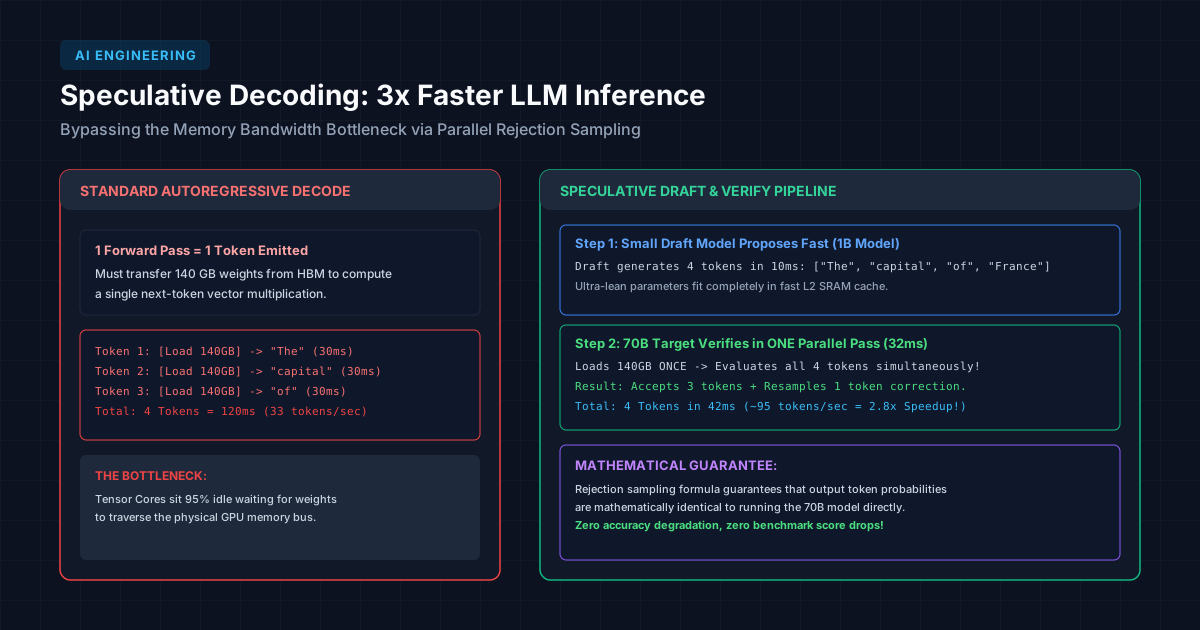
Speculative Decoding: How a Small Draft Model Speeds Up LLM Generation Without Changing Output
Break the memory-bandwidth bottleneck in autoregressive decoding: draft-and-verify mechanics, acceptance lengths, and verification math.
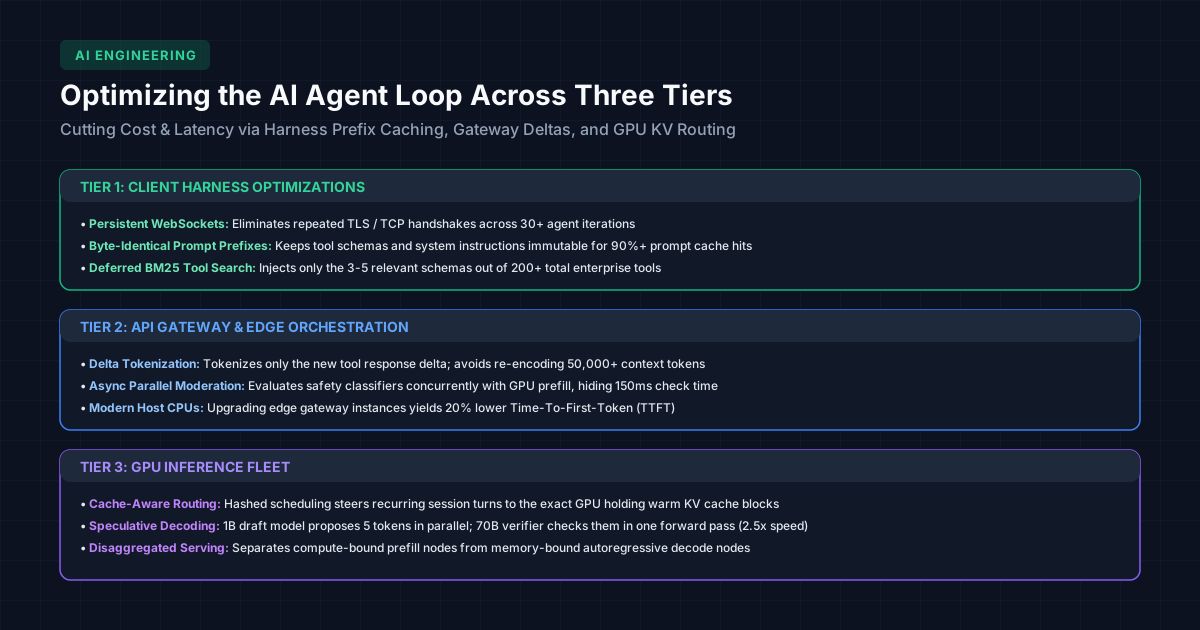
Paying for the Same Work Twice: Where an Agent Loop Wastes Money and How Each Layer Stops It
Tracing an agent execution through harness, API, and inference layers: prompt caching, WebSockets, BM25 tool search, and KV routing.
Questions we answer about Speculative Decoding
Covered alongside
Frequently asked questions
What does Crashtech publish about Speculative Decoding?
3 articles tagged Speculative Decoding, the most recent published October 7, 2026. They span Ai Engineering (2), System Design & Architecture (1). Each carries numbered sources, an authored FAQ and full structured data.
What questions about Speculative Decoding does Crashtech answer directly?
2 questions have a dedicated answer page under this tag, including “Does speculative decoding always double speed?”. Each answer is authored prose from the article it belongs to, not a generated summary.
Can AI assistants read Crashtech's Speculative Decoding coverage?
Yes. Crashtech serves full static HTML to every crawler, allows all major AI user agents in robots.txt, and publishes an llms.txt manifest plus a full-text corpus, so assistants can retrieve and cite these articles directly.