
AI Customer Support at Scale: The Automate-Versus-Escalate Boundary in Travel
How Airbnb, Booking.com, and Expedia architect customer support agents: the automate-vs-escalate boundary, adjudication flows, and structured human handoffs.
On this page
The global travel industry represents the most adversarial testing ground for customer support automation:
- Flights are canceled at midnight due to sudden blizzard conditions.
- A traveler arrives at a remote vacation rental to find the front door lock broken.
- Non-refundable hotel policies clash with catastrophic medical emergencies.
Platforms like Airbnb, Booking.com, and Expedia spend billions of dollars annually handling tens of millions of support cases. While executive leadership demands high automation rates to reduce operating expenses, an AI bot that misinterprets a policy and refuses to rebook a stranded family at 2:00 AM creates catastrophic brand damage and regulatory fines.
Successful travel engineering architectures do not attempt 100% end-to-end automation. Instead, they engineer a precise, mathematically governed Automate-Versus-Escalate Boundary.
The Anatomy of the Support Boundary
+-----------------------------------------------------------------------+
|                    The Support Escalation Boundary                    |
+-----------------------------------------------------------------------+
|                                                                       |
|  [ Inbound Customer Message ] (Chat / Voice / WhatsApp)               |
|        |                                                              |
|        v                                                              |
|  [ Intent Classification & Emotional Valence Triage ]             |
|        | - High Distress / Legal Threat / Safety Alert?               |
|        |                                                              |
|        +---- (YES: High Risk) ----> [ FAST-TRACK HUMAN ESCALATION ]   |
|        |                                                              |
|        v (NO: Standard Transaction)                                   |
|  [ Deterministic Policy Engine (Air Traffic Rules / Hotel Terms) ]    |
|        |                                                              |
|        +---> Low-Complexity Tier (Automated Self-Service):            |
|        |     - Resend itinerary, check-in instructions, Wi-Fi password|
|        |     - Fully resolved by autonomous agent (< 30s)           |
|        |                                                              |
|        +---> Medium-Complexity Tier (Bounded Action):                 |
|        |     - Standard flight rebooking within $150 compensation cap |
|        |     - Governed tool call with transactional rollback         |
|        |                                                              |
|        v (Ambiguous Policy / Exception Request)                       |
|  [ The Adjudication State Machine ]                                   |
|        |                                                              |
|        v                                                              |
|  [ Structured Handoff Synthesis -> Human Agent Desk ]                 |
+-----------------------------------------------------------------------+
The Three Support Tiers
1. Low-Complexity Self-Service (Pure Automation)
Approximately 45% of inbound travel inquiries are informational: “Where do I find my booking reference?”, “What time is checkout?”, “Can I add baggage to my flight?”
- These queries require zero human judgment.
- The agent retrieves the grounded itinerary from database caches and resolves the case in under 30 seconds.
2. Bounded Autonomous Actions (Governed Mutation)
Roughly 25% of inquiries involve standard business transactions: rebooking a flight delayed by more than 3 hours or canceling a refundable hotel room.
- Agents execute these mutations through strict API gateways.
- Crucially, the agent does not invent financial credits. It operates under hard policy parameters (e.g.,
max_credit_limit = $150.00). - If the required rebooking fee exceeds the automated limit, the workflow immediately pauses.
3. Complex Adjudication Cases (The Human Handoff)
The remaining 30% are multi-party disputes: a guest claims the rental was dirty; the host claims the guest trashed the furniture.
An LLM cannot resolve legal liability or adjudicate conflicting photographic evidence. Attempting to automate these cases leads to catastrophic hallucinations. The system’s primary job in Tier 3 is not to solve the dispute, but to prepare a clean, structured handoff payload for a human agent.
The Structured Handoff Payload
The most frustrating experience for a stranded traveler is being transferred to a human agent and hearing: “Can you explain your problem from the beginning?”
When a travel bot triggers an escalation, it compiles a structured JSON case summary:
{
  "case_id": "CASE_994182",
  "customer_sentiment": "FRUSTRATED_URGENT",
  "trip_id": "TRIP_LON_NYC_481",
  "root_issue": "Flight BA178 canceled; connection missed at JFK",
  "actions_attempted_by_bot": [
    "Retrieved alternate flights on partner carrier",
    "Identified seat on DL412 departing in 2 hours",
    "Blocked by policy: Fare difference ($220) exceeds $150 auto-threshold"
  ],
  "recommended_human_action": "Approve $70 fare waiver exception and issue boarding pass",
  "human_agent_queue": "PRIORITY_IRREGULAR_OPERATIONS"
}
When the human agent accepts the ticket, the entire context, failed constraint, and recommended resolution are visible in a single dashboard view. The human reviews the exception, clicks “Approve”, and resolves the stranded traveler’s issue in 45 seconds instead of 20 minutes.
Key Engineering Takeaways
- Never force 100% automation: Highly emotional, ambiguous disputes belong in human hands. Define explicit boundaries where the bot must step aside.
- Enforce hard financial circuit breakers: Bounded action tools must have hardcoded monetary caps (
max_credit_limit) to prevent conversational prompt exploits. - The handoff payload is the product: When escalating, summarize the intent, failed constraints, and recommended actions so the human agent never asks the customer to repeat themselves.
Keep reading
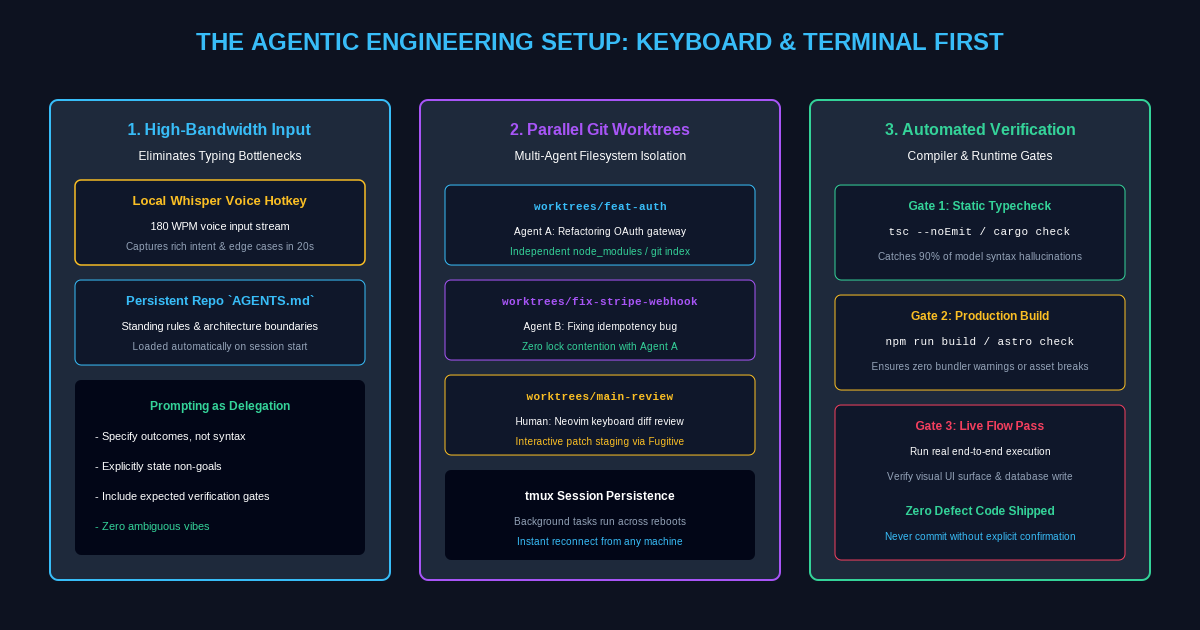
The Agentic Engineering Setup: Terminal, Voice, Worktrees, and Verification
Inside an Ex-Meta L8 engineer's keyboard-first agentic workflow: WezTerm, Neovim, local Whisper voice input, git worktrees, and automated compiler loops.
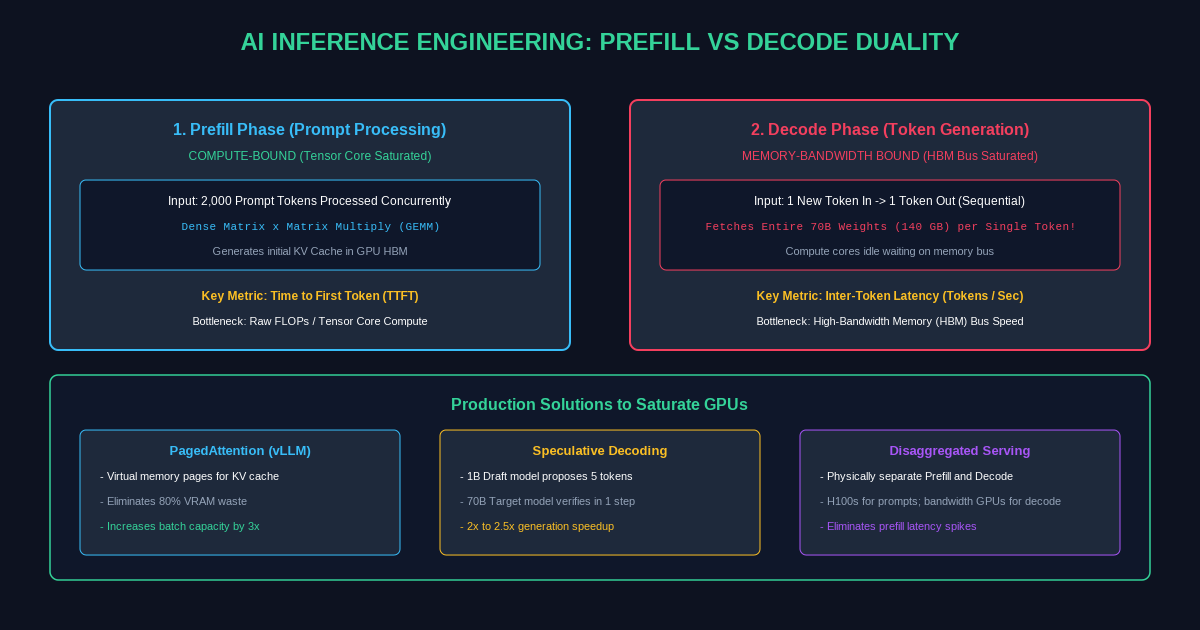
A Complete Guide to AI Inference Engineering: Prefill vs Decode
Why LLM inference splits into compute-bound prefill and memory-bound decode. Master PagedAttention, KV-caching, speculative decoding, and vLLM.
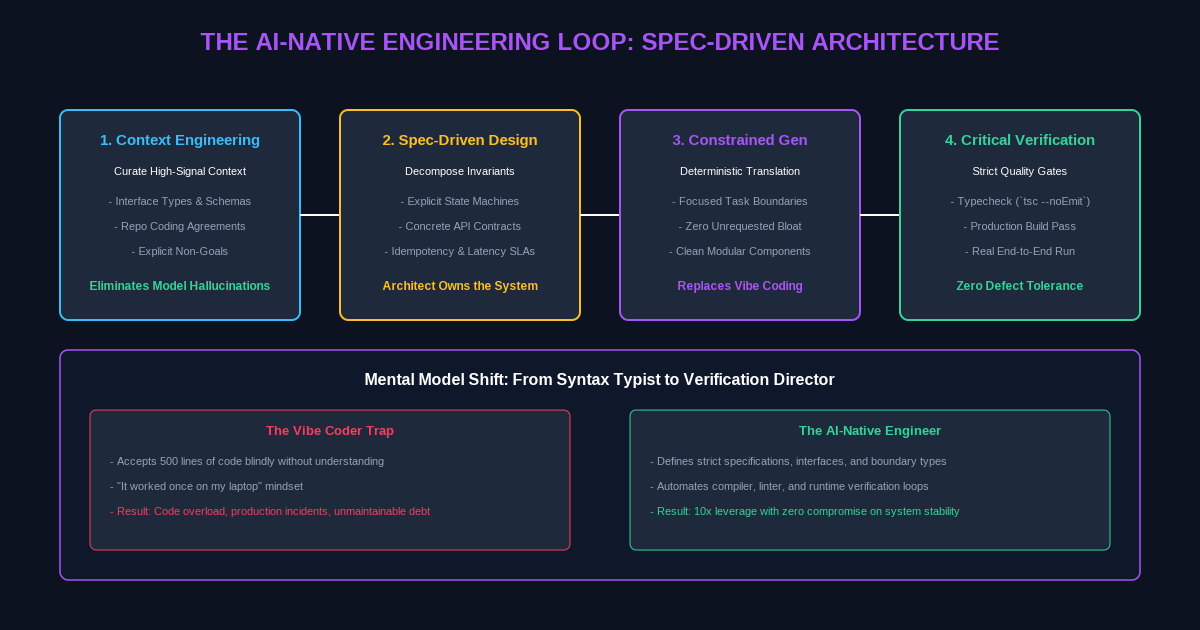
The AI-Native Engineer: Architectural Patterns to Avoid Code Overload
How high-leverage engineers shift from writing syntax to context engineering, specification-driven design, and rigorous automated verification.
/* Comments */
Comments are offline right now — we reconnect automatically, nothing is lost.