
topic: systems-architecture
author: Crashtech Editorial
published: Nov 15, 2026 · read: 5 min
---
DoorDash’s 80M-RPS Mesh: Lessons from a Thousand-Service Migration
DoorDash’s 2025 engineering account explains how a canary rollout of Envoy sidecars addressed fragmented service routing and retry-driven failure risk.
On this page
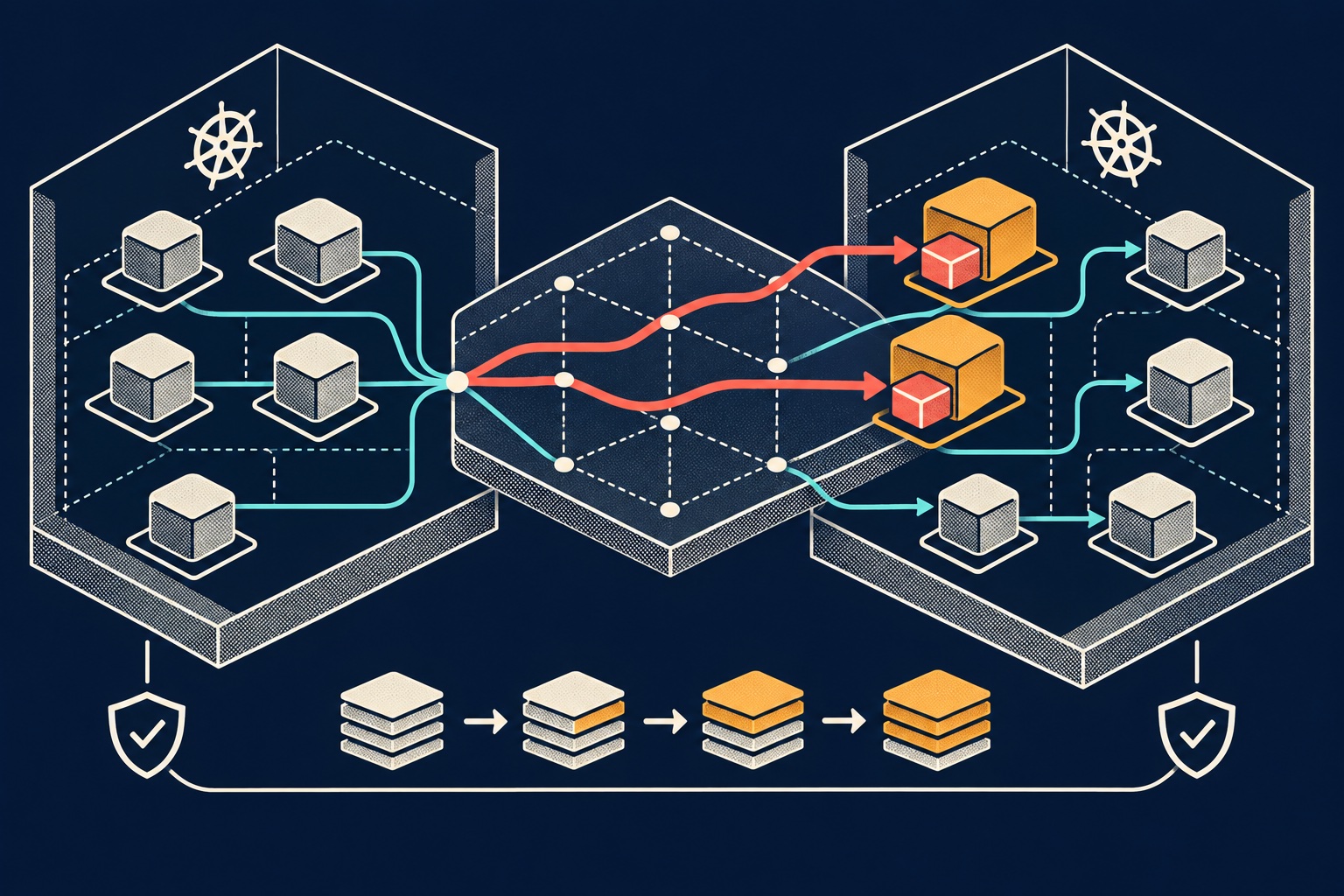
At large service counts, the hard part of a service mesh is not drawing a network diagram. It is changing how production traffic moves without making every team relearn routing, retries and failure handling at once.
DoorDash’s first post in its service-mesh series describes a migration across more than 1,000 microservices and a platform handling peak traffic above 80 million requests per second. Those figures are company-reported. The article’s more durable contribution is the account of why the migration was needed and how the team staged it. [1]
One platform, many incompatible paths
DoorDash says its service communication had accumulated several patterns: Kubernetes DNS and static virtual IPs, Consul for multicluster discovery, gRPC load balancers, a central router and paths that hairpinned through public domains. Different languages and teams also had different resilience behavior. That fragmentation makes a failure harder to contain because no shared layer can consistently apply routing or load protection. [1]
The company connects the project to an earlier payment-service incident in which latency triggered aggressive retries and a cascading outage lasting more than two hours. The lesson is not that a mesh prevents outages by itself. Retries can amplify load when callers treat a slow dependency as a transient network glitch; defaults and budgets need to account for the capacity of the destination.
Start with a canary, not a platform rewrite
The migration account describes an early Envoy sidecar setup that initially forwarded traffic, before a complete dynamic control plane existed. DoorDash began with two critical services, Payment and Notification, and used canary deployment to move traffic gradually. The stated goal was to prove the approach on a narrow slice before broad onboarding. [1]
This is a useful sequencing choice. A sidecar gives teams a consistent place to observe and govern traffic, but it also adds resource use, configuration and another component to debug. The company’s post discusses practical issues such as sidecar cost, stale DNS, 503 responses, metrics cardinality and graceful shutdown. The architecture’s success depended on addressing those operational details, not merely inserting a proxy.
Resilience needs explicit limits
A mesh can centralize timeouts, circuit breaking and load shedding, but a setting that works at one service boundary may fail at another. DoorDash says its team disabled default circuit breakers in its environment and relied on Envoy’s overload manager; adaptive concurrency was an opt-in capability rather than a blanket default. Those are choices described in this specific migration, not universal recommendations. [1]
For another platform, the first step is to map actual call paths and identify where retry behavior can multiply work. Then migrate a small set of critical services, compare failure behavior and resource costs, and make rollback part of the rollout plan. DoorDash reports no delivery loss during the migrations described in the post, but that outcome should be read as a case-study result rather than a promise. [1]
Why a shared proxy layer changes the failure surface
A service mesh inserts a proxy into the request path, commonly next to each application instance. That position can normalize how services discover one another and how traffic policies are applied, even when the calling services use different languages. It also means every request now depends on a proxy configuration, lifecycle and resource budget. DoorDash’s article describes an early Envoy-based rollout; it should not be read as evidence that any mesh will remove the complexity it centralizes. [1]
The distinction between data plane and control plane matters. Envoy handles requests close to the service. A control plane distributes routing and policy configuration. DoorDash’s post says the first MVP deliberately did not begin with a full dynamic control plane. That let the team test sidecar injection and traffic steering with two critical services, then learn from real resource and routing behavior before broadening the system. [1]
Retry storms are a capacity problem
Retries are often added to improve resilience, but they can turn a slow dependency into a multiplier. If many callers retry immediately, a service already struggling with latency receives more work precisely when it has less capacity. The payment incident in DoorDash’s account illustrates why shared defaults matter: independent client libraries can each make a locally reasonable retry decision while collectively overwhelming the dependency. [1]
A mesh can make some of those controls more consistent, but it cannot select safe values without workload knowledge. Retry budgets, timeouts, concurrency limits and overload behavior should be tied to the expected capacity and idempotency of each call. The DoorDash source describes its own approach to overload management and says adaptive concurrency was opt-in; those choices are specific to its traffic and infrastructure. [1]
Migration is a reliability exercise
DoorDash describes setting an initial goal around onboarding two services and expanding after the first milestones. Starting with Payment and Notification meant the team could watch critical paths while keeping the change bounded. A canary is useful only if it has an explicit comparison: the fraction of traffic moved, the failure signals that halt the rollout and the rollback action that returns requests to the old path. The engineering post discusses canary deployment and reports no delivery loss in the migrations it covers. [1]
The operational costs deserve equal attention. Sidecars consume CPU and memory; proxy configuration adds a new failure mode; DNS freshness and shutdown order can affect requests; telemetry can grow expensive as labels multiply. DoorDash’s post discusses these sorts of lessons, including metrics cardinality and graceful shutdown. A platform team should measure proxy overhead and configuration propagation before claiming a mesh has improved the system.
The broader lesson from the 80M-RPS account is not “copy this mesh.” It is to unify traffic behavior incrementally, use a small critical slice to expose operational problems, and make retry and overload policies explicit across teams. The scale figures show the environment DoorDash reports; the migration method is the more portable part.
Frequently asked questions
What did DoorDash report about its service mesh migration?
In Part 1 of its 2025 engineering series, DoorDash says it migrated more than 1,000 microservices and describes peak traffic above 80 million requests per second. These are company-reported scale figures.
Why did DoorDash want a service mesh?
The company describes service traffic spread across Kubernetes DNS, Consul, load balancers, a central router and other paths. A mesh offered a common place to manage service-to-service routing and resilience behavior.
Does the article prove that every service was migrated without risk?
No. The post describes DoorDash’s migration approach and selected outcomes, including canaries and no delivery loss during the migrations it discusses. It is a company case study, not a guarantee for other systems.
Sources & further reading
Keep reading
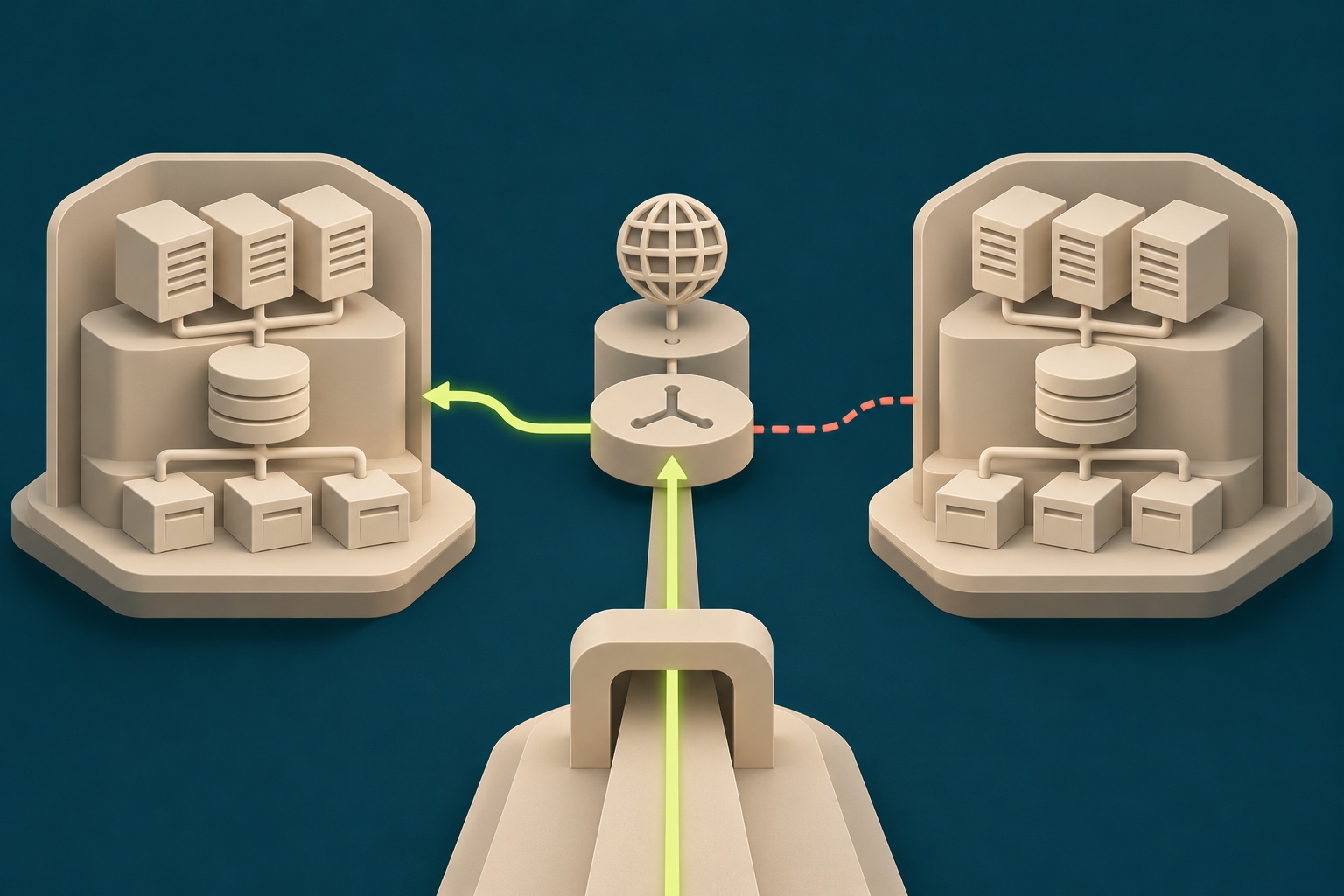
Linear’s Multi-Region Architecture: Regional Data, Global Identity, One Routing Layer
Linear describes replicating its full production deployment by region, then routing shared-domain requests through a global authentication service and proxy.
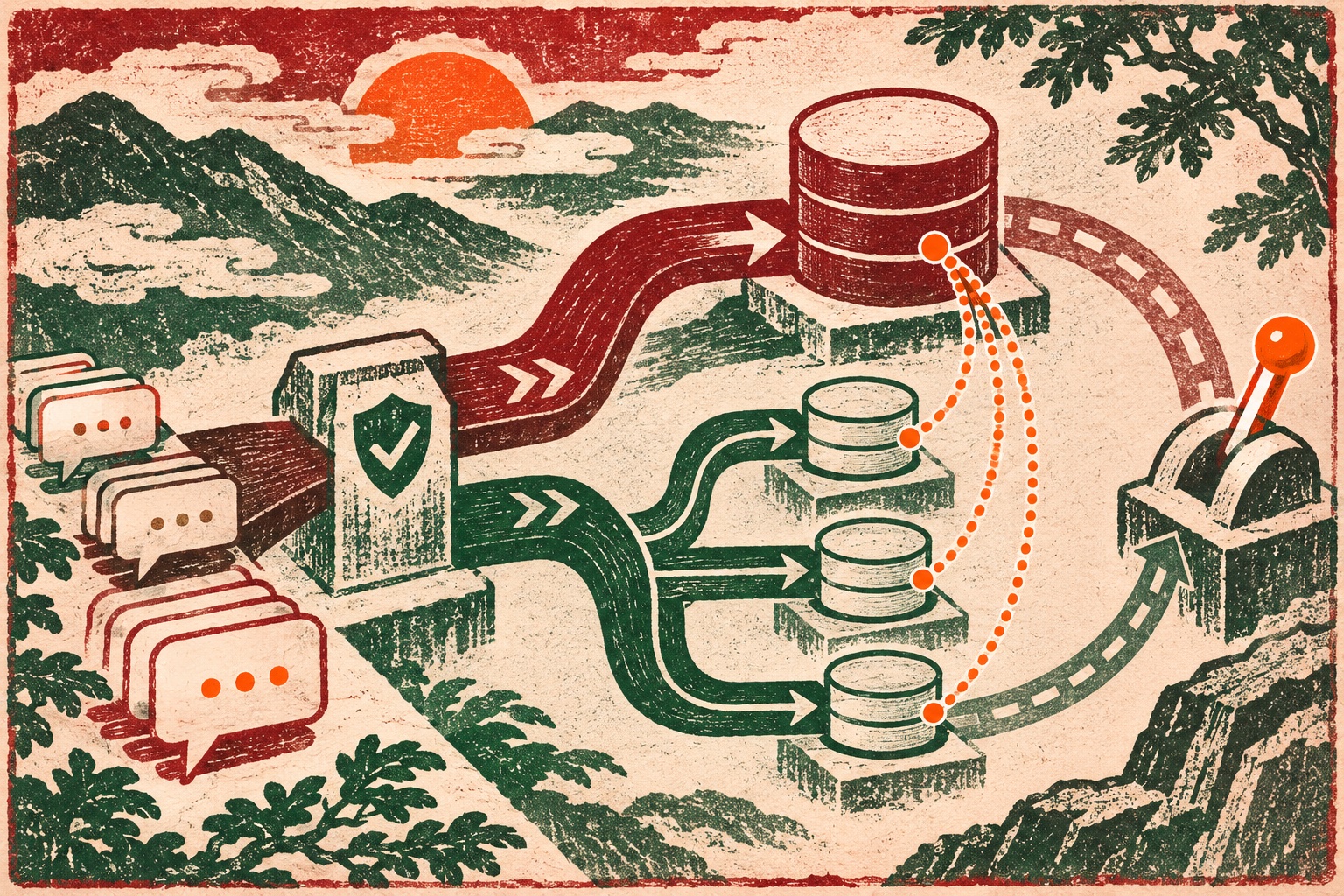
How Reddit Migrated Its Comments Backend from Python to Go Without Switching Blind
Reddit’s engineering team used tap-compare reads and isolated sister datastores to validate a high-write Go migration while Python remained the production path.

Shopify’s BFCM 2025 Readiness: Testing Beyond Forecast Load Before the Holiday
Shopify’s 2025 engineering account details full-journey load tests, regional failovers, chaos exercises, and fixes to analytics systems before BFCM.
/* Comments */
Comments are offline right now — we reconnect automatically, nothing is lost.