
topic: systems-architecture
author: Crashtech Editorial
published: Nov 15, 2026 · read: 5 min
---
Shopify’s BFCM 2025 Readiness: Testing Beyond Forecast Load Before the Holiday
Shopify’s 2025 engineering account details full-journey load tests, regional failovers, chaos exercises, and fixes to analytics systems before BFCM.
On this page

A holiday traffic plan is easy to approve on paper and hard to trust in production. The meaningful test is whether a real checkout journey survives when a region fails, a dependency slows down, or traffic arrives in bursts the forecast missed.
Shopify’s November 2025 engineering account describes its preparation for that year’s Black Friday Cyber Monday weekend. The team started in March, coordinated capacity and infrastructure plans, injected faults during Game Days, and ran five major scale tests through October. This is a 2025 case study, not a description of Shopify’s 2026 readiness plan. [1]
Treat readiness as work across the year
Shopify says the program connected three tracks: capacity planning, infrastructure roadmaps and risk assessments. Capacity estimates were based on historical traffic and merchant growth. Risk teams documented “what could go wrong” scenarios and turned them into Game Day inputs. The engineering roadmap then incorporated bottlenecks and operational findings before the holiday window. [1]
That sequencing matters. A release freeze near the event may limit change risk, but it cannot create months of evidence about a new architecture. Shopify says migrations and architectural changes were completed well ahead of BFCM so the team could test them rather than treating the event itself as a deadline. [1]
Its Game Days simulated production failures on critical journeys such as checkout, payments, order creation and fulfillment. The team describes injecting network faults and latency, randomizing browsing paths and invalidating caches to create realistic load patterns. These exercises tested response procedures and monitoring as much as service capacity. Findings fed into a Resiliency Matrix containing failure scenarios, recovery procedures, playbooks and on-call coverage. [1]
Test behavior that looks like a buyer
Shopify says its load tool Genghis runs scripted workflows resembling browsing, cart additions and checkout. It gradually ramps traffic on production infrastructure from three Google Cloud regions—us-central, us-east and europe-west4—and adds flash-sale bursts on top of baseline traffic. Toxiproxy is used to simulate network failures and partitions. The team monitors the runs and can abort if systems degrade. [1]
This is more useful than a single synthetic request-per-second number. A cart and checkout traverse more systems than a static page request, so a test that only hits one endpoint may miss pressure on inventory, payment, order creation or analytics. The design lesson is to test business journeys end to end while retaining enough observability to identify which service or dependency becomes the constraint.
Shopify’s post says its 2025 tests aimed at 150% of the prior year’s BFCM load. It reports five large scale tests from April through October. The fourth reached 146 million requests per minute and more than 80,000 checkouts per minute; a later test exercised a 200-million-requests-per-minute p99 target. These are the company’s test figures and forecast assumptions, not reported 2025 event traffic. [1]
New systems need their own failure rehearsal
The article identifies an asymmetry in Shopify’s analytics platform: its ETL pipelines had experienced BFCM 2024, but a new API layer had launched after the peak season and had never faced holiday traffic. The team therefore ran Game Days for database latency and cache failures, tested API behavior under load, and reported finding Kafka partition, memory and timeout issues. It also changed how requests routed to another region to relieve pressure. [1]
That example addresses a common planning trap. Historical traffic data cannot predict a system that did not yet exist. When an API or persistence layer is new, its readiness depends more on targeted load and failure experiments than on extrapolating from a predecessor.
Capacity is only one success condition
The source describes regional failovers, cross-system simulations and coordination with cloud and CDN providers. A successful test must establish more than whether the platform stayed up: did the team notice the fault, did recovery follow the runbook, did traffic rebalance safely, and could systems return to normal after the event? Shopify reports finding delays during region rebalancing and adding authenticated checkout flows after anonymous browsing tests missed rate-limit paths. [1]
For teams planning seasonal peaks, the transferable method is a loop: forecast, inject realistic failures, exercise complete journeys, inspect bottlenecks, fix them, and retest. A service-mesh migration case study shows another side of this work: the consistency of traffic controls affects how safely a platform contains failures. Keep metrics tied to the year and test stage they describe; readiness numbers are not live event outcomes.
Scale tests revealed coordination problems
Shopify distinguishes Game Days from its full scale tests. Game Days inject controlled faults to test a critical journey and incident response; scale tests run the platform together at forecast traffic to expose interactions that isolated service tests may miss. The 2025 program used five large tests between April and October, with the first two checking the prior year’s baseline and later tests ramping toward the 2025 projection. [1]
That distinction is helpful for any organization with a seasonal peak. A service can pass its own load test and still fail when a downstream dependency, regional route or queue saturates under concurrent demand. Full-platform tests require coordination across teams, providers and monitoring, but they can reveal issues that a single service’s benchmark cannot.
The team also changed tests as it learned. Shopify says it added authenticated checkout after discovering that anonymous browsing did not exercise the same rate limits. It tested regional evacuations and found a delay when bringing regions back online during rebalancing. Those findings show why readiness plans should include both expected paths and the assumptions behind each test. [1]
Separate forecasts from evidence
A forecast gives capacity teams a target; a test shows how a particular system behaved under a particular traffic shape. Neither alone proves how the eventual event will behave. Shopify reports 2024 traffic totals and 2025 test targets in the same post, so it is important to keep those categories separate. The reported 2024 totals are historical event observations; the 150% target and 200M-RPM test are preparation figures. [1]
The operationally useful practice is to keep a record of each test’s workload, bottleneck, mitigation and retest result. When the assumptions change—new APIs, a different checkout flow, or a new region—the evidence should change with them. That is how peak readiness becomes a continuous engineering program rather than an annual checklist.
Frequently asked questions
What did Shopify test ahead of BFCM 2025?
Shopify describes capacity planning, cross-system Game Days, scripted load tests, five platform scale tests and regional failover exercises from spring through October 2025.
What is Genghis in Shopify’s readiness program?
Shopify describes Genghis as a load-testing tool that runs scripted workflows such as browsing, cart additions and checkout, with traffic generated from three Google Cloud regions.
Were Shopify’s 2025 scale-test results the same as live BFCM traffic?
No. The post reports test traffic and forecast assumptions before the event. Its results should not be presented as a report of what happened during BFCM 2025 or as a 2026 forecast.
Sources & further reading
Keep reading
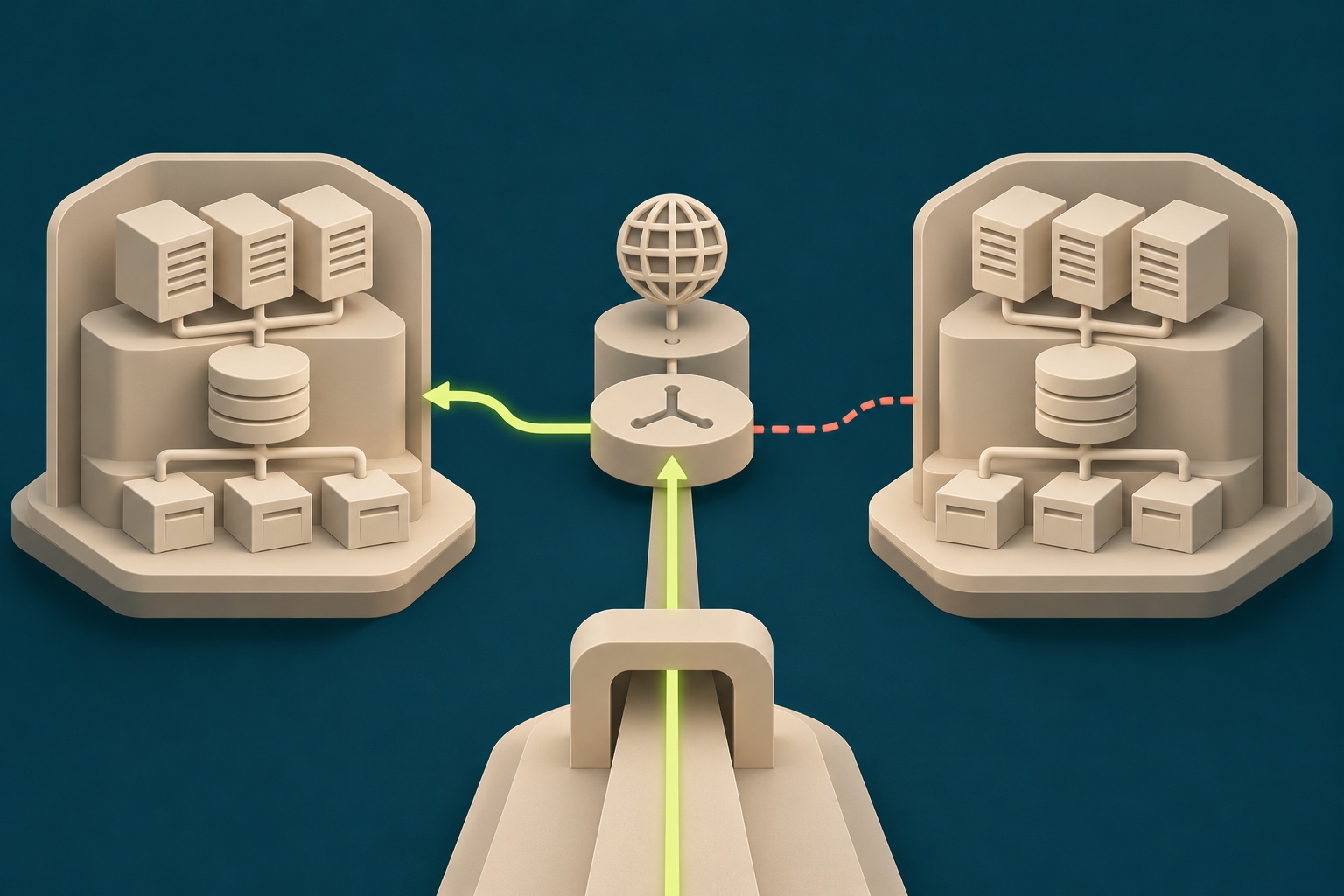
Linear’s Multi-Region Architecture: Regional Data, Global Identity, One Routing Layer
Linear describes replicating its full production deployment by region, then routing shared-domain requests through a global authentication service and proxy.
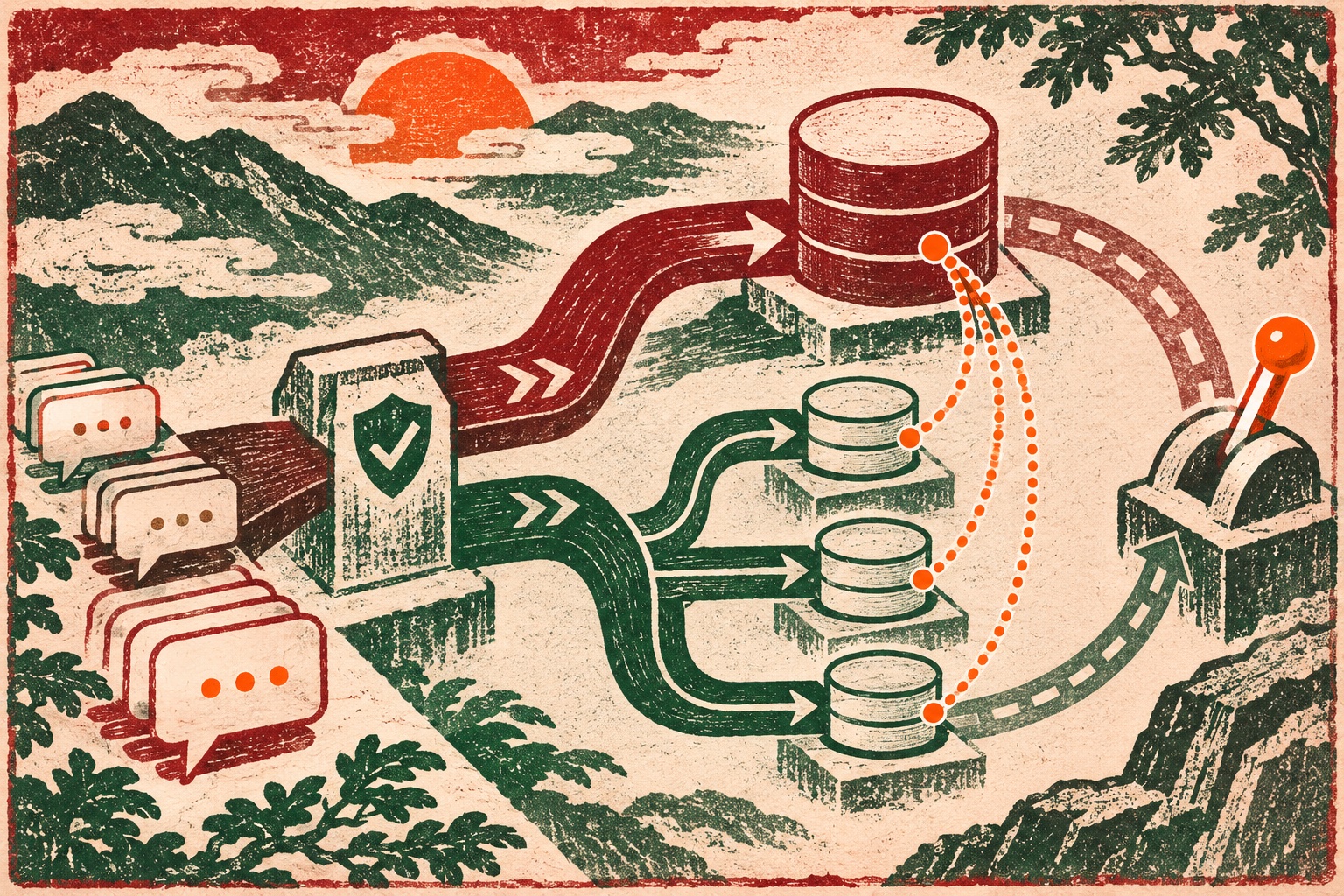
How Reddit Migrated Its Comments Backend from Python to Go Without Switching Blind
Reddit’s engineering team used tap-compare reads and isolated sister datastores to validate a high-write Go migration while Python remained the production path.
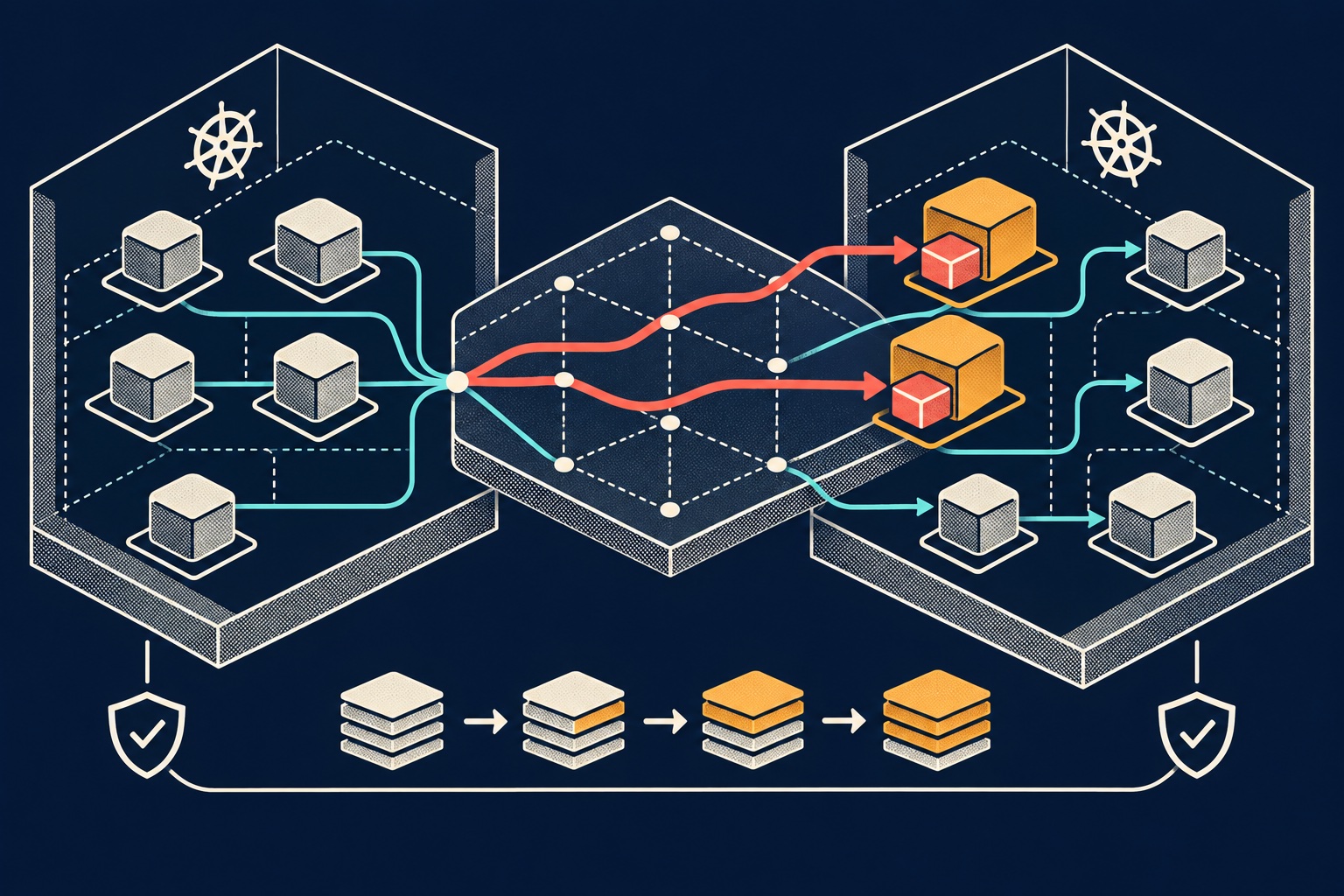
DoorDash’s 80M-RPS Mesh: Lessons from a Thousand-Service Migration
DoorDash’s 2025 engineering account explains how a canary rollout of Envoy sidecars addressed fragmented service routing and retry-driven failure risk.
/* Comments */
Comments are offline right now — we reconnect automatically, nothing is lost.