The Meeting Ends. The Commitments Stay: Inside Flocci Donna's Memory
Donna brings unresolved commitments and earlier questions into later meeting analysis, giving recurring conversations a memory with context and evidence.
On this page
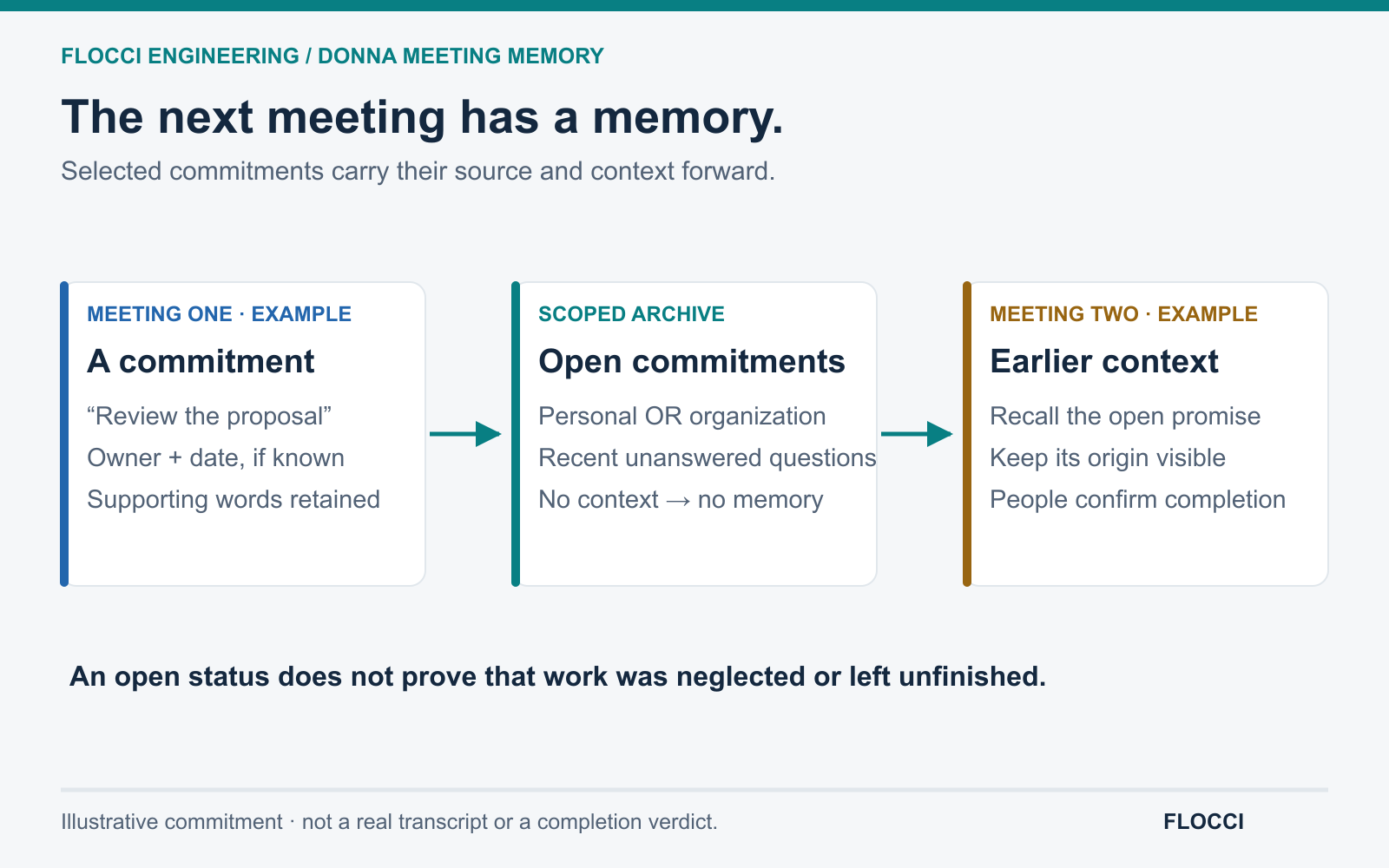
Illustrative commitment · not a real transcript or a completion verdict. · Open the full-size diagram
The most expensive sentence in a recurring meeting
“What did we decide last time?”
The answer may be somewhere in a transcript, a chat message or a document that nobody has opened since the previous call. Finding it interrupts the conversation. Failing to find it lets the same uncertainty return.
Flocci Donna approaches this problem through meeting memory. Its reviewed implementation carries open commitments and recent unanswered questions into analysis of a later meeting.
The earlier conversation becomes context the report can work with.
Remember the unfinished work
An archive preserves what was said. A working memory makes selected parts of that archive relevant to what is happening now.
Donna’s memory builder retrieves unresolved commitments and recent questions. A commitment can carry its owner, action, deadline, originating meeting date and supporting words when those are available. The context also distinguishes a soft deadline from a firmer one.
Imagine a team promising to review a proposal in one meeting, then discussing the same proposal later. If the commitment remains open in Donna’s archive, the later analysis has evidence of that earlier promise.
That is a hypothetical example of the mechanism, not a customer outcome or proof that the task was neglected. A stored open status can be incomplete; completion may have happened elsewhere.
Memory belongs to a context
A personal meeting should not casually inherit a company’s entire archive. An organization meeting should not depend on one participant’s private history.
Donna’s reviewed path selects memory using the current meeting’s context. Personal meetings draw from the owner’s personal archive. Organization meetings draw from the associated organization archive. Runs without an attributable context receive no cross-meeting memory.
This is a subtle but important product decision. More memory is not automatically more useful. The right memory is relevant, appropriately scoped and understandable to the people receiving the analysis.
Extract facts before changing the lens
Donna separates fact extraction from report synthesis. The implementation supports different lenses for different kinds of conversation, including technical sessions, delivery ceremonies, workshops and business discussions.
The same meeting can therefore support different questions. A delivery perspective may emphasize commitments and impediments. An architectural perspective may emphasize decisions and unresolved technical choices.
Where facts and transcripts have been retained, reanalysis can use the existing record. The lens changes the interpretation and emphasis; it should not create a new history of the meeting.
Keep the record useful after the report
The implementation also includes sharing and export paths, with revocable report links and reports associated with their analysis lens. That makes the output something a team can revisit and discuss rather than a notification that disappears into an inbox.
These capabilities still depend on the relevant release, configured integrations and available meeting evidence. Recording and analysis are fallible. A useful meeting assistant should support review rather than turn uncertain interpretation into unquestionable authority.
A team deserves continuity
Donna’s strongest idea is that the next meeting should begin with more context than the last one ended with.
Unanswered questions can remain visible. Earlier commitments can be recalled. Different readers can examine the same record through an appropriate lens. The people in the room remain responsible for the decisions and for confirming what actually happened afterward.
Explore Donna and continue with how Flocci preserves work across interfaces.
Frequently asked questions
What does Donna remember across meetings?
Donna's reviewed memory path retrieves open commitments and recent unanswered questions from the archive associated with the current meeting. Personal meetings use the personal context, while organization meetings use the organization context. This supports continuity in analysis; it does not independently verify whether someone completed a commitment.
Can the same Donna meeting be analyzed through different lenses?
Donna's implementation separates extracted meeting facts from report synthesis and provides multiple analysis lenses. Where stored facts and transcripts are available, a meeting can be reanalyzed through a different lens. A new interpretation should remain grounded in the same underlying record rather than inventing new events.
Sources & further reading
Keep reading
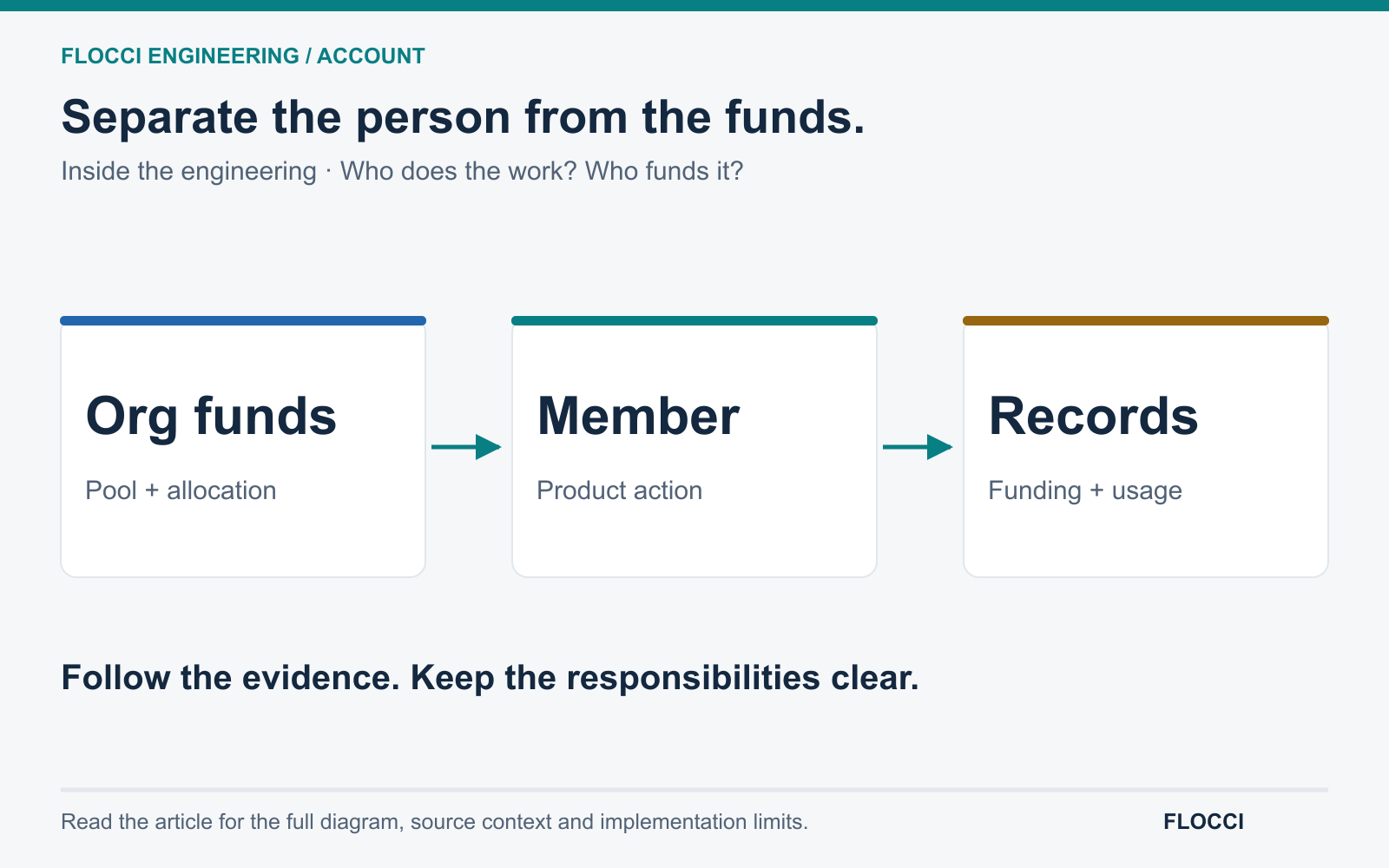
Freedom to Use AI, Control Over Its Cost: Inside Flocci Account
How Flocci Account and shared payment capabilities connect personal credits, organization funding, allocations and accountable spending across products.
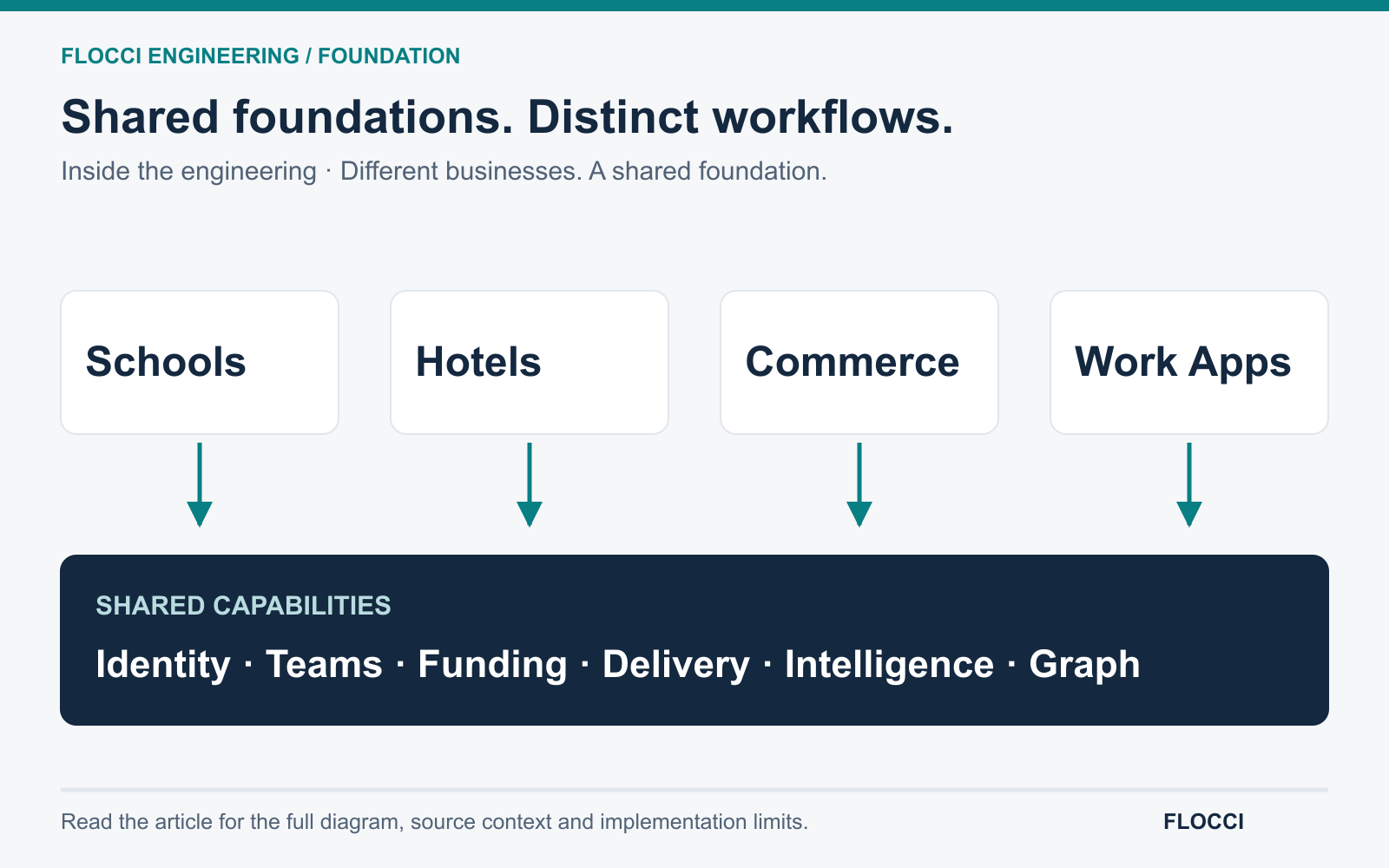
Inside Flocci: The Shared Foundation Beneath Very Different Businesses
How Flocci connects specialized business products through reusable identity, spending, delivery and intelligence while preserving distinct workflows.
Flocci Graph: When Business Applications Begin to Remember Each Other
Inside Flocci Graph's approach to connected context: recorded activity, evidence-bearing suggestions and useful next steps across business applications.
/* Comments */
Comments are offline right now — we reconnect automatically, nothing is lost.