
Why Agent-Scale Git Storage Needs More Than Faster Pushes
GitHub's new storage architecture targets concurrent writes to shared repositories by separating reference coordination from object storage.
On this page
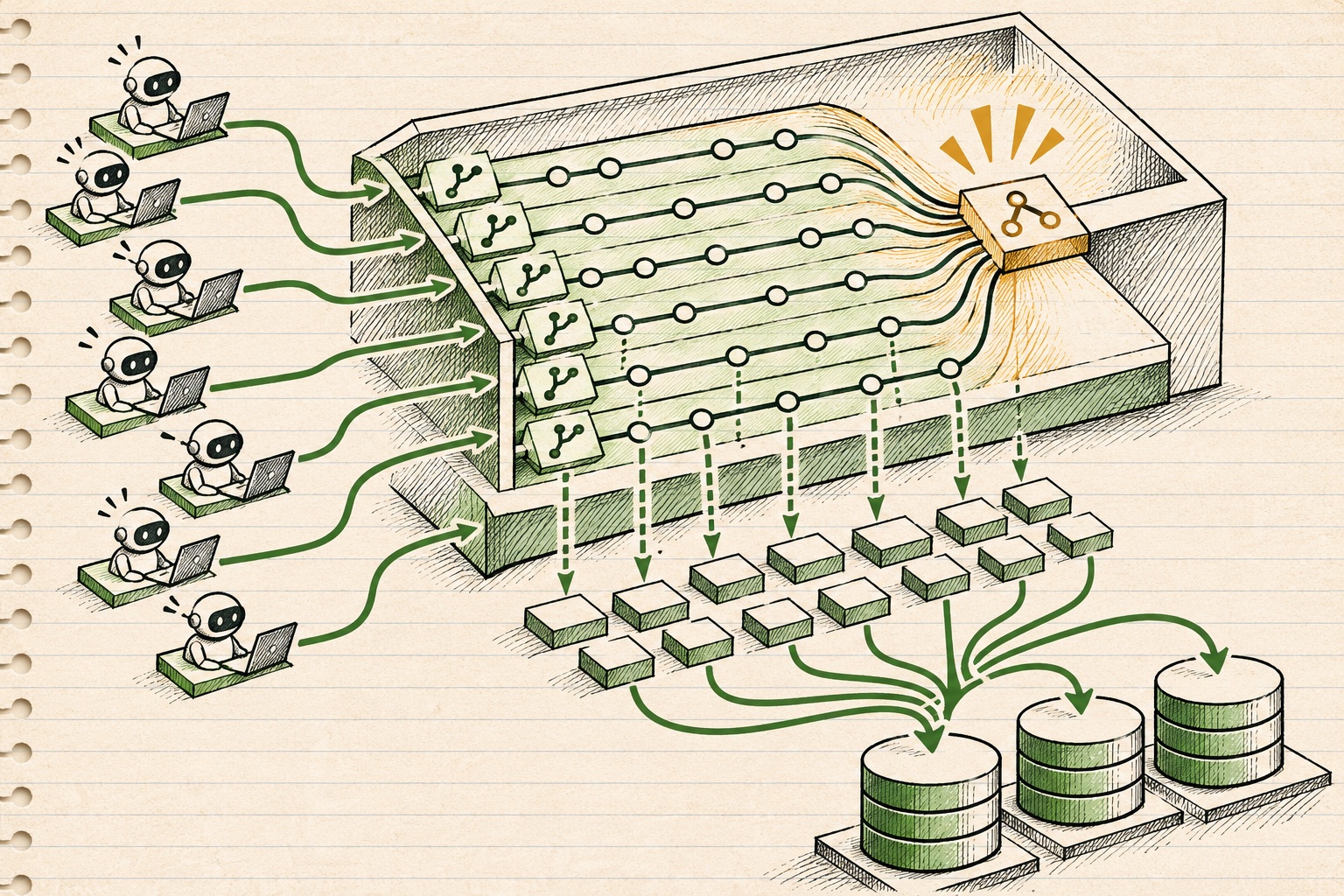
Agent workflows change the shape of repository traffic: many workers can create commits and attempt updates to one shared project at once. GitHub’s November 5 engineering post describes a new storage architecture intended to let thousands of agents push to a single repository concurrently. The architectural pressure point is coordinating mutable references while storing and serving immutable Git objects. [1]
Git has two different kinds of work
A Git commit points to a tree of content-addressed objects; branches and tags are references that name selected commits. Object data is naturally immutable once written. A branch reference is mutable: a push asks the server to move it from one commit to another, subject to rules and concurrent updates. The Git object model makes this distinction visible, even if a hosted service hides the storage machinery from most users. [2]
That difference matters at scale. A system can spread object reads and writes across storage while still needing a reliable way to serialize or reconcile changes to the same reference. Pushing many unrelated branches and repeatedly racing updates to one hot branch are different traffic patterns. The latter makes coordination—not raw bytes—the critical path.
Scale storage without pretending conflicts disappear
GitHub’s post frames the design around agent-scale concurrency and a repository as a shared destination. The storage architecture can improve the service’s ability to accept and serve repository data, but it cannot decide whether two agents made compatible edits. Fast transport doesn’t resolve a semantic conflict in package.json, a migration, or a public API. Those remain workflow and review problems. [1]
A robust client still needs to handle rejected non-fast-forward updates, refresh the target branch, rebase or merge deliberately, and surface changed files for a human or automated reviewer. Server-side protections must also preserve repository rules and an auditable history under concurrent writes.
What to measure in an agent fleet
Teams building repository hosts or agent orchestration should separate measurements for object upload, reference update latency, lock or quorum contention, retry rates, and time spent resolving rejected pushes. Track hot references separately from total repository throughput. A high aggregate write rate can conceal a single branch that repeatedly serializes every worker.
For application teams, the takeaway is modest but useful: isolate agent work on branches, limit unnecessary shared-branch writes, and keep merge validation as a first-class stage. Infrastructure that absorbs more concurrent pushes makes the system more capable; it does not make concurrent code changes automatically correct. [1]
Frequently asked questions
Why do many agents stress Git hosting differently?
Concurrent agents can produce many pushes and reference updates to the same repository, making coordination and shared write hotspots more significant.
Can Git object storage be scaled independently from refs?
GitHub's engineering post describes an architecture that separates object storage concerns from per-reference coordination to scale reads and writes differently.
Does this architecture make concurrent changes conflict-free?
No. Storage throughput does not remove semantic merge conflicts or the need to review and reconcile changes to the same files.
Sources & further reading
Keep reading

Accessibility Work Improves When Open Source Shares the Tools
GitHub’s new accessibility projects show how shared tools and contribution paths can sustain open-source accessibility work.
DNS Can Be Healthy While New Records Are Stuck
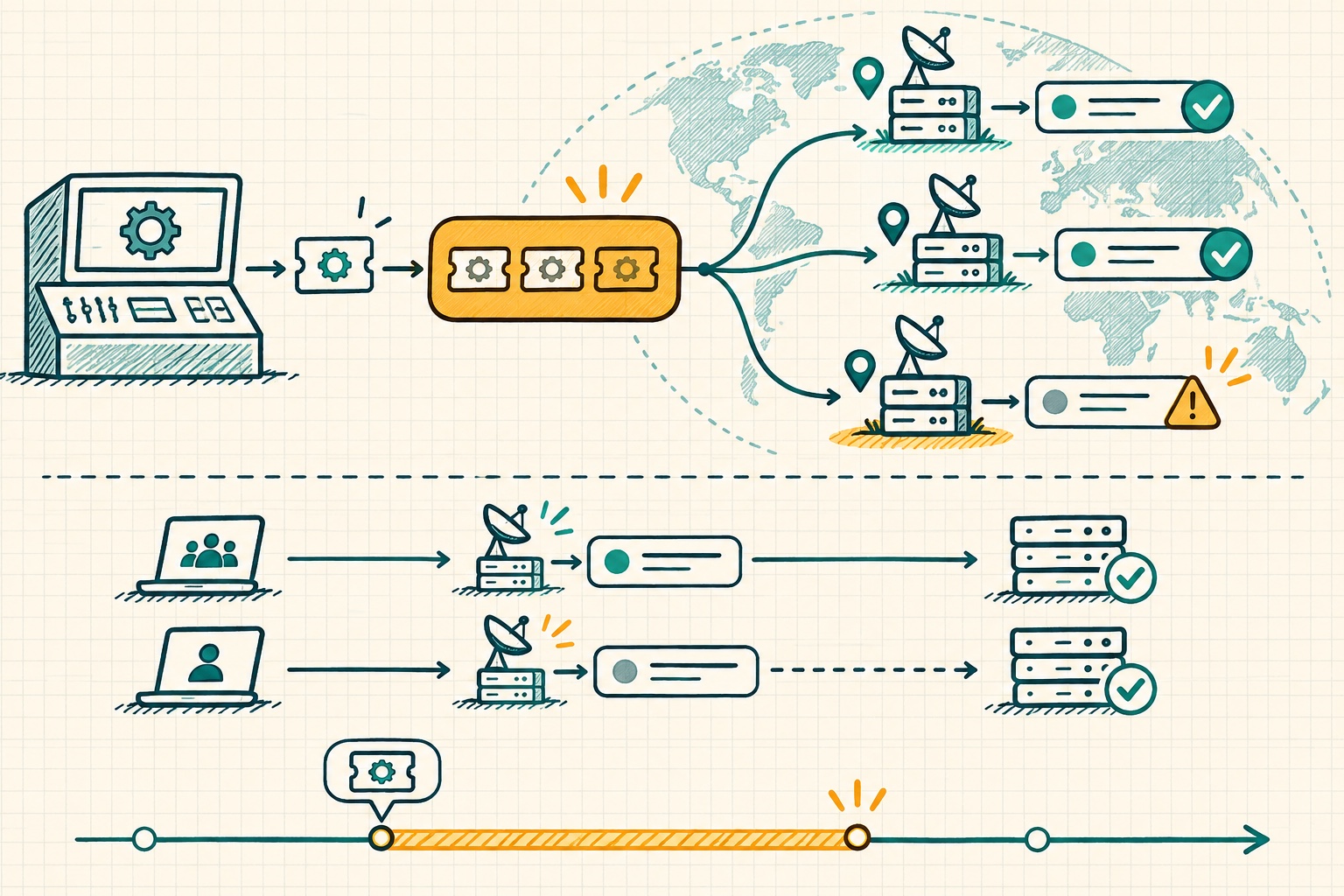
Cloudflare's production DNS probes show why service health checks miss delayed record publication and how release gates can measure propagation.
GitHub Desktop Can Keep Multiple Accounts on One Host
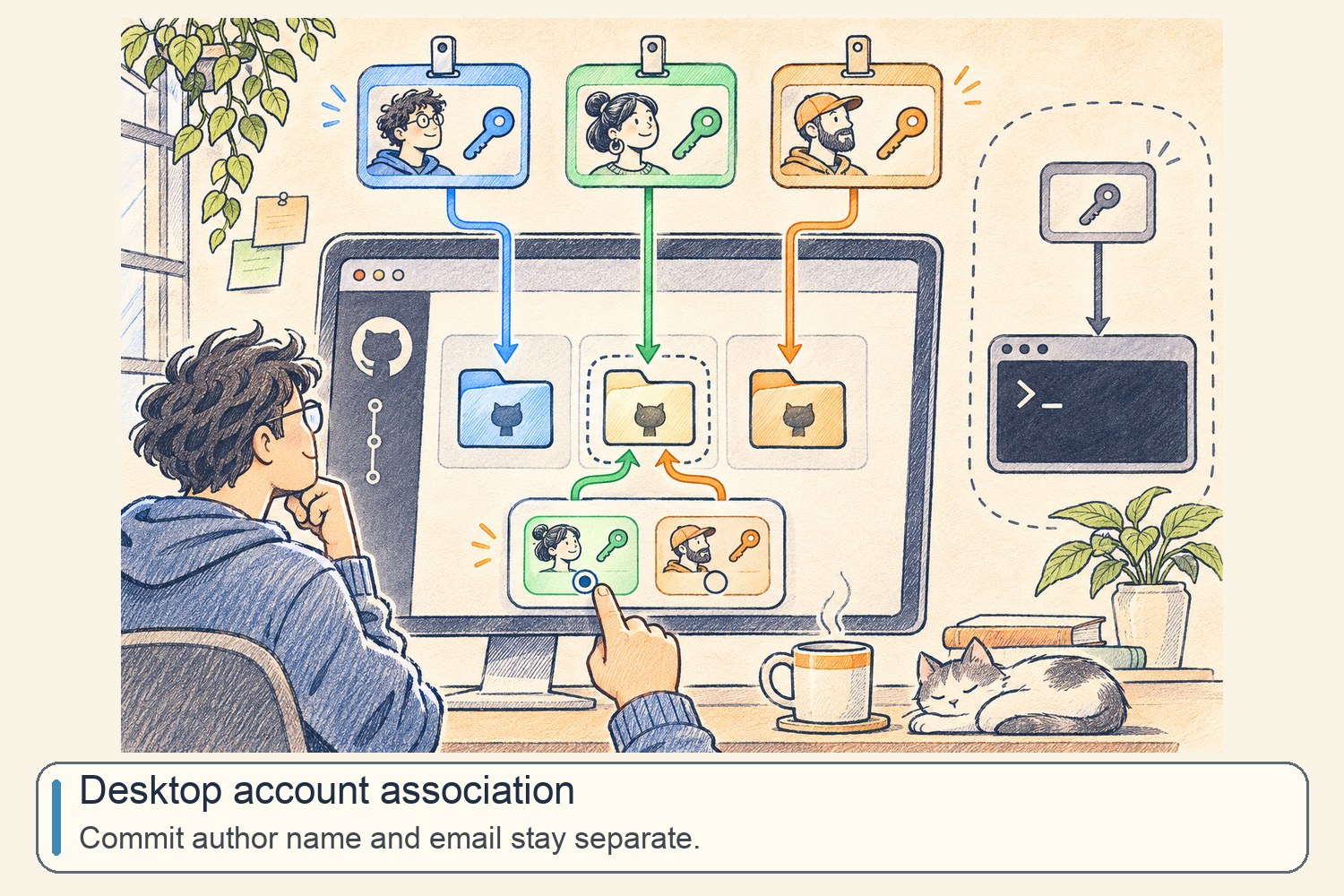
GitHub Desktop 3.7 assigns an account to each repository. See how selection works, what happens with shared repositories and which identity stays separate.
/* Comments */
Comments are offline right now — we reconnect automatically, nothing is lost.