
AI-Recreated Artists’ Studios Need Labels as Carefully as the Archives
Google Arts & Culture reconstructs lost sculptors’ studios from archival clues. The key question: where does evidence end and interpretation begin?
On this page
A room can feel more convincing than a footnote. That is the promise and the hazard of using generative imagery to reconstruct an artist’s lost studio: viewers can imagine a working life that photographs never recorded, but a plausible desk, window or plaster cast may also look like proof. Google Arts & Culture’s new Visionaries project is an opportunity to ask how cultural institutions can make that distinction visible.
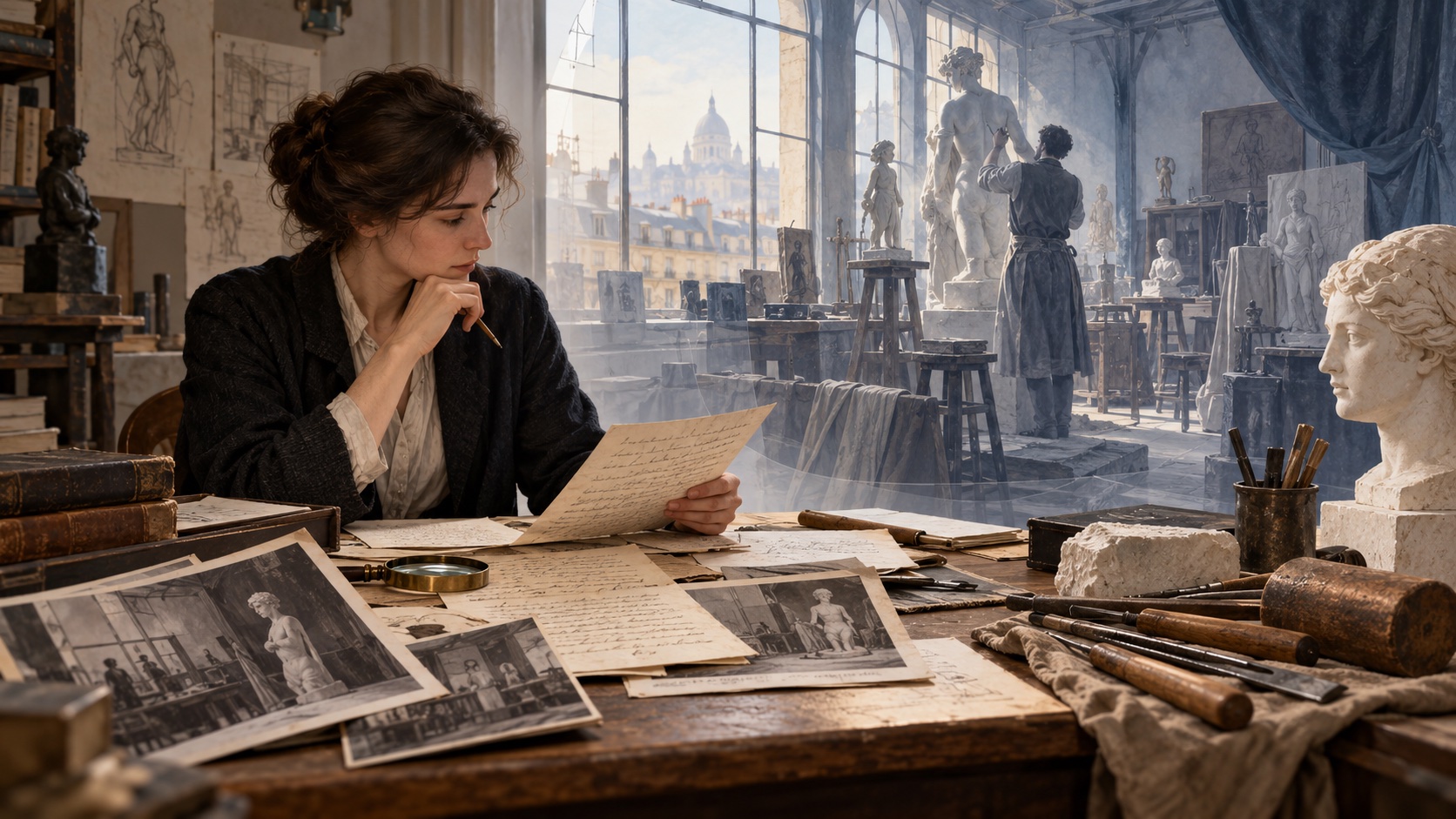
Reconstructing what the archive did not preserve
Google says the Visionaries exhibition and short documentary celebrate 18 women sculptors whose work was often obscured in accounts of art history. For the film, three art historians gathered letters, journals and photographic portraits. Because few photographs of the artists’ actual studios survive, a creative technologist used generative image and editing models to create 3D models from archival photographs and animate camera paths. The post names Camille Claudel, Jane Poupelet and Nancy Elizabeth Prophet among the artists represented. [1]
That method can give a viewer a spatial encounter with historical clues that normally sit flat on a page. But the studio interiors necessarily include choices beyond the surviving record: how large a room was, what lay outside a window, where a tool sat, or how objects related in depth. A reconstruction can be historically informed without being historically observed.
The exhibition itself is at Paris’s Petit Palais, which presents Visionnaires as an exhibition centered on Prune Nourry’s sculptural portraits. The film and generated sequences form one interpretive layer around that work, not a substitute for the archival material or the artists’ surviving sculpture. [2]
Give each image a provenance label
A useful label for a generated historical scene should answer at least three questions: which source materials informed it; which elements are documented versus inferred; and which parts are artistic visualization. “AI generated” alone says little about the evidence. A viewer needs to know whether an image was based on a photograph of the room, a written description, a reconstructed 3D model, or an imaginative bridge between sparse fragments.
The London Charter’s documentation principle says that a computer-based heritage visualization should identify what it represents, the degree of factual uncertainty, its research sources and the interpretive decisions behind it. That guidance is directly relevant to reconstructed scenes, even though it predates current generative models. UNESCO’s AI ethics recommendation likewise sets broad expectations around transparency, human oversight and respect for cultural contexts. Neither document is a specific certification of Google’s film; they offer principles institutions can apply when presenting generated reconstructions. [3] [4]
The same provenance should travel with the asset when it is clipped for social media, embedded in a classroom slide or reused in a later exhibition. Captions are often separated from long-form essays. A short visible marker—“interpretive reconstruction based on archival research; not a surviving studio photograph”—can prevent the most consequential misunderstanding.
Evocation can restore attention, not evidence
The project’s strongest argument is ethical as much as technical: archives are incomplete, and absence can reflect who was allowed to train, exhibit, be photographed and enter the historical record. A reconstruction may help an audience picture the constraints and labor that conventional archives leave out. Google also describes a sequence that digitally fades women from an archival photograph to illustrate erasure; that is an editorial visualization layered onto a source image, and viewers should be told where that transformation begins. [1]
The danger is that an emotionally coherent visualization can make uncertainty disappear. When a scene looks like a photograph, audiences may remember the room as fact even if the underlying sources are fragmentary. The more polished the rendering, the more important the explanation of its evidentiary limits.
A practical standard for cultural AI
Museums considering similar work can keep the benefits while protecting trust: publish a source list; identify the historians and creative team; mark the reconstructed sequences in the film itself; preserve the archival originals beside the generated view; and state which details are inferred. Where possible, let curators explain competing interpretations instead of presenting one generated image as the definitive room.
For audiences, the right response is neither to treat every generated image as false nor to accept it as recovered history. Ask what evidence supports the visible detail and how the institution distinguishes documentation from reconstruction. Used carefully, generative imagery can make an incomplete archive easier to approach. Its job is to invite historical curiosity, not to quietly fill every blank with certainty.
Frequently asked questions
How were the studios in Google's Visionaries project reconstructed?
Google says historians gathered letters, journals, and photographic portraits, then a creative technologist used generative image models and a custom Gemini-based tool to create 3D models and camera paths. The project notes that few photographs of the sculptors' actual workspaces survive.
Are AI-generated studio scenes historical photographs?
No. They are interpretive reconstructions based on archival research. They can help audiences imagine a lost space, but the generated room itself is not documentary evidence of how a particular studio looked.
Sources & further reading
Keep reading
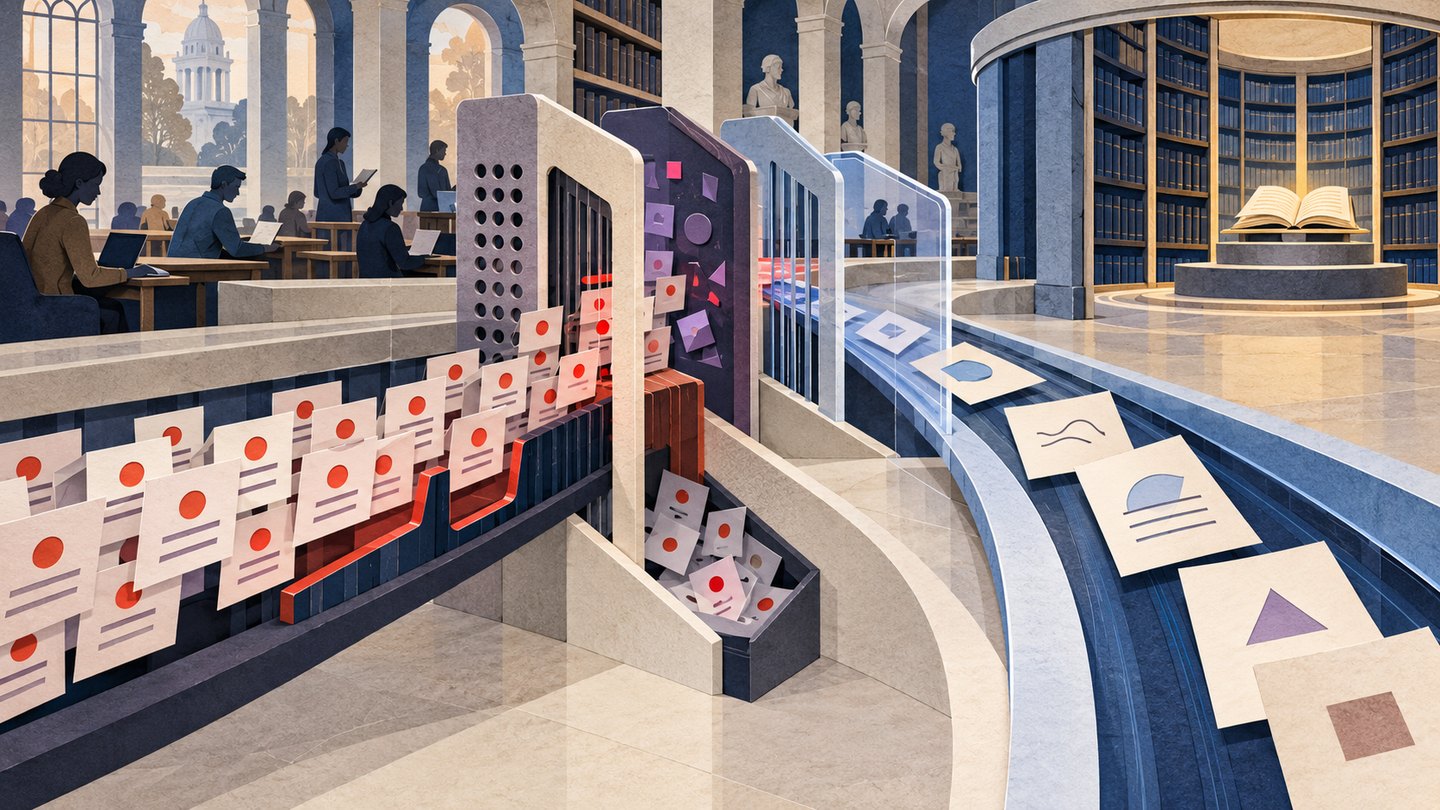
Anthropic’s Distillation Defenses Show Why Extraction Is a Lifecycle Problem
Anthropic describes controls against model-output extraction, from reasoning access to account networks, while acknowledging tradeoffs and adaptive attackers.
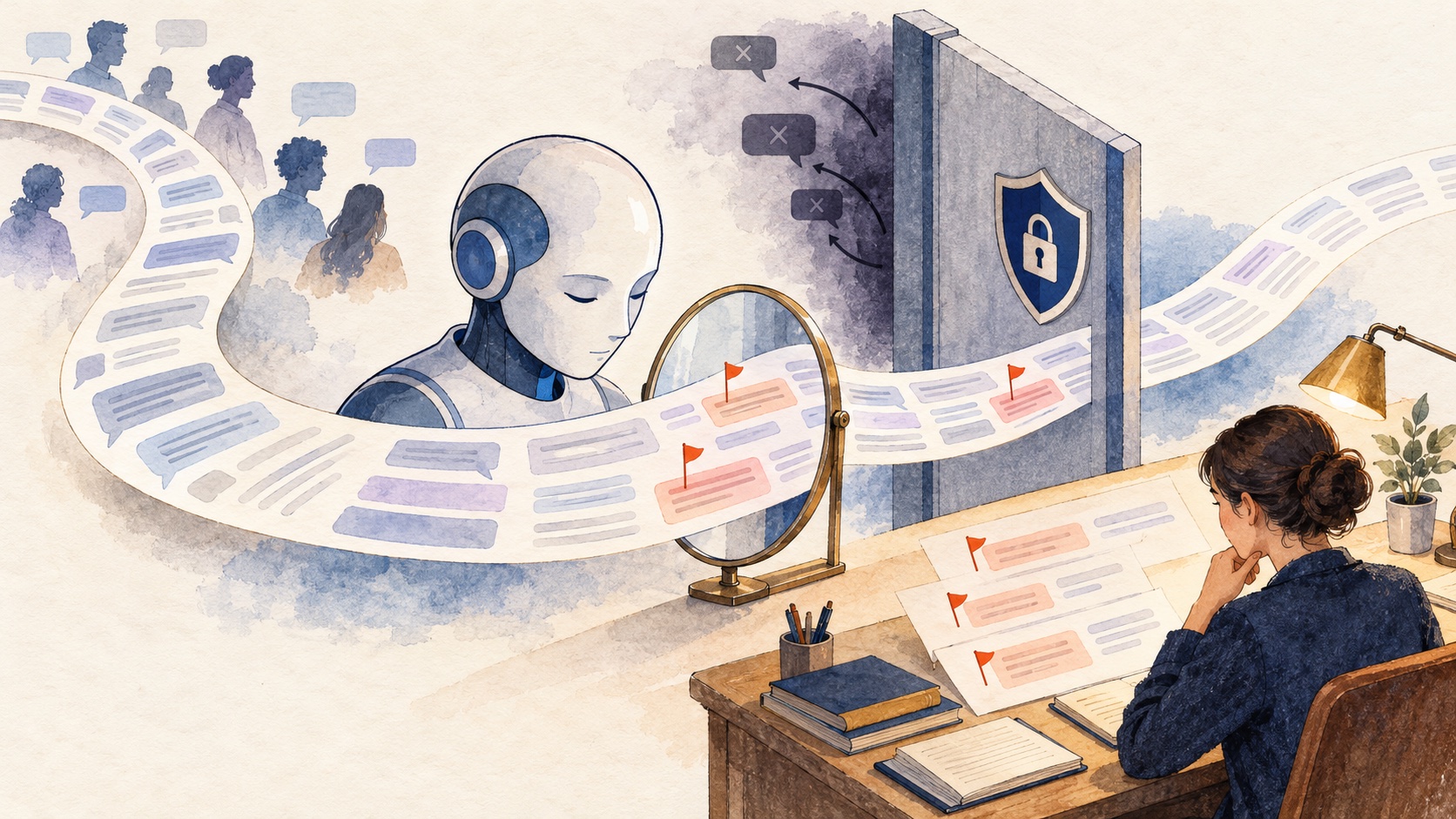
Anthropic’s Self-Assessment Monitor Adds Coverage, Not a Safety Guarantee
Anthropic says Claude can flag potentially harmful conversations using its existing context. The approach is cheap to run, but remains a triage layer.
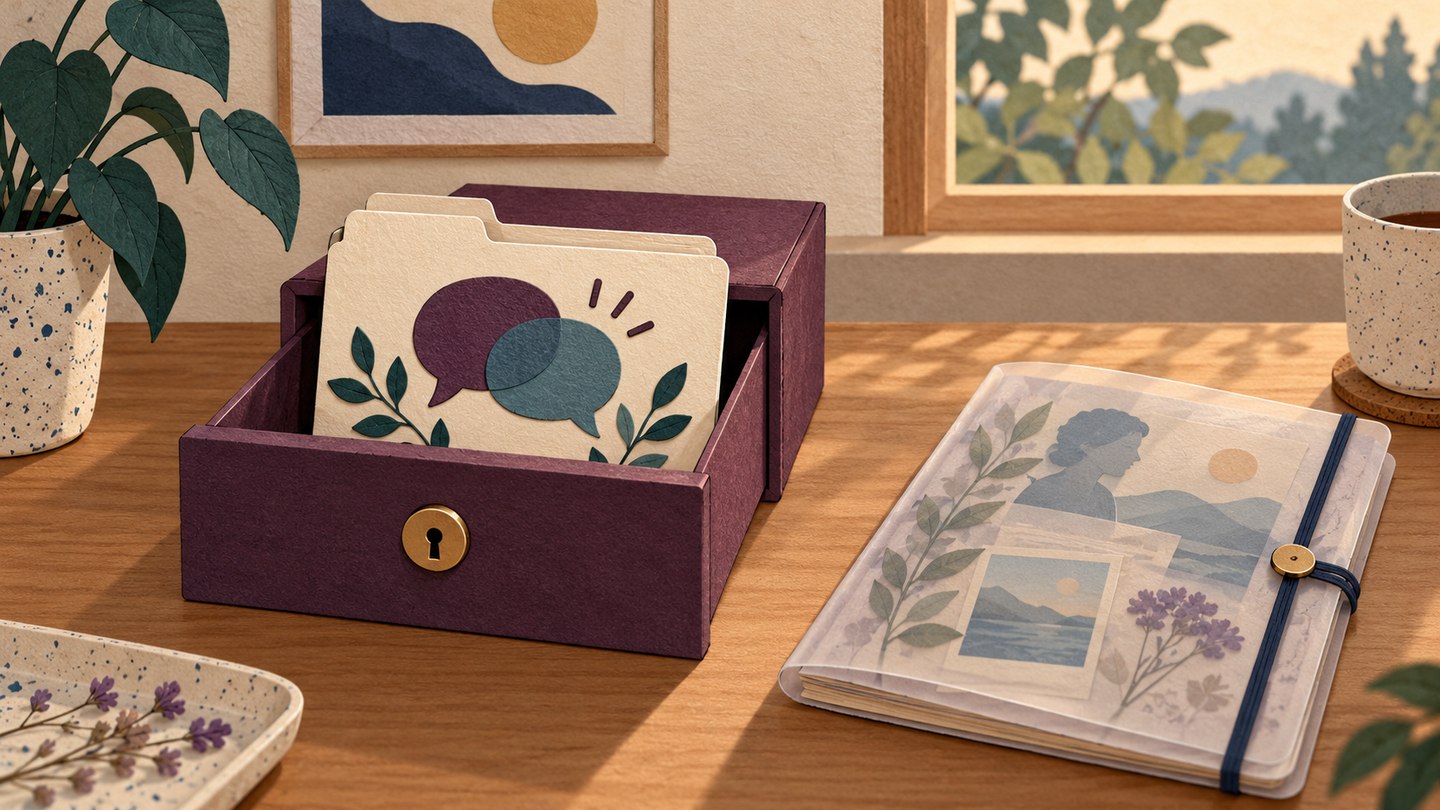
ChatGPT Locked Chats Hide a Conversation. They Do Not Turn It into a Vault
OpenAI locked chats use a PIN or device authentication to hide saved conversations. Retention, training and workspace rules remain in effect.
/* Comments */
Comments are offline right now — we reconnect automatically, nothing is lost.