
Kubernetes 1.37.3 Narrows `kubectl proxy` and Kubelet ID Ranges
The 1.37.3 patch adds a node run path to kubectl proxy’s default filter and rejects overflowing kubelet subordinate ID ranges at startup.
On this page
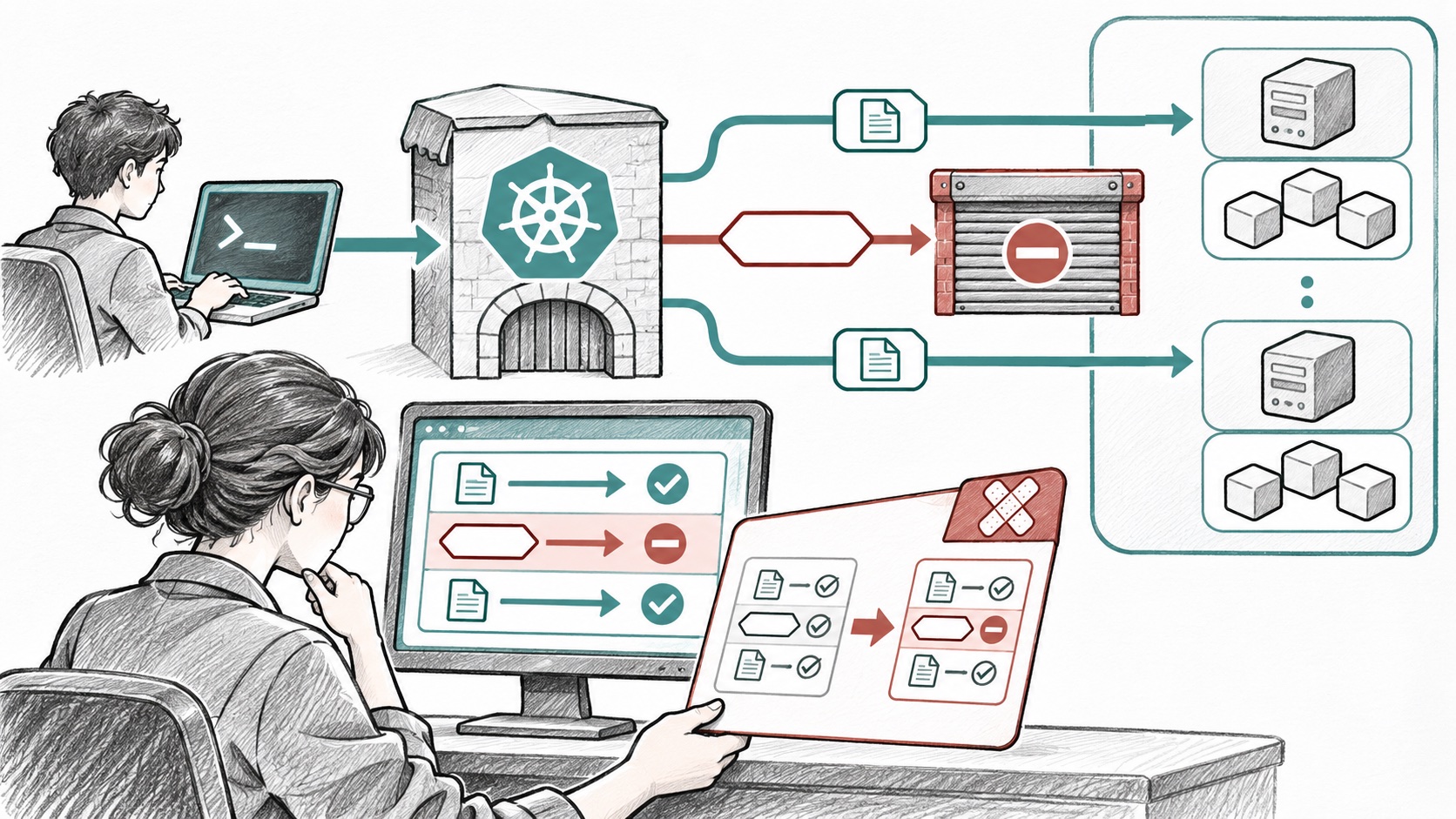
Kubernetes 1.37.3 contains a small proxy-filter change with a clear security consequence: the default kubectl proxy filter now rejects the node run API path. The changelog says the filter previously needed an added path to block; its example is a request shaped like /api/v1/nodes/<node>/proxy/run/<namespace>/<pod>/<container>?cmd=id. That is a specific default-path-filter update, not a claim that every Kubernetes proxy or every cluster configuration was vulnerable in the same way. [1] [2]
For operators, the immediate check is whether automation or a local tool depends on proxying requests to node run paths. The new default is meant to reject that route. If a team has customized proxy filtering, compare its configuration with the updated default rather than assuming the patch applies to a custom allowlist. The release is a patch update; plan it through the ordinary cluster upgrade path and validate both permitted API access and blocked proxy paths in a controlled environment.
One path among other upgrade notes
The same 1.37.3 changelog has a separate urgent note for kubelet user-namespace ID mappings. The kubelet now refuses to start when its configured subordinate UID or GID range in /etc/subuid or /etc/subgid ends at or beyond 4294967295. The project’s example is kubelet:65536:4294901760; before upgrading, that configuration must reduce its count by at least one idsPerPod block, 65,536 by default. This is a startup compatibility issue, not a warning that all subordinate ID mappings need to change. [2]
That distinction matters during rollout. A cluster can have both a security-filter change affecting a proxy path and a node-startup prerequisite affecting a narrow user-namespace configuration. Treat them as separate checks: audit how teams use kubectl proxy, then inspect node configuration for subordinate ID ranges at the upper edge of the 32-bit space. A generic “upgrade succeeded on a test cluster” does not prove either case was covered if the test cluster does not exercise the route or configuration.
The upstream release tag identifies v1.37.3 as released on November 25, and the Kubernetes release schedule identifies the branch as actively supported. The release page links the full changelog and binary downloads. This article focuses on the two operator-facing changes above; consult the complete version-specific changelog for the full list of fixes and dependency changes. [1] [2]
A disciplined patch run can add two checks to the existing upgrade review: confirm the default proxy blocks the node run path, and scan kubelet subordinate-ID ranges for overflow before restarting nodes. For context on how control-plane APIs expose delegated operations, see our Kubernetes apply and running-pod guide and API gateway access boundaries.
Frequently asked questions
What did Kubernetes 1.37.3 change in kubectl proxy?
The patch adds the node run API path to kubectl proxy’s default path filter, closing a route that could proxy a command-running request through a node endpoint.
Can a kubelet subordinate ID range block an upgrade to 1.37.3?
The 1.37.3 urgent note says kubelet refuses to start when the configured subordinate range ends at or beyond 4294967295; affected nodes must reduce the range before upgrading.
Sources & further reading
Keep reading

Google’s Workspace CLI Is GA, but Its Agent Commands Can Change
Google’s gwscli is generally available for Workspace automation, with dynamic command discovery, OAuth, human checks, and an explicit compatibility warning.

OpenShell 0.1.10 Needs a Routing Check Before Kubernetes Upgrades
OpenShell 0.1.10 changes registries and disables gateway-mediated Kubernetes service routing by default, so Helm users should audit forwarding before upgrading.

Vercel Workflow 5.8 Gets Faster by Replaying Safe Steps
Workflow SDK 5.8 adds speculative execution and lower orchestration overhead, but the speedup depends on idempotent steps and careful handling of side effects.
/* Comments */
Comments are offline right now — we reconnect automatically, nothing is lost.