
On this page
Running untrusted developer build scripts on multi-tenant cloud infrastructure is an adversarial challenge. Because build scripts (npm run build, make, arbitrary shell commands) execute arbitrary third-party code, platforms cannot trust the caller. They must assume malicious intent: attempts to escape containers, read adjacent customer memory, or mount denial-of-service attacks against shared host kernels.
Historically, cloud platforms solved this isolation challenge by spinning up fresh virtual machines for each build. But full VM provisioning took anywhere from 60 to 90 seconds just to boot an operating system, attach EBS volumes, and configure networking before the user’s build command even started.
To crush this overhead, Vercel built an internal execution engine named Hive. By leveraging AWS Firecracker microVMs, warm pre-initialized instance pools, and distributed rootfs caching, Vercel reduced build initialization from 90 seconds down to under 5 seconds without compromising security boundaries.
The Security Dilemma: Containers vs Virtual Machines
Platform engineers face a classic trade-off between isolation depth and provisioning speed:
+-----------------------------------------------------------------------+
|  Traditional Docker Containers: Fast Start (<1s), Weak Isolation      |
|  - Shared Linux Host Kernel                                           |
|  - One kernel privilege escalation breaks multi-tenant isolation      |
+-----------------------------------------------------------------------+
|  Traditional Cloud EC2 VMs: Strong Isolation, Painful Spin-up (60-90s)|
|  - Dedicated hardware virtualization, separate OS kernels             |
|  - High memory footprint (gigabytes), slow cold boot                  |
+-----------------------------------------------------------------------+
|  Firecracker MicroVMs: Strong Isolation, Ultra-Fast Boot (~125ms)     |
|  - Stripped Linux kernel via KVM (Kernel-based Virtual Machine)       |
|  - Minimalist device model, single-digit megabyte memory baseline     |
+-----------------------------------------------------------------------+
Because users routinely install untrusted npm dependencies during builds, container breakout exploits (such as Linux kernel zero-days) make bare Docker containers an unacceptable risk for multi-tenant software platforms.
Architecture of Vercel Hive
Hive sits between the Vercel Git deployment gateway and the physical bare-metal fleet running in AWS.
+-----------------------------------------------------------------------+
|                         Vercel Hive Architecture                      |
+-----------------------------------------------------------------------+
|                                                                       |
|  [ Developer Git Push / Webhook ]                                     |
|        |                                                              |
|        v                                                              |
|  [ Hive Dispatcher / Scheduler ]                                      |
|        | (Matches build specs, checks regional capacity)              |
|        v                                                              |
|  [ Warm MicroVM Pool Manager ]                                        |
|        | (Maintains thousands of pre-booted Firecracker jails)        |
|        v                                                              |
|  +-----------------------------------------------------------------+  |
|  |                    Bare-Metal Host Worker                       |  |
|  |                                                                 |  |
|  |   [ Firecracker MicroVM Jail (< 150ms claimed) ]                |  |
|  |   - Dedicated Linux Kernel, Dedicated Memory Boundary           |  |
|  |   - OverlayFS Root Filesystem with Pre-cached Node/Rust runtimes|  |
|  |   - Ephemeral loopback network + egress firewall rules          |  |
|  |                                                                 |  |
|  |   [ Incremental Build Execution ]                               |  |
|  |   - Turbopack / Next.js compilation engine                      |  |
|  |   - Remote Turborepo Caching (Sub-second artifact rehydration) |  |
|  +-----------------------------------------------------------------+  |
|        |                                                              |
|        v                                                              |
|  [ Immutable Output Artifact -> Global Edge CDN Deployment ]          |
|        |                                                              |
|        v                                                              |
|  [ MicroVM Terminated & Reclaimed in ~50ms ]                          |
+-----------------------------------------------------------------------+
1. Firecracker MicroVMs and Minimalist Kernels
Firecracker (originally created by Amazon Web Services for AWS Lambda and Fargate) strips away legacy PC peripherals, ACPI tables, and PCI buses. It boots a minimalist Linux kernel in roughly 125 milliseconds while consuming only 5 MB of RAM per instance.
Each Vercel build runs inside its own isolated Firecracker microVM with a dedicated kernel. If an attacker executes a malicious root exploit or kernel panic, it only crashes their private microVM; the host operating system and neighboring tenants remain completely insulated.
2. Pre-Warmed Pools and OverlayFS Rootfs
Even with 125ms microVM boot times, configuring network namespaces and mounting disk images can still eat precious seconds. Hive circumvents this by maintaining pools of warm, pre-booted microVMs.
When a build request arrives:
- The scheduler claims an already running, idle microVM in under 50 milliseconds.
- An OverlayFS layer is mounted instantly on top of a read-only base rootfs that already contains pre-installed language runtimes (Node.js, Rust, Go, pnpm).
- The project source code is pulled directly from a high-throughput NVMe disk cache or object storage.
3. Remote Cache Hydration
Once the environment is active, the build relies on Turborepo and Turbopack incremental computation graphs. By querying Vercel’s global Remote Cache via content-addressable hashes, unchanged build outputs (compiled TypeScript, transformed images, bundled client chunks) are fetched directly from cache without running the bundler.
If 95% of a monorepo is unmodified, the build task completes in 4 to 8 seconds instead of re-compiling the entire dependency graph.
Lifecycle of a 5-Second Build
Time 0.00s: Webhook received, metadata parsed
Time 0.15s: Warm Firecracker microVM claimed from host pool
Time 0.40s: Git commit delta pulled into ephemeral OverlayFS
Time 0.90s: Remote Cache hit verification (85% hits)
Time 3.80s: Turbopack incremental bundle of changed pages
Time 4.50s: Output uploaded to Edge Network, MicroVM destroyed
Total Wall-Clock Time: 4.50 seconds
Key Engineering Takeaways
- Firecracker bridges security and speed: Never sacrifice kernel isolation for startup performance. MicroVMs deliver true virtualization in under 150 milliseconds.
- Maintain pre-warmed pools: Eliminating cold-boot overhead requires running background pools of ready-to-claim microVMs sitting on standby.
- Pair fast runtimes with remote caching: A fast virtual machine is wasted if you re-bundle static code from scratch on every commit. Content-addressable remote caching finishes the job.
Keep reading
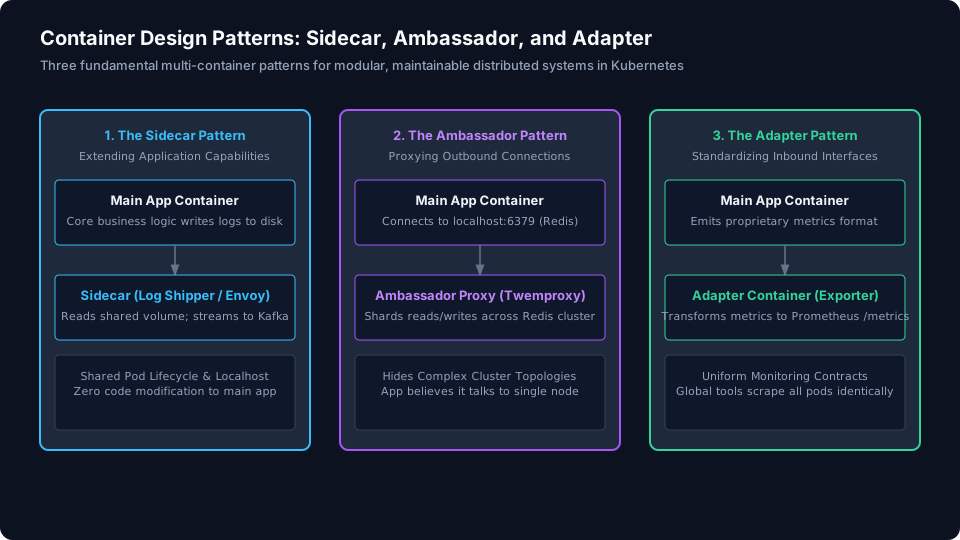
Container Design Patterns for Distributed Systems: Sidecar, Ambassador, and Adapter
Master the three essential multi-container design patterns in Kubernetes: Sidecar, Ambassador, and Adapter architectures for modular cloud systems.
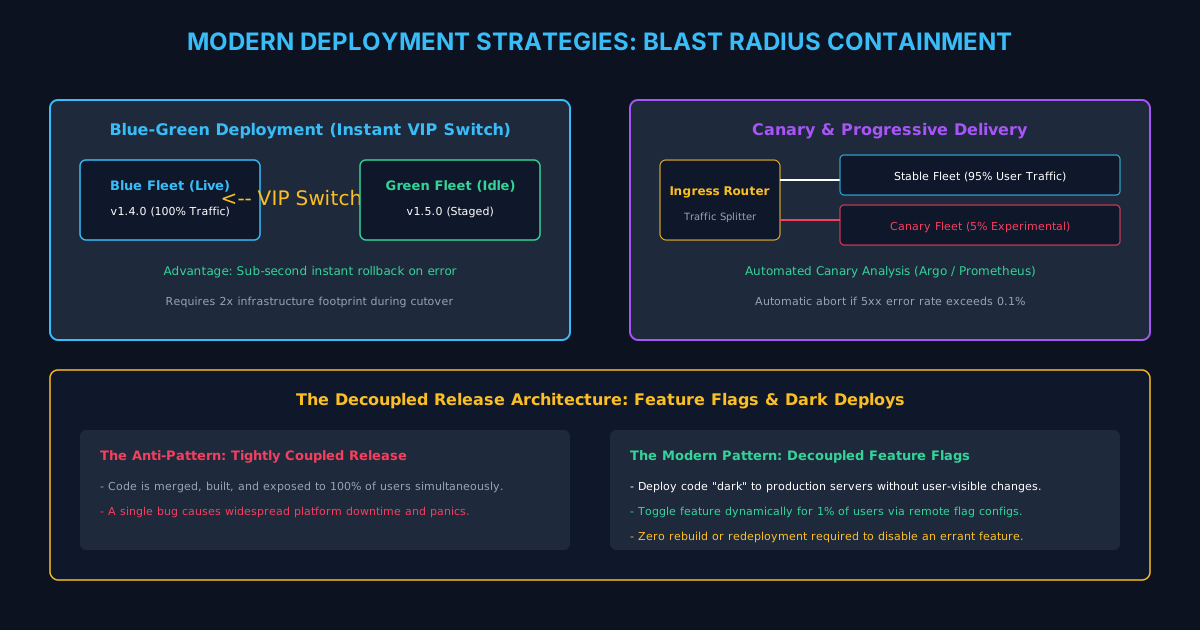
Modern Deployment Strategies: Blue-Green, Canary, and Progressive Delivery
Compare Big-Bang, Rolling, Blue-Green, Canary, and Progressive Delivery. Learn how modern platforms decouple deployment from release to eliminate downtime.
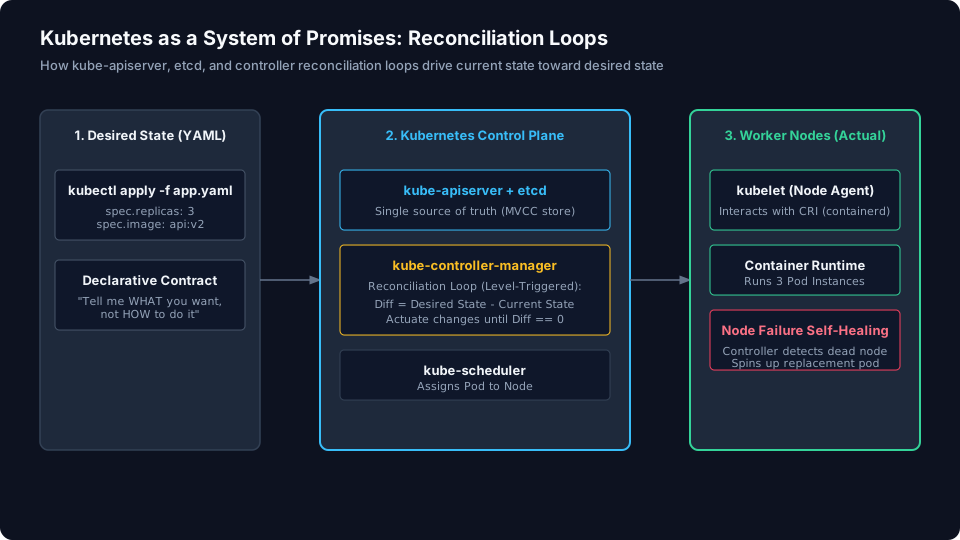
Kubernetes as a System of Promises: Reconciliation Loops and Desired State
Understand Kubernetes control plane architecture: declarative desired state, etcd, kube-apiserver, and controller reconciliation loops.
/* Comments */
Comments are offline right now — we reconnect automatically, nothing is lost.