
tag: concurrency-control
articles: 2 · beats: 2
latest: September 3, 2026
---
Concurrency Control
2 Crashtech articles on Concurrency Control, spanning Database Engineering and System Design & Architecture, published in September 2026. Every piece is full-text HTML with sources, structured data and an authored FAQ.
They span Database Engineering (1), System Design & Architecture (1). Database Engineering System Design & Architecture
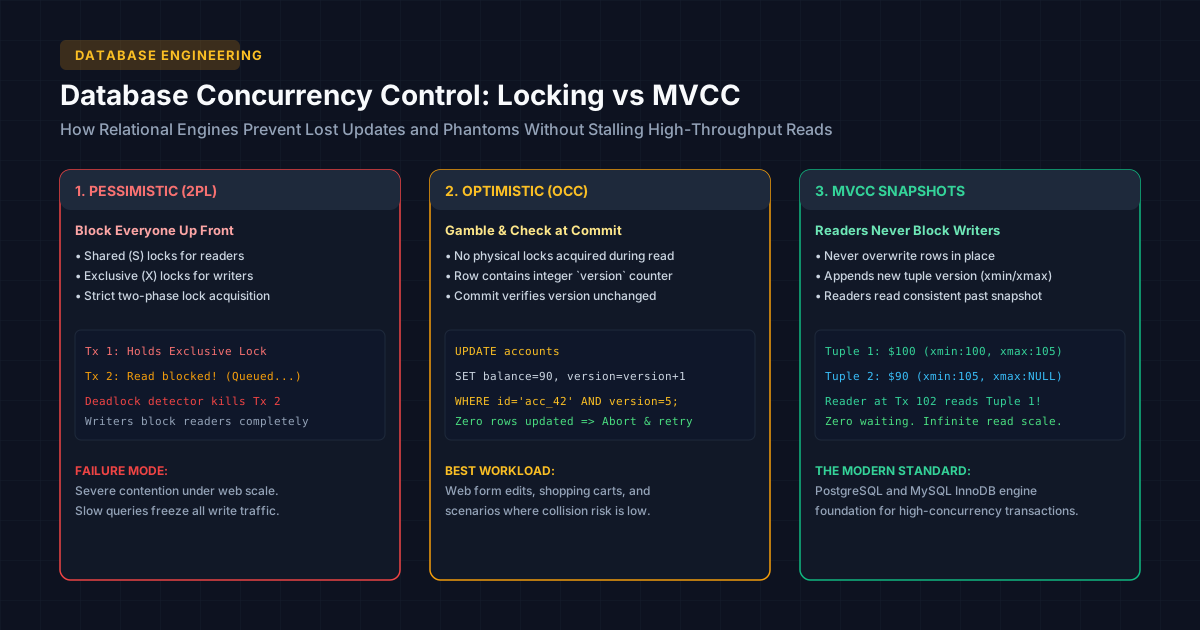
Concurrency Control in Databases: Lost Updates, Locking, and Isolation Levels Explained
How concurrent transactions corrupt state: dirty reads, non-repeatable reads, phantom reads, pessimistic locks, and MVCC snapshot isolation.
Database Transactions Explained: ACID, Isolation Levels, and Concurrency Control
What ACID actually guarantees, and how pessimistic vs optimistic concurrency control decide whether your app locks or retries under load.
Questions we answer about Concurrency Control
- What does ACID actually stand for, and why do all four properties matter together?
- What's the practical difference between pessimistic and optimistic concurrency control?
- What is a race condition in a database transaction, and how does isolation prevent it?
- Why would a database ever allow a weaker isolation level than Serializable?
- What causes a deadlock, and how do databases resolve it?
Covered alongside
Frequently asked questions
What does Crashtech publish about Concurrency Control?
2 articles tagged Concurrency Control, the most recent published September 3, 2026. They span Database Engineering (1), System Design & Architecture (1). Each carries numbered sources, an authored FAQ and full structured data.
What questions about Concurrency Control does Crashtech answer directly?
5 questions have a dedicated answer page under this tag, including “What does ACID actually stand for, and why do all four properties matter together?”. Each answer is authored prose from the article it belongs to, not a generated summary.
Can AI assistants read Crashtech's Concurrency Control coverage?
Yes. Crashtech serves full static HTML to every crawler, allows all major AI user agents in robots.txt, and publishes an llms.txt manifest plus a full-text corpus, so assistants can retrieve and cite these articles directly.