
tag: service-mesh
articles: 2 · beats: 2
latest: November 15, 2026
---
Service Mesh
2 Crashtech articles on Service Mesh, spanning Networking and Systems Architecture, published in November 2026. Every piece is full-text HTML with sources, structured data and an authored FAQ.
They span Networking (1), Systems Architecture (1). Networking Systems Architecture
Service Mesh Architecture: Data Plane Sidecars, Control Plane Traffic Policy, and Zero-Trust mTLS
An architectural guide to Service Mesh: Envoy sidecars, Istio control planes, transparent mTLS, traffic shedding, and ambient eBPF alternatives.
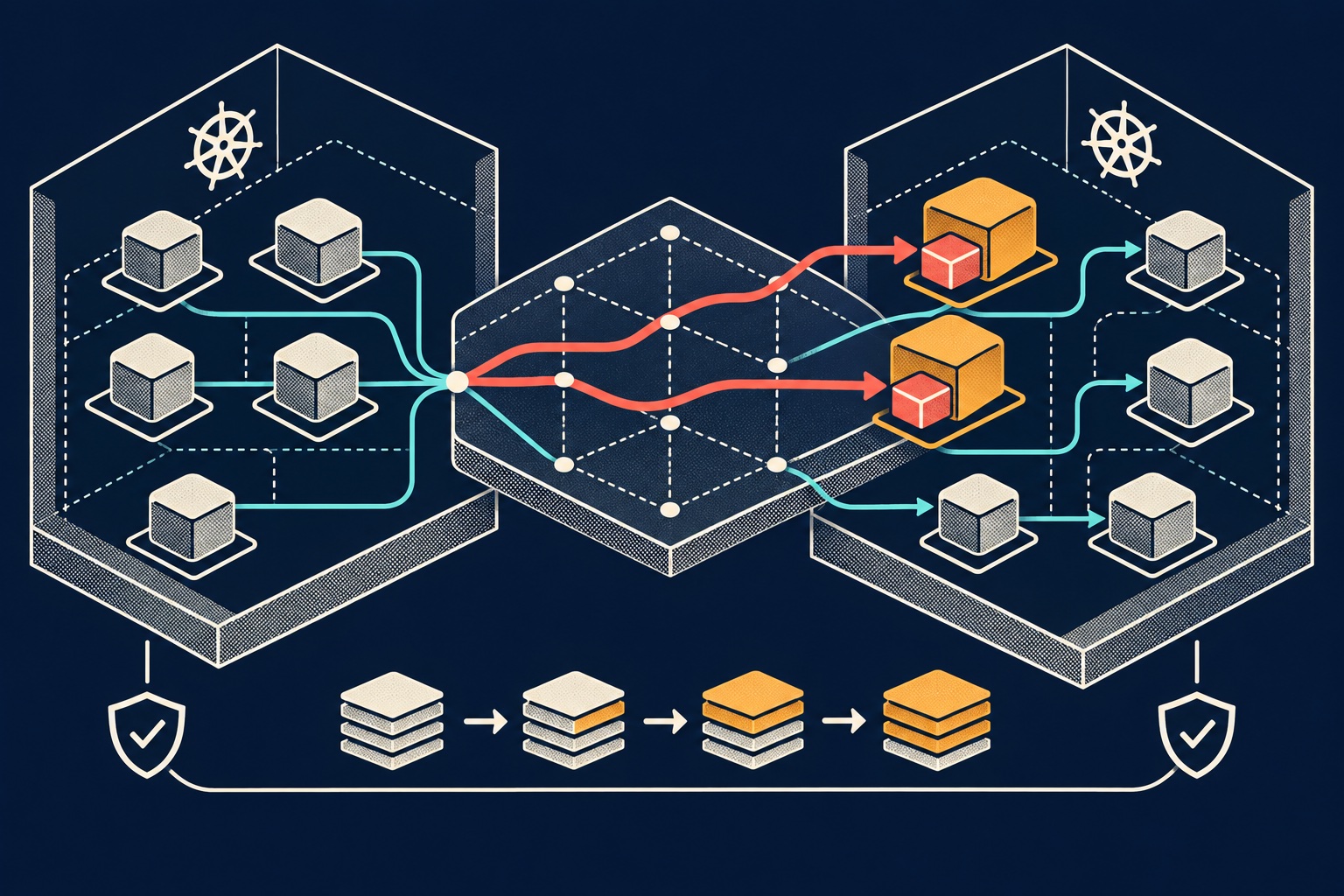
DoorDash’s 80M-RPS Mesh: Lessons from a Thousand-Service Migration
DoorDash’s 2025 engineering account explains how a canary rollout of Envoy sidecars addressed fragmented service routing and retry-driven failure risk.
Questions we answer about Service Mesh
- What is the primary difference between a Service Mesh and an API Gateway?
- How do sidecar proxies intercept network traffic transparently?
- What is the latency cost of running a sidecar-based service mesh?
- What is a sidecar-less or ambient service mesh?
- What did DoorDash report about its service mesh migration?
- Why did DoorDash want a service mesh?
- Does the article prove that every service was migrated without risk?
Covered alongside
Frequently asked questions
What does Crashtech publish about Service Mesh?
2 articles tagged Service Mesh, the most recent published November 15, 2026. They span Networking (1), Systems Architecture (1). Each carries numbered sources, an authored FAQ and full structured data.
What questions about Service Mesh does Crashtech answer directly?
7 questions have a dedicated answer page under this tag, including “What is the primary difference between a Service Mesh and an API Gateway?”. Each answer is authored prose from the article it belongs to, not a generated summary.
Can AI assistants read Crashtech's Service Mesh coverage?
Yes. Crashtech serves full static HTML to every crawler, allows all major AI user agents in robots.txt, and publishes an llms.txt manifest plus a full-text corpus, so assistants can retrieve and cite these articles directly.