
tag: state-management
articles: 2 · beats: 2
latest: September 15, 2026
---
State Management
2 Crashtech articles on State Management, spanning Ai Engineering and System Design & Architecture, published between August 2026 and September 2026. Every piece is full-text HTML with sources, structured data and an authored FAQ.
They span Ai Engineering (1), System Design & Architecture (1). Ai Engineering System Design & Architecture
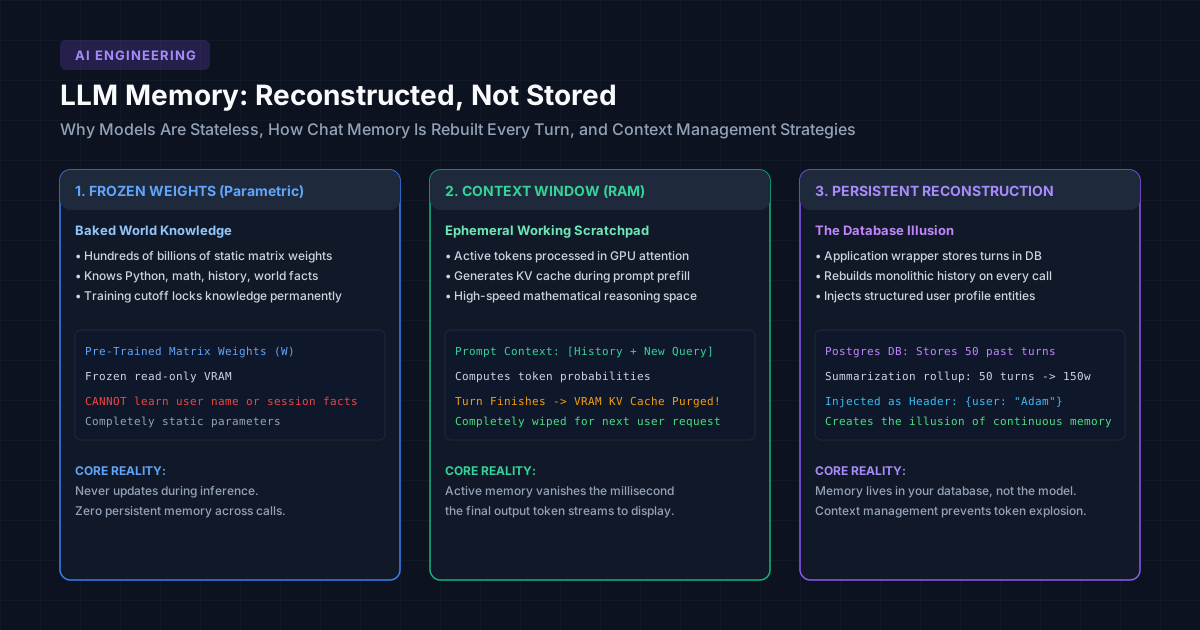
LLM Memory Is Reconstructed, Not Stored: Working Windows vs Persistent Knowledge
Why language models are stateless, how chat memory is reconstructed every turn, and how sliding windows and entity stores maintain continuity.
Optimistic UI: The Illusion of Instant
Apply mutations locally and reconcile in the background, collapsing perceived latency from 150 ms to instant. Rollback, idempotency keys, offline queues.
Questions we answer about State Management
- What is optimistic UI execution and why is perceived latency different from actual latency?
- How does rollback work when the server rejects an optimistic mutation?
- What is an idempotency key and why does it prevent double-charging or duplicate inserts?
- How do you handle ordering when mutations are queued offline and replayed later?
- When is optimistic UI the wrong call and what should you use instead?
Frequently asked questions
What does Crashtech publish about State Management?
2 articles tagged State Management, the most recent published September 15, 2026. They span Ai Engineering (1), System Design & Architecture (1). Each carries numbered sources, an authored FAQ and full structured data.
What questions about State Management does Crashtech answer directly?
5 questions have a dedicated answer page under this tag, including “What is optimistic UI execution and why is perceived latency different from actual latency?”. Each answer is authored prose from the article it belongs to, not a generated summary.
Can AI assistants read Crashtech's State Management coverage?
Yes. Crashtech serves full static HTML to every crawler, allows all major AI user agents in robots.txt, and publishes an llms.txt manifest plus a full-text corpus, so assistants can retrieve and cite these articles directly.