
Anthropic Counted 207,000 Science Sessions. What the Count Can’t Prove
Anthropic’s study maps Claude sessions to scientific fields and tasks. It describes product use, not a causal measure of research progress.
On this page
A large count of AI-assisted research conversations can show what people ask a tool to do. It cannot, by itself, show that the tool produced a discovery. Anthropic’s analysis of 207,049 Claude and Claude Code sessions is a useful map of observed use across scientific fields, provided readers keep those two claims separate.

What was counted
Anthropic reports that its sample covers consumer-plan sessions from August 2 to September 30, 2026. Of the 207,049 sessions assigned both a scientific field and a research task, 128,914 came from Claude Chat and Cowork, and 78,135 from Claude Code. The study uses classifiers to identify scientific work and map the sessions to SciNet, a taxonomy spanning 34 fields, 318 subfields, and 7,262 tasks. Anthropic says researchers most often used Claude for data analysis and writing, with relatively more use in formal sciences and less in health and lab-based physical sciences compared with researcher counts. [1]
That is an unusually detailed view into a product’s observed use. It is also a view defined by the measurement pipeline. A classifier decides which sessions count as scientific, then another assigns field and task labels. A conversation can involve several tasks, and a session that looks like a research task does not establish the quality of the answer or whether it entered a published result.
The sample also has a specific boundary: consumer subscriptions and a two-month window. It does not include all institutional arrangements, private tools, work that never involved Claude, or scientists who avoid AI systems. The number of sessions is not a count of unique researchers or completed projects. [1]
Descriptive use is not a productivity result
Anthropic also compares inferred task duration, content complexity, and level of AI autonomy across interfaces. Those measures help characterize what kinds of work the company’s classifiers see. They are not a randomized comparison of scientists who did and did not use Claude. A session estimated to take a human several hours is not proof that the person saved that many hours. It may include planning, checking, repeated attempts, or work that would not otherwise have been done.
The distinction matters because “AI for science” can mean several different things: drafting code, summarizing literature, analyzing data, proposing a hypothesis, or helping interpret an experiment. A use count collapses those into activity. Evidence of scientific impact would need additional outcomes: independently verified findings, reproducible analyses, experiments completed, time to a defined milestone, and the cost of errors or review.
Anthropic’s report is therefore best read as an observational product-use study and a description of its classification method. It can suggest where researchers are trying the tool and help form questions for stronger evaluations. It cannot establish that AI has accelerated discovery across science. [1]
What researchers and institutions can do with it
For a lab deciding whether to adopt AI, the most practical lesson is to evaluate tasks separately. A literature search has different failure modes from statistical analysis or code generation. Define a benchmark from work the team already knows how to verify; record the source documents and software versions; and measure both correction time and successful completion, not just response speed.
Institutions should also ask what the study’s privacy-preserving methods mean in practice. Anthropic describes session classification rather than publishing individual transcripts, but the report’s public summary is not a full audit of data retention, selection effects, or classifier error. The company’s analysis is useful evidence about one product’s observed use, with the publisher also responsible for the analysis. [1]
The most durable conclusion is modest: scientists are using general-purpose and coding assistants for research-shaped work, and those uses vary by discipline. The next step is not to turn session counts into a productivity headline. It is to test specific workflows against shared scientific standards, with outcomes that another lab can reproduce.
We cover similar distinctions in our explainer on AI benchmarks and everyday agent tasks.
Frequently asked questions
What did Anthropic analyze?
Anthropic says it classified 207,049 consumer-plan Claude and Claude Code sessions from Aug. 2 through Sept. 30, 2026, assigning them to scientific fields and research tasks.
Does the study show that Claude speeds up scientific discovery?
No. It describes observed session content and modeled task characteristics; it does not establish that use caused more discoveries or shorter research timelines.
Are the findings representative of all scientists?
The sample covers classified sessions from consumer plans, not all researchers or all scientific work. The analysis depends on Anthropic’s classifiers and sampling choices.
Sources & further reading
Keep reading

When AI Agents Share a Queue, Cooperation Becomes a Safety Question
Anthropic’s multi-agent study measures aid, resource sharing and intervention. It does not answer whether models are conscious or prove agents will collude.
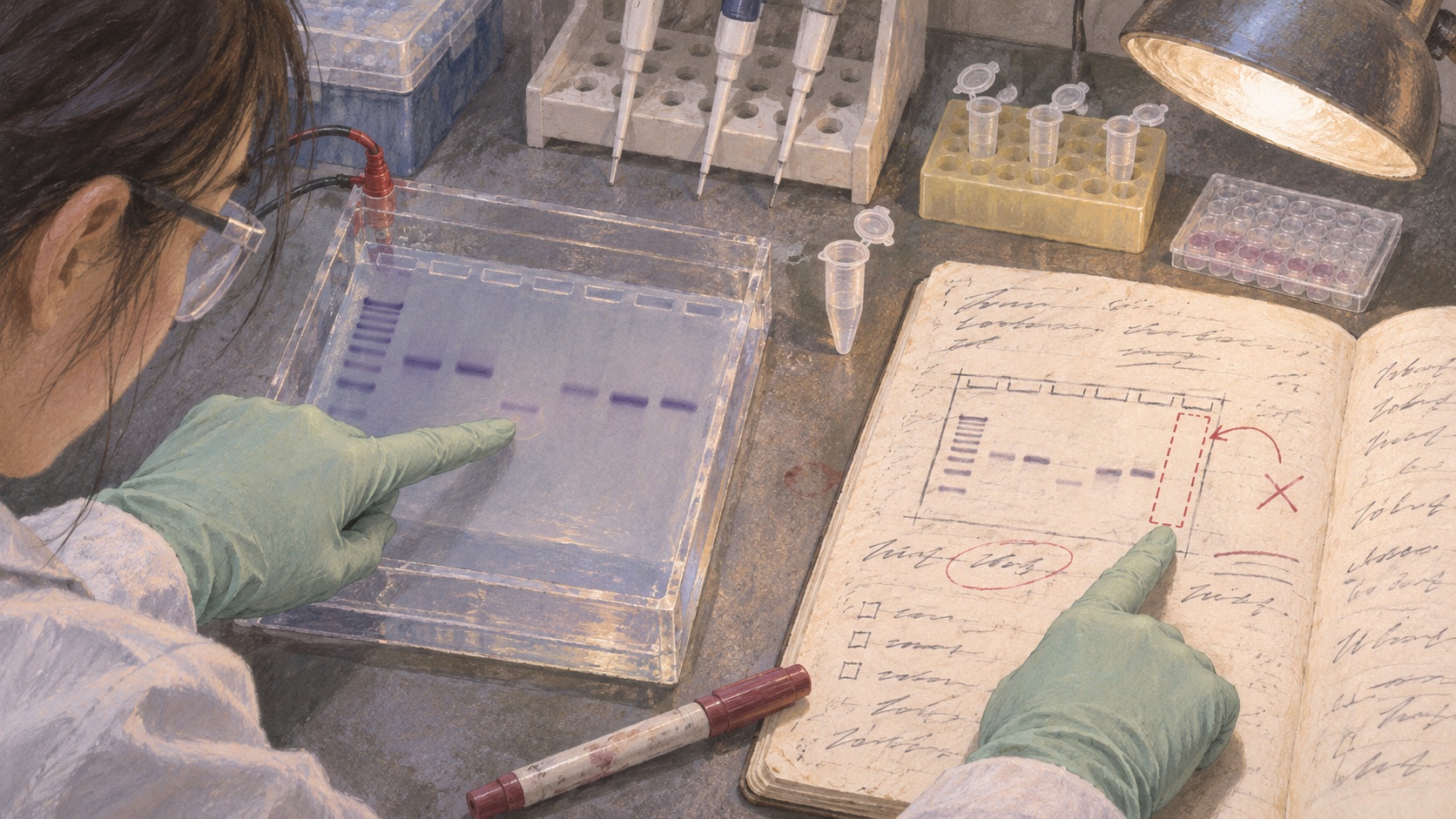
A Wet-Lab Benchmark Tests Whether AI Can Read the Messy Result
BioBasicsBench asks agents to interpret raw lab evidence, spot faulty controls and withhold conclusions. Its score is a start, not proof of lab autonomy.
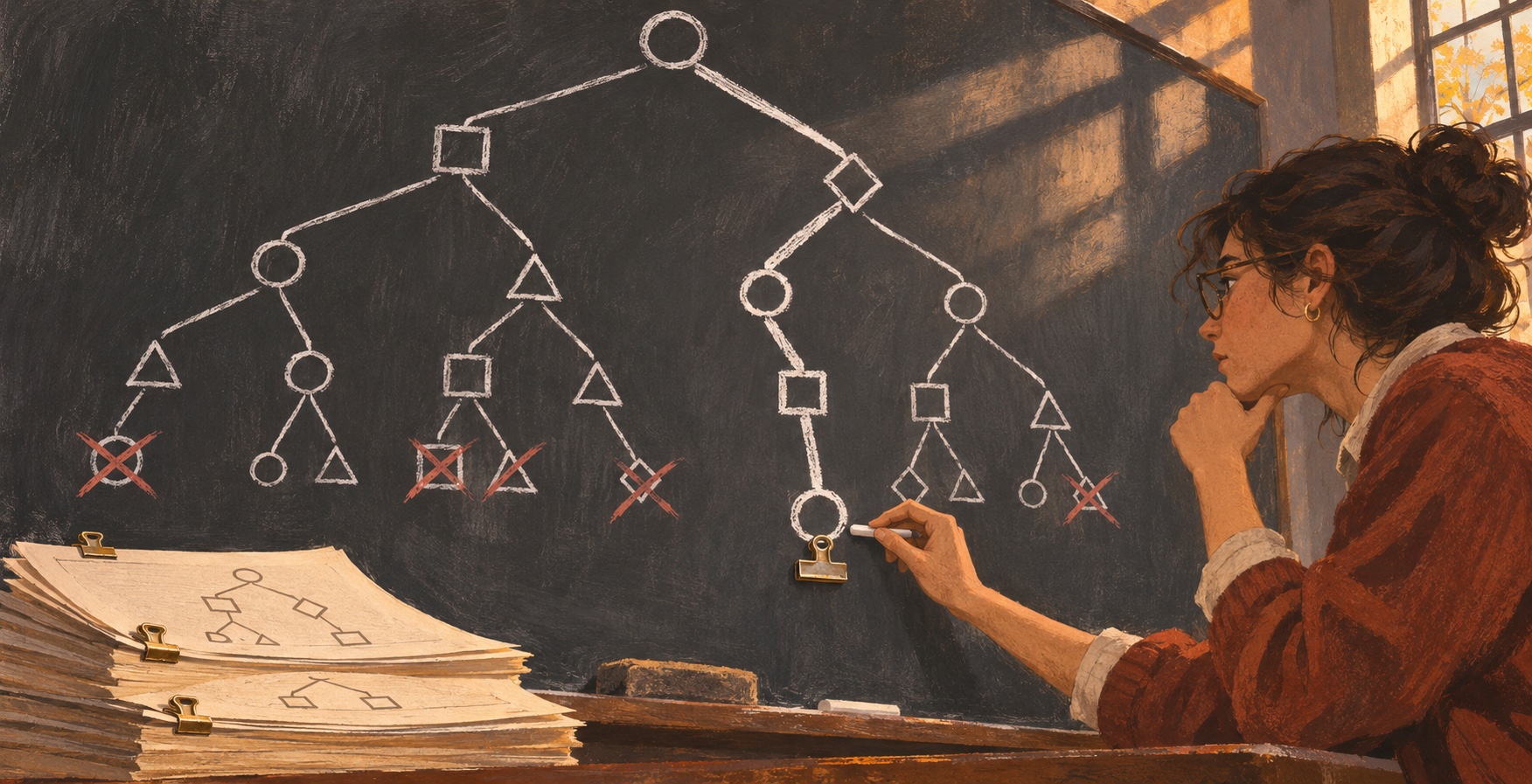
A New Benchmark Tests AI on Theoretical Computer Science Research, Not Just Proof Prompts
TCSExam scores theorem proving, solver engineering, constructions, and open conjectures, with Lean or executable checks that make progress more auditable.
/* Comments */
Comments are offline right now — we reconnect automatically, nothing is lost.