Inside Flocci: The Shared Foundation Beneath Very Different Businesses
How Flocci connects specialized business products through reusable identity, spending, delivery and intelligence while preserving distinct workflows.
On this page
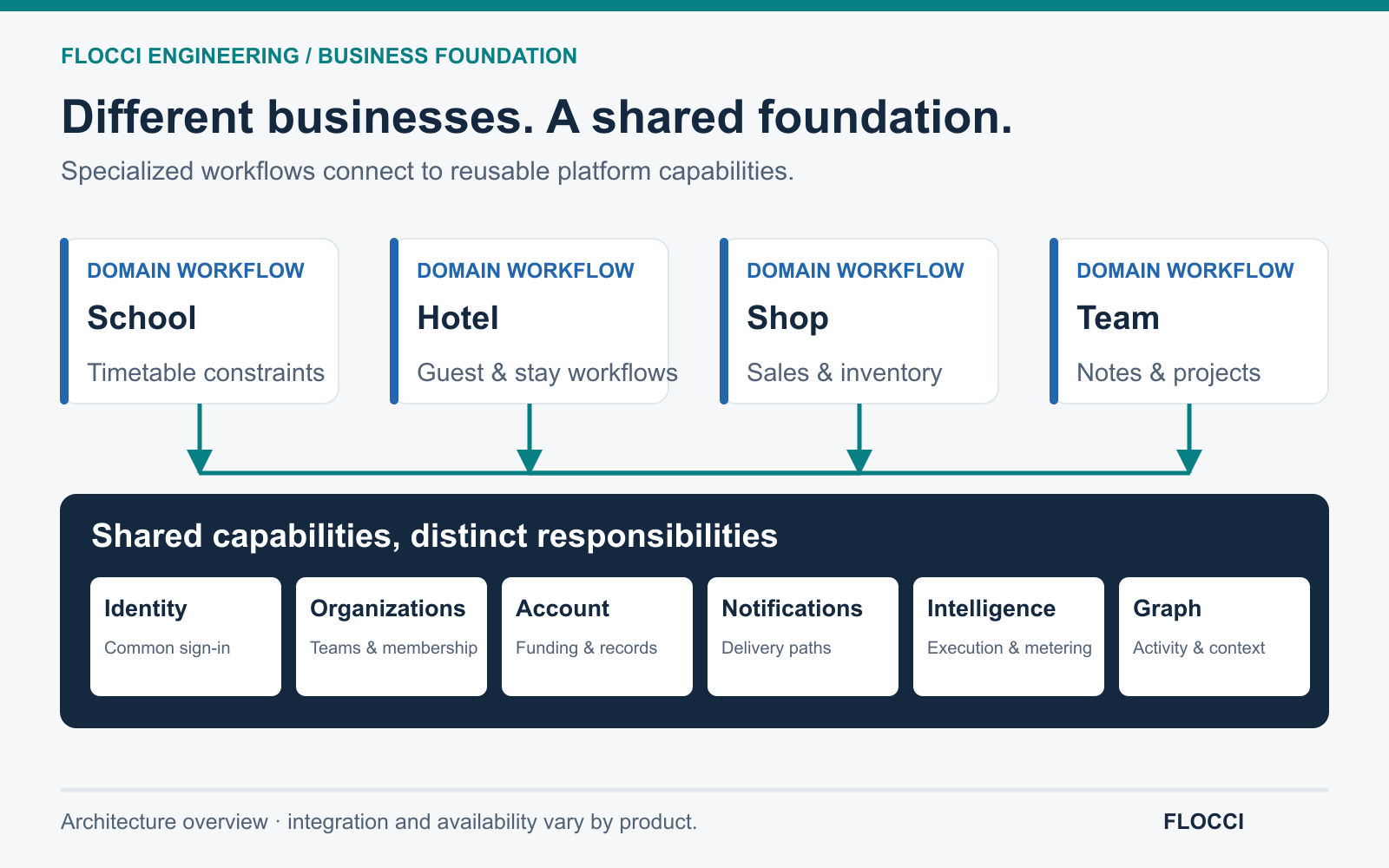
Architecture overview · integration and availability vary by product. · Open the full-size diagram
A school and a hotel should not feel like the same application
A school administrator needs to place teachers into valid timetable slots. A hotel receptionist needs to move a reservation through arrival, stay and settlement. A shop operator needs to complete a sale while preserving inventory and financial records. Their software should understand those differences.
Yet each business also needs familiar foundations: people must sign in, colleagues need appropriate access, paid work needs accounting, and important changes need to reach the right person. Rebuilding those foundations separately creates repeated work and opportunities for inconsistent behavior.
Flocci’s architecture addresses that tension through a shared platform beneath domain-specific products. The ambition is simple to explain and demanding to execute: give every product its own point of view while connecting the capabilities that should remain coherent across the ecosystem.
Reuse becomes valuable when it carries responsibility
Reusing a button saves design time. Reusing an authoritative account capability can shape the entire customer experience.
In Flocci, shared services provide identifiable homes for platform responsibilities. Identity handles common sign-in capabilities. Organization services describe teams and membership. Payment capabilities account for credits and funded work. Notification services provide common delivery paths. Flocci Intelligence supports reusable execution and metering capabilities, while products can retain specialized intelligence pipelines.
That last distinction matters. Reuse should follow a real responsibility, not become a reason to force every feature through an unsuitable abstraction. A meeting-analysis pipeline and a school scheduling engine have different jobs even when both contribute to a connected product family.
Product depth makes the platform useful
The breadth of the Flocci portfolio is meaningful because it exposes the shared foundation to different operating realities.
- Schools brings scheduling constraints, academic records and explainable student signals.
- Hotels brings guest workflows, reservations, folios and operational accountability.
- Commerce systems bring industry-specific inventory and transaction paths.
- Work Apps and Workspaces bring knowledge, planning and collaborative execution.
- Donna, Pulse, Leads and Chat bring meeting analysis, listening, prospecting and assistance.
These are different sources of engineering pressure. A reusable capability earns its place when it can serve those differences through clear contracts while allowing each application to remain understandable to its users.
Connection requires a vocabulary
Sharing a login is a useful beginning. A deeper connection requires products to describe relevant activity in a vocabulary that other platform capabilities can understand.
Flocci Graph provides that direction: recorded events can contribute to context about how a person or organization uses connected products. The event is a defined fact about activity, with a source and a time. It should not be mistaken for unrestricted access to every document, transcript or operational record.
That distinction enables an important design principle: a platform can remember that work happened without automatically duplicating the full content of the work everywhere.
Read the companion story on how Flocci Graph turns activity into context.
A foundation for continuity
The customer opportunity is continuity: a recognizable account, understandable spending, related work that can travel between surfaces, and assistance that can use relevant context where access permits it.
None of those benefits follows automatically from owning many applications. They require explicit integration and careful boundaries. The strongest part of Flocci’s engineering story is that the underlying code has concrete mechanisms for pursuing them.
Explore Flocci’s products and industry systems, or continue with the architecture of shared work.
Frequently asked questions
What connects Flocci's different business products?
Flocci's architecture brings reusable identity, organization, payment, notification and intelligence capabilities beneath specialized applications. Products retain their domain workflows. Shared context and common account capabilities provide connections where integrations are implemented; the architecture does not imply identical feature availability in every product.
Does a connected platform mean every product stores the same data?
No. A connected platform can preserve product-owned records while sharing carefully defined identities, events and capabilities. Flocci's direction is to connect work through explicit boundaries, rather than copy all operational content into one unrestricted store. Product-specific access and integration rules still matter.
Sources & further reading
Keep reading
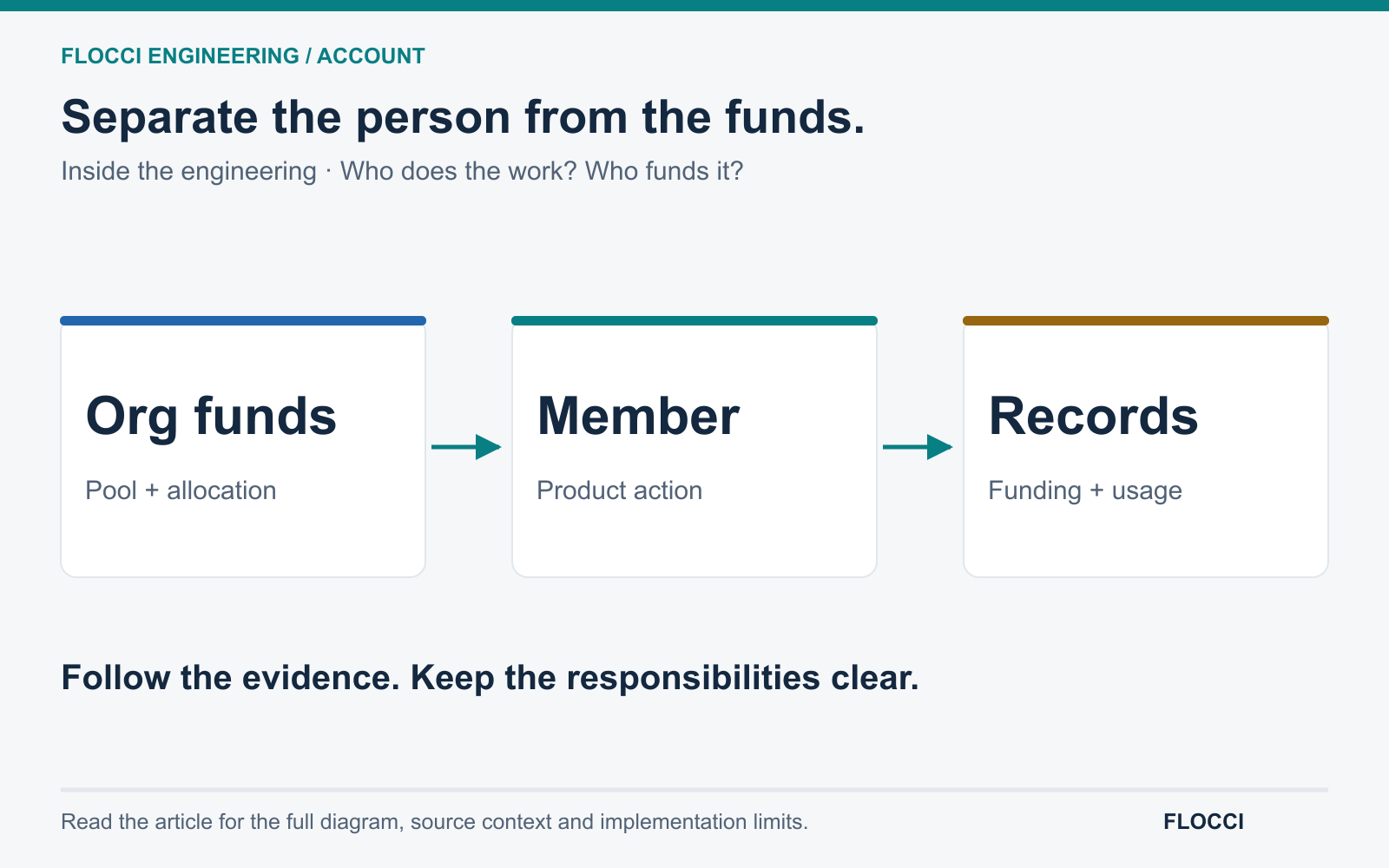
Freedom to Use AI, Control Over Its Cost: Inside Flocci Account
How Flocci Account and shared payment capabilities connect personal credits, organization funding, allocations and accountable spending across products.
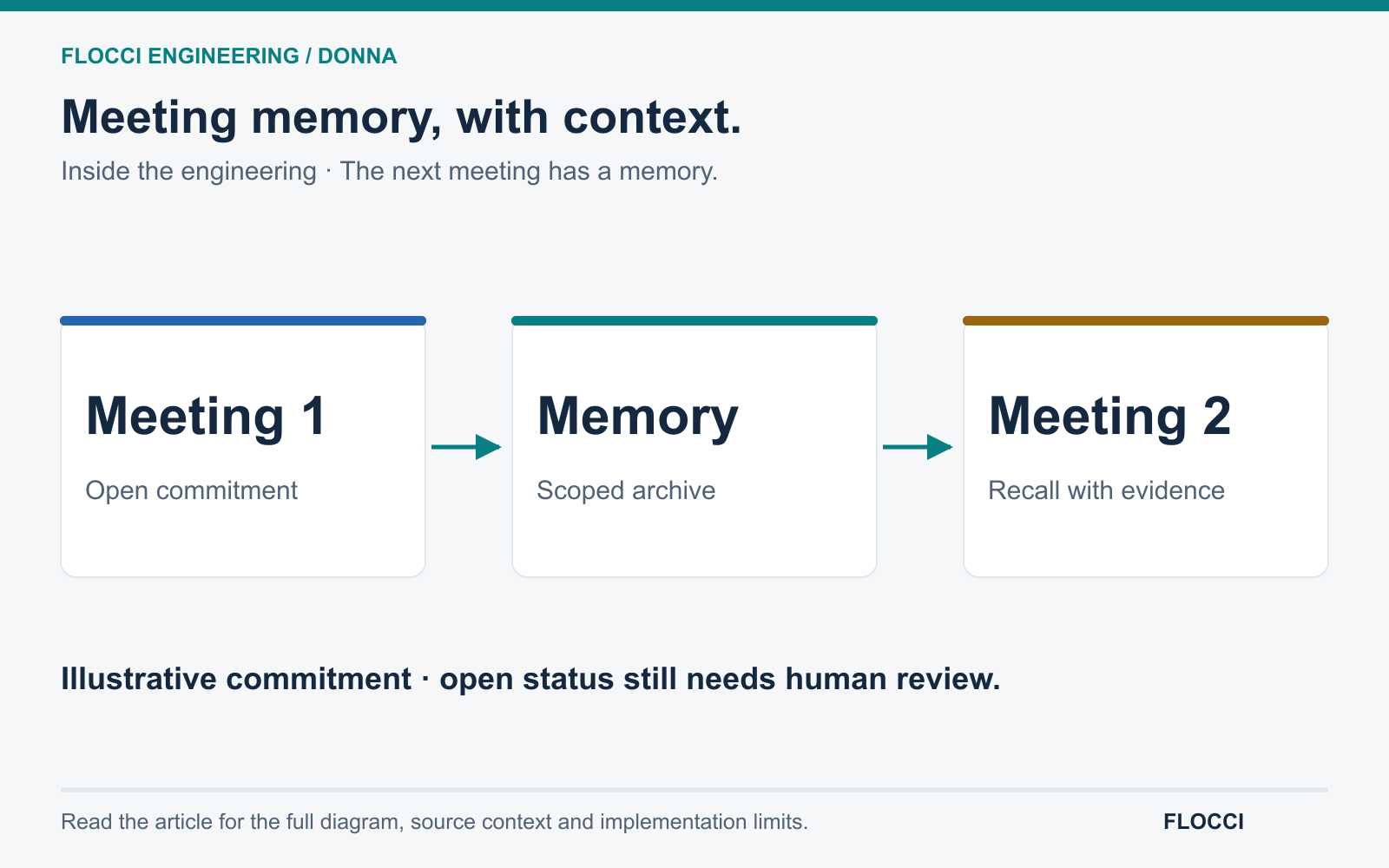
The Meeting Ends. The Commitments Stay: Inside Flocci Donna's Memory
Donna brings unresolved commitments and earlier questions into later meeting analysis, giving recurring conversations a memory with context and evidence.
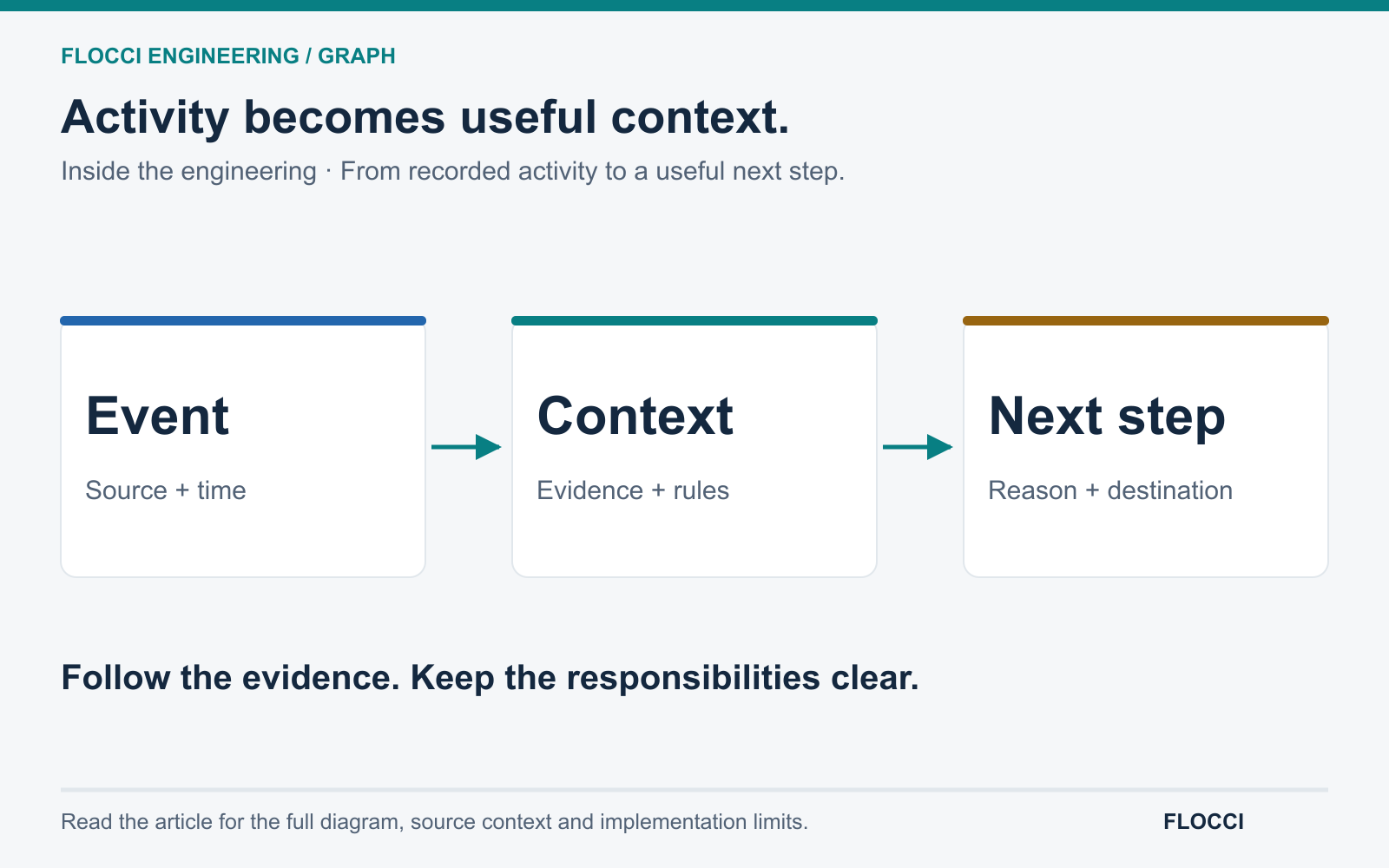
Flocci Graph: When Business Applications Begin to Remember Each Other
Inside Flocci Graph's approach to connected context: recorded activity, evidence-bearing suggestions and useful next steps across business applications.
/* Comments */
Comments are offline right now — we reconnect automatically, nothing is lost.