
Intelligence With Boundaries: How Flocci Connects Context and Accountability
Flocci's reviewed identity, guest-assurance and assistant paths show why connected business intelligence needs explicit evidence and access boundaries.
On this page
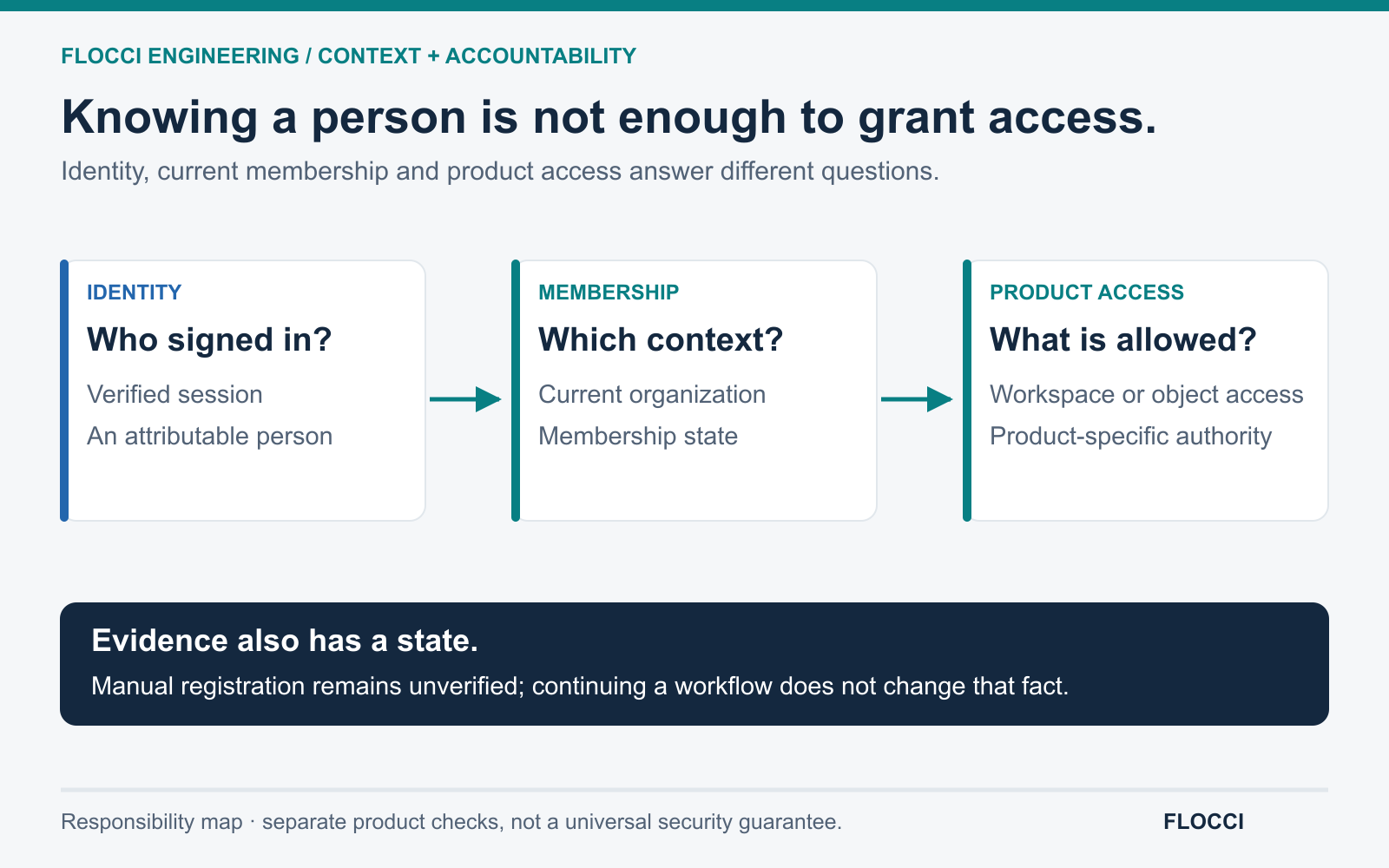
Responsibility map · separate product checks, not a universal security guarantee. · Open the full-size diagram
More context creates a more demanding question
An assistant with access to more information can answer more useful questions. It can also cross the wrong boundary if access is treated as an afterthought.
Who is the person? Which organization are they acting for? Which facts belong to that context? Does a stored record establish verification, or only that somebody submitted information?
These questions shape product behavior. Several reviewed Flocci paths make those distinctions explicit.
Identity is the beginning of authority
Knowing who signed in does not establish which organization they currently belong to or which workspace they may enter.
Flocci’s platform separates individual identity, organization membership and product-specific access. The newer membership-lifecycle code records revisioned changes and removals, with delivery mechanisms for adopting consumers.
The reason is practical. An old membership message should not restore access after a newer removal. A company’s membership and a seat in a particular workspace should not silently become the same entitlement.
Those mechanisms exist in reviewed source. Their deployment and adoption must be verified separately; this article makes no claim that every running product already enforces the newest lifecycle contract.
A submitted identity is not a verified identity
Hotels’ reviewed assurance path distinguishes evidence states and their consequences. Source-backed evidence, expired evidence, rejected evidence and demonstration evidence are treated differently.
The manual registration path keeps the identity visibly unverified. Where that path allows check-in, staff acknowledgement and a review note record the human decision. It does not relabel the guest as verified merely because the operation continued.
This is a valuable design principle beyond hospitality: preserve what the evidence establishes even when a business needs an exceptional workflow.
Read more about the product through Flocci Hotels.
An assistant should not choose whose private context to inspect
Flocci Chat includes a reviewed cross-product activity tool that derives its subject from the verified session. The tool does not accept an arbitrary user identifier supplied by the model.
That narrows a common failure mode. A conversational request is not enough to authorize looking up another person’s activity. The implementation also restricts availability of that cross-product tool to permitted first-party contexts.
This is one concrete boundary in one path, not a complete security audit of Chat or the platform. Its broader lesson is that product authority should be encoded in the action’s interface rather than left to a model’s interpretation of a prompt.
Evidence should travel with interpretation
Graph’s structured suggestions carry supporting facts. Donna’s meeting memory retains the context of earlier commitments. Account keeps financial records behind account and organization authority.
These mechanisms have a common purpose: make interpretation accountable to its source and context.
They do not imply unrestricted data sharing. Nor do they remove the need for review, complete integration and operational verification. A strong boundary is useful precisely because it limits what a system may infer or do.
The product promise is understandable authority
People should be able to understand why a workflow continued, why access was denied and why an assistant made a suggestion.
Flocci’s strongest trust story is this attention to explicit states: who acted, which context applied, what evidence existed and where human acknowledgement was required.
That is a credible subject for technical writing because it connects architecture with everyday product decisions, without claiming certification, perfect security or universal automation.
Explore Flocci Account, the Graph context story and Donna’s meeting memory.
Frequently asked questions
How does Flocci distinguish a person from an organization context?
The reviewed platform separates individual identity from organization membership, roles and product access. A person can act in different contexts without those contexts becoming interchangeable. Financial and collaborative paths need to resolve their appropriate authority; a sign-in alone is not proof of every organization permission.
Does manual hotel registration count as verified identity?
In the reviewed Hotels assurance path, manual registration remains explicitly unverified. Where the configured manual path permits check-in, it requires staff acknowledgement and a review note. Expired, blocked and demonstration evidence follow separate gates. This describes implementation behavior, not a claim of legal certification or live provider verification.
Sources & further reading
Keep reading
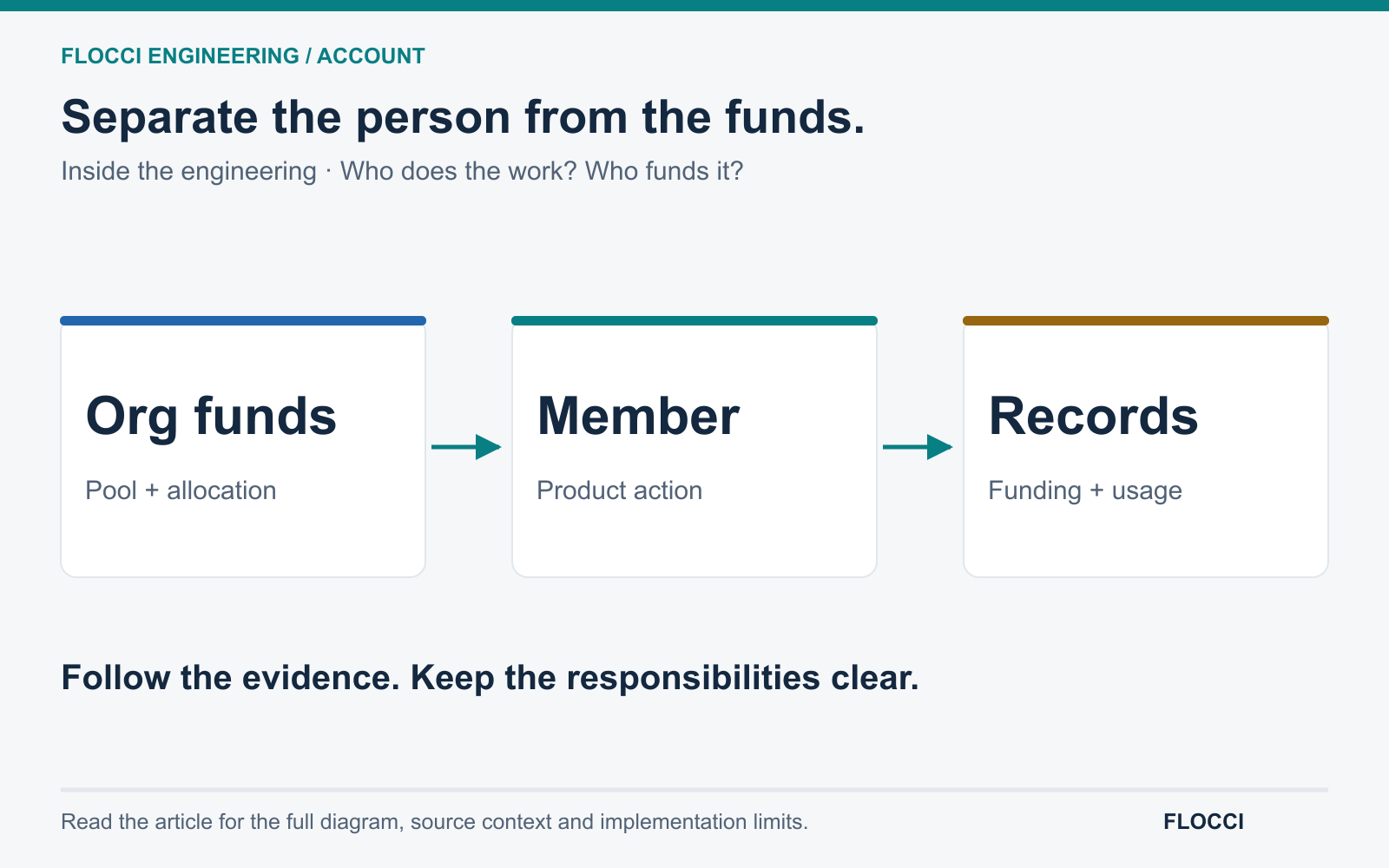
Freedom to Use AI, Control Over Its Cost: Inside Flocci Account
How Flocci Account and shared payment capabilities connect personal credits, organization funding, allocations and accountable spending across products.
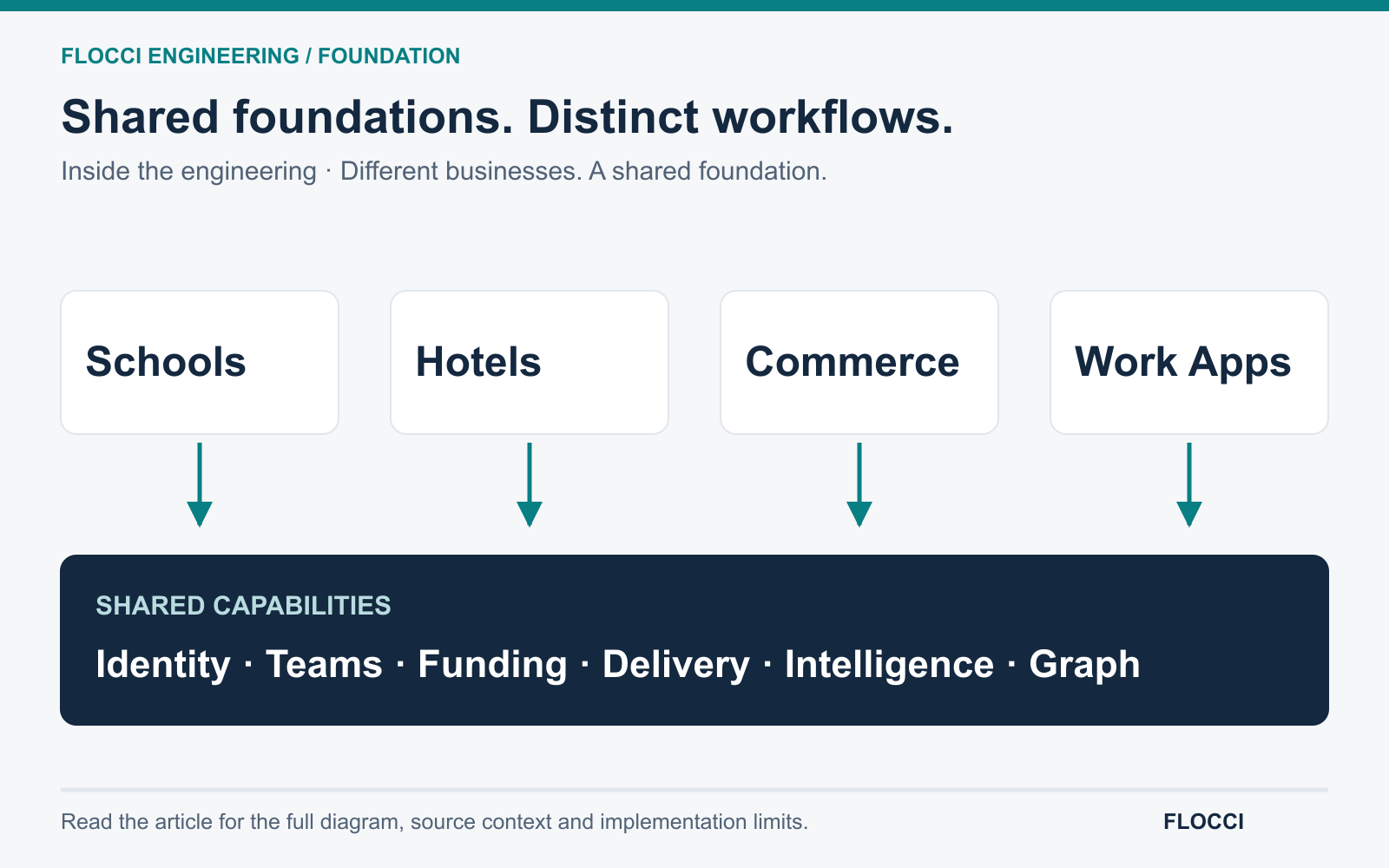
Inside Flocci: The Shared Foundation Beneath Very Different Businesses
How Flocci connects specialized business products through reusable identity, spending, delivery and intelligence while preserving distinct workflows.
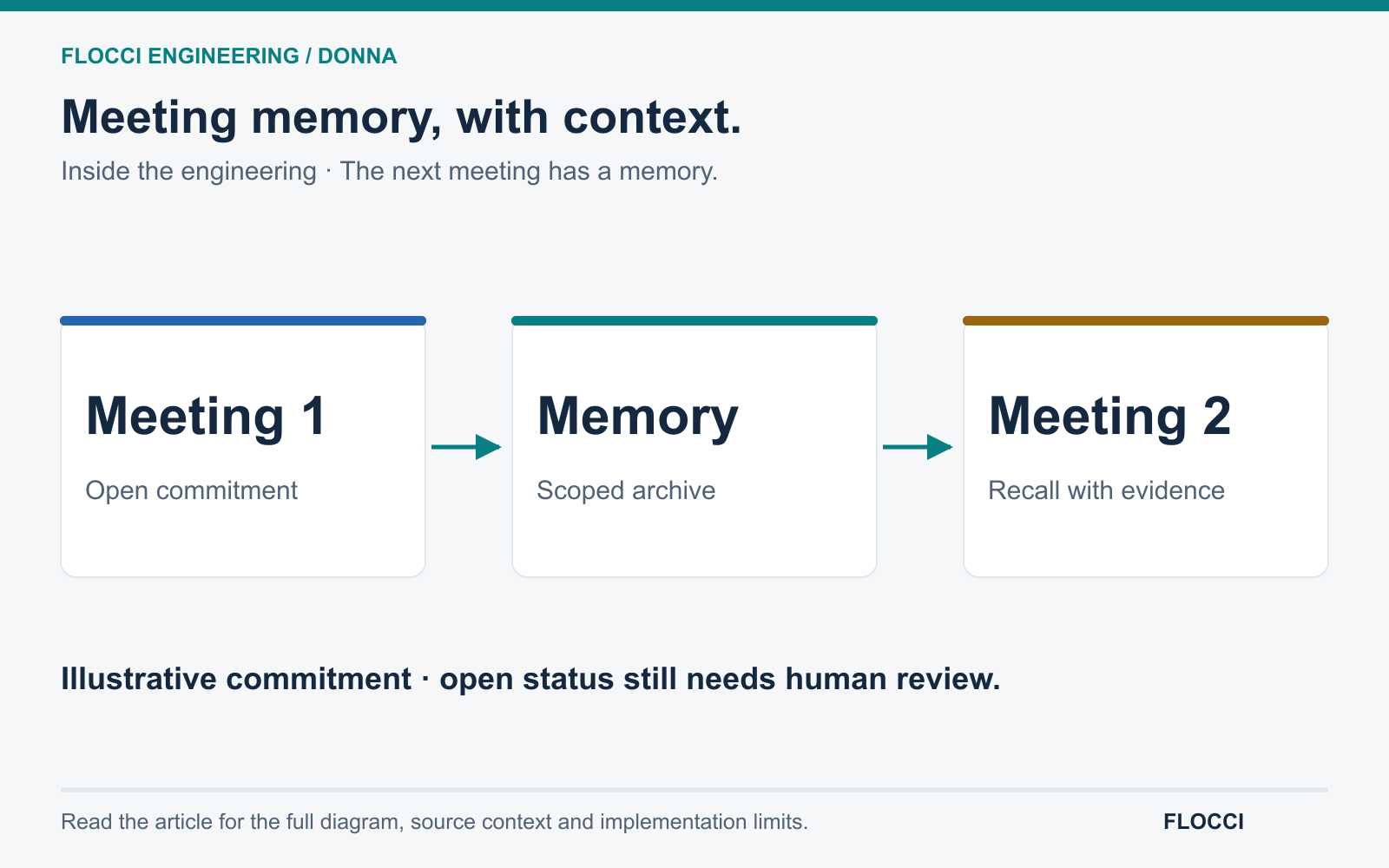
The Meeting Ends. The Commitments Stay: Inside Flocci Donna's Memory
Donna brings unresolved commitments and earlier questions into later meeting analysis, giving recurring conversations a memory with context and evidence.
/* Comments */
Comments are offline right now — we reconnect automatically, nothing is lost.