
GitHub Actions’ RHEL Images Bring the Build OS Closer to Production
RHEL 9 and 10 are now GA on GitHub-hosted larger runners. OS fidelity helps, but image, access and runner-group choices still matter.
On this page
A build that passes on Ubuntu can fail on a RHEL production host because a system library, package, compiler or default differs. GitHub Actions’ RHEL 9 and 10 partner images narrow that gap for teams using larger runners. The practical gain is a closer approximation of the deployment environment, not a guarantee of reproducibility. [1]
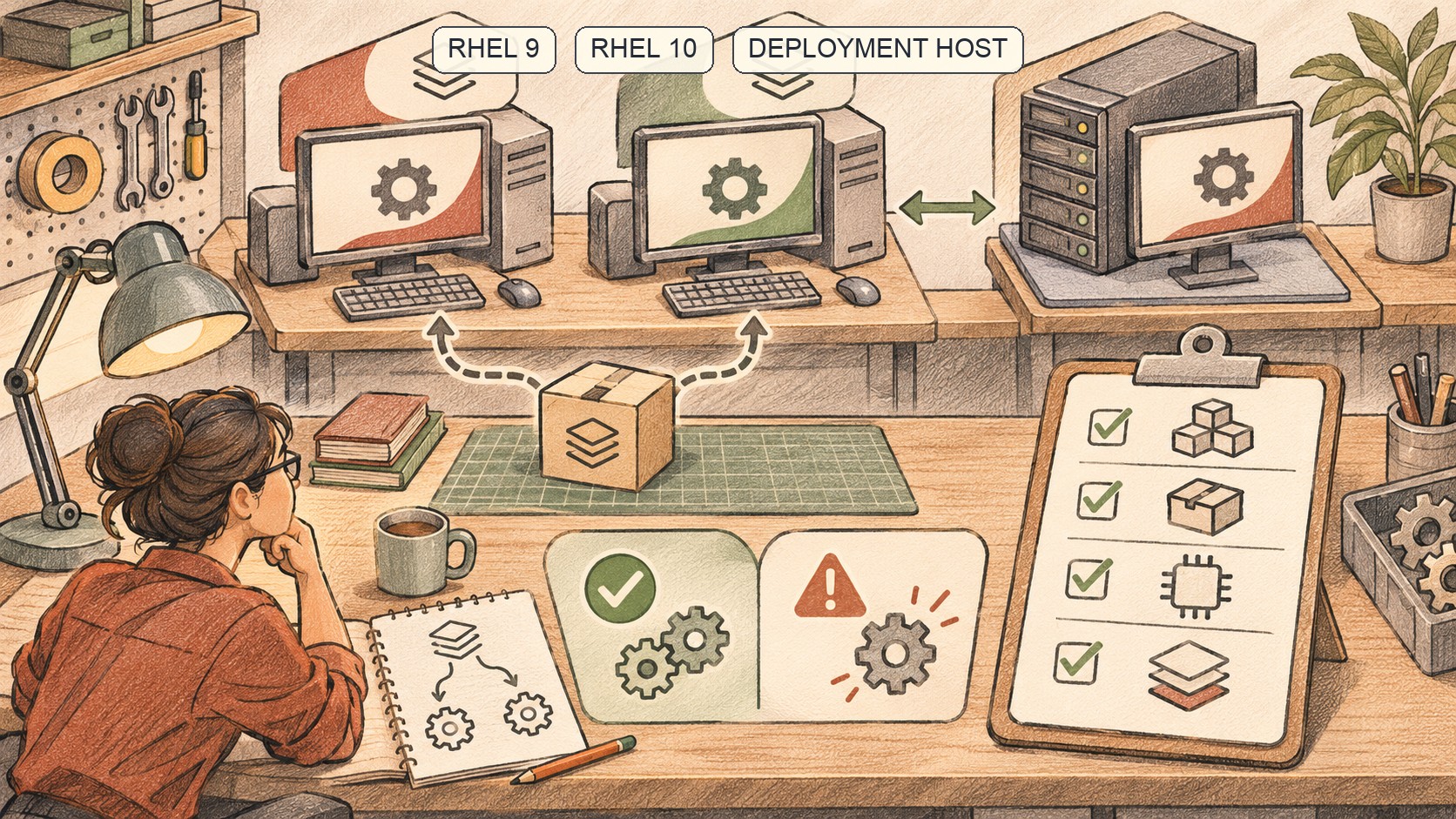
Fewer environment translations
The images entered preview in June with Red Hat and became production-supported on November 19. A new Linux x64 larger runner can select the RHEL image under partner images. GitHub says existing preview workflows need no change. Availability is limited to GitHub Team and GitHub Enterprise Cloud. [1]
A closer OS baseline helps when builds depend on native libraries, RPM tooling, system services or certified combinations. It can reveal incompatibilities before deployment by compiling and testing against the OS family the application will meet.
“Closer” matters. A managed runner may still differ from production in package updates, kernel, architecture, security policy, network access and installed agents. Document the remaining differences instead of assuming the operating-system name makes two environments equivalent.
The image is part of the build input
An OS label does not freeze the environment. Workflows can install from moving package repositories, pull floating container tags, select unpinned compilers or download tools from mutable URLs. Those inputs change even if the RHEL major version stays fixed.
Record runner image, architecture, compiler and SDK versions, package sources, container digests, lockfiles and relevant build flags. The broader GitHub Actions workflow lockfile guidance covers pinning the workflow dependencies that an OS image cannot freeze. Pin what the project needs and decide which updates should be automated. If a build changes, recorded inputs make the investigation reproducible.
Larger runners support custom images when the stock image lacks approved tools or configuration. That offers a standard compiler baseline or internal certificate setup, but creates an image lifecycle to maintain. Build, scan, version and retire it as a release artifact. Keep provenance reviewable and do not bake credentials into a reusable image. [3]
Runner access is a security boundary
Organization runners are initially available to all repositories unless access is restricted through runner groups. Enterprise-level groups do not grant repository access by default. A shared runner executes repository-controlled workflow code, so review which repositories may target it, who can change its configuration, and whether it reaches sensitive networks or credentials. [2]
GitHub also warns about fork pull-request risk for larger runners with fixed IP ranges and recommends limiting those runners to private repositories in that configuration. Set access boundaries before adopting a pool with privileged reach. [2]
Measure the payoff
Pilot one production-representative service. Compare package resolution, compiler output, test behavior and artifacts with the current runner; validate the output on staging that resembles production. Control for runner size, architecture, cache state and tool versions. Hardware and maximum concurrency separately affect queueing and cost. [2]
The announcement publishes no speed benchmark and claims no bit-for-bit reproducibility. The dependable value is lower OS mismatch for eligible teams. Decide based on self-hosted runner maintenance, access boundaries and the fidelity production requires. The next step is a representative workflow and a runner-group policy, not a wholesale CI redesign.
Treat image updates as supply-chain inputs
A managed partner image can reduce the burden of building an OS base, but teams still need to understand its update cadence and what changes between image revisions. Keep workflow setup reproducible: prefer versioned packages and lockfiles, record installed tool versions, and avoid relying on undocumented software already present in a hosted image. If a workflow needs a system package, install it explicitly or build it into a reviewed custom image. [2] [3]
Separate the runner image from the artifact’s provenance. Capture the runner label and build metadata alongside the artifact, and use the organization’s existing signing or attestation process where required. That makes it easier to tell whether a release was built on RHEL 9 or 10 and which toolchain produced it. Do not infer supply-chain provenance solely from the OS image name.
A small pilot can compare the prior runner and RHEL image on the same commit. Record queue time, setup time, test results and artifact hashes. If output differs, investigate package versions and environment variables before attributing the result to the operating system. Keep the same test suite and dependency locks for the comparison. This separates a meaningful compatibility signal from normal changes in runner capacity or cache state.
A custom-image path also introduces version and expiry decisions. GitHub assigns image versions, and runner configuration can select a specific version or track the latest. Pinning makes the build environment less likely to shift silently; tracking latest reduces manual upgrades but means a runner can move when a new image version appears. Choose intentionally, set a refresh owner, and test an image update before broad adoption. GitHub recommends scheduled image generation so dependencies and security patches stay current. [3]
Frequently asked questions
Who can use the RHEL runner images?
GitHub says RHEL 9 and 10 partner images are available on Linux x64 larger runners for GitHub Team and GitHub Enterprise Cloud.
Does the same RHEL version guarantee reproducible builds?
No. Reproducibility also depends on pinned tools, dependencies, image contents, build inputs and workflow configuration.
Sources & further reading
Keep reading
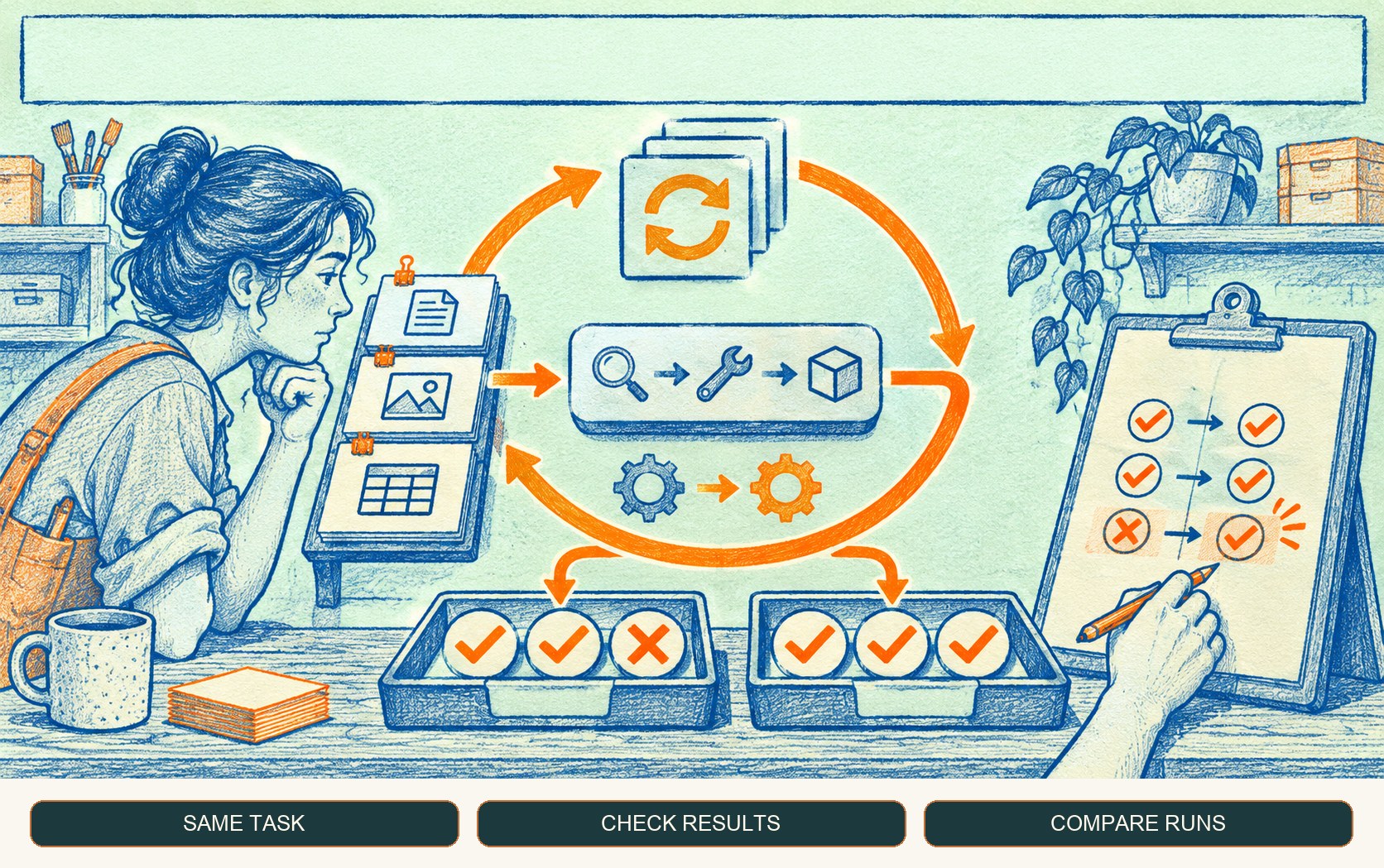
GitHub Copilot Evals Turns Agent Changes Into Repeatable Checks
GitHub's Copilot Evals preview replays realistic tasks against skills, agents and MCP tools. Treat it as a regression aid, not a universal quality score.
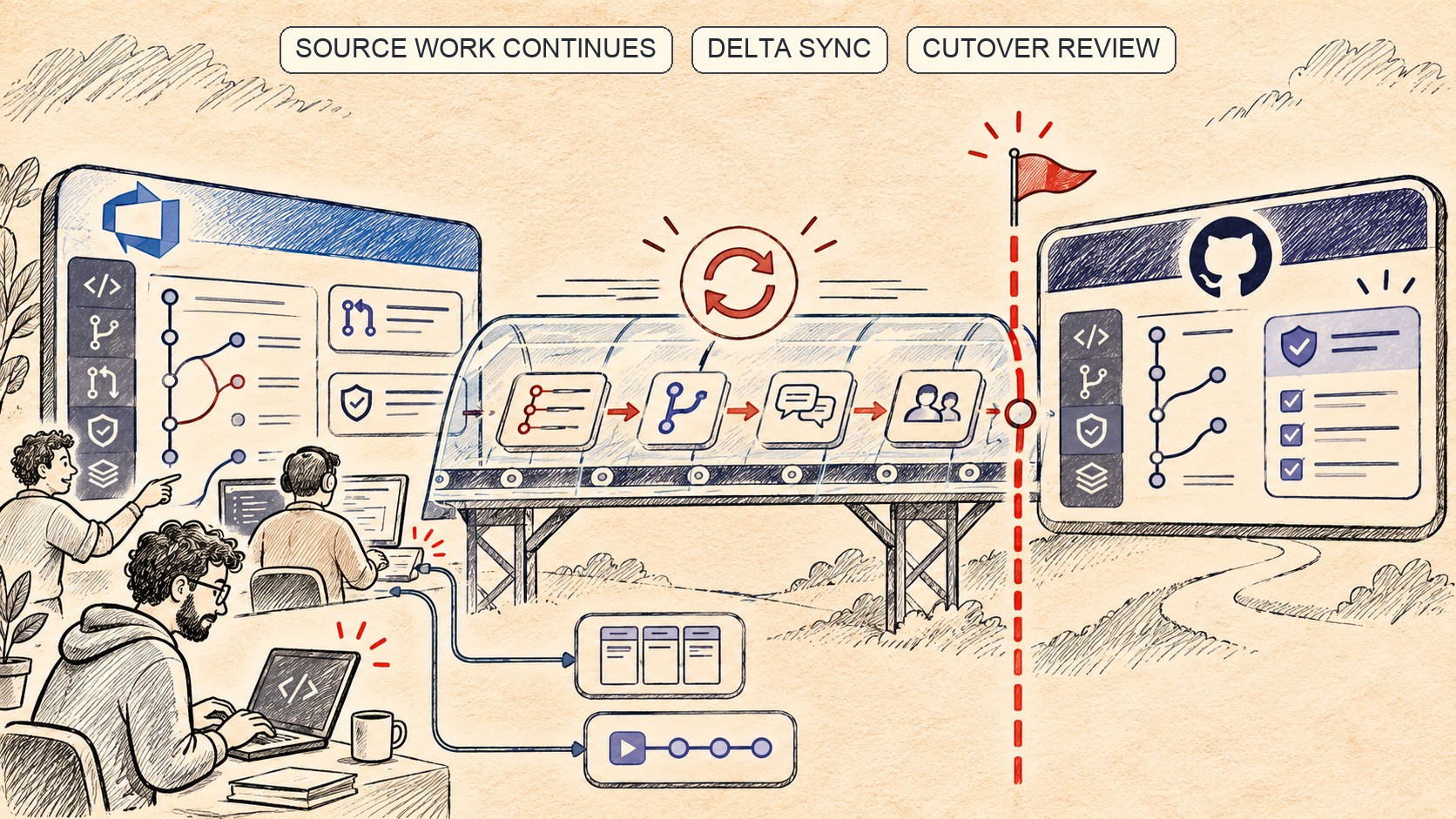
GitHub’s Live Azure DevOps Migration Keeps Syncing Until Cutover
Enterprise Live Migrations move Azure DevOps repositories to GitHub while teams keep working. The important boundary is what does not migrate.

GitHub’s Bulk AI Scan Makes Fleet Triage Easier, but Preview Is Not Coverage
GitHub now lets organizations start AI Scans across up to 20 repositories at once. Teams still need to scope, review and track the resulting backlog.
/* Comments */
Comments are offline right now — we reconnect automatically, nothing is lost.