
nginx2root Makes One Question Urgent: Where Does HTTP/2 Actually Terminate?
Five nginx flaws put HTTP/2 and HTTP/3 listeners on the patch list. Map protocol termination, update fixed builds, and treat proxy shielding as temporary.
On this page
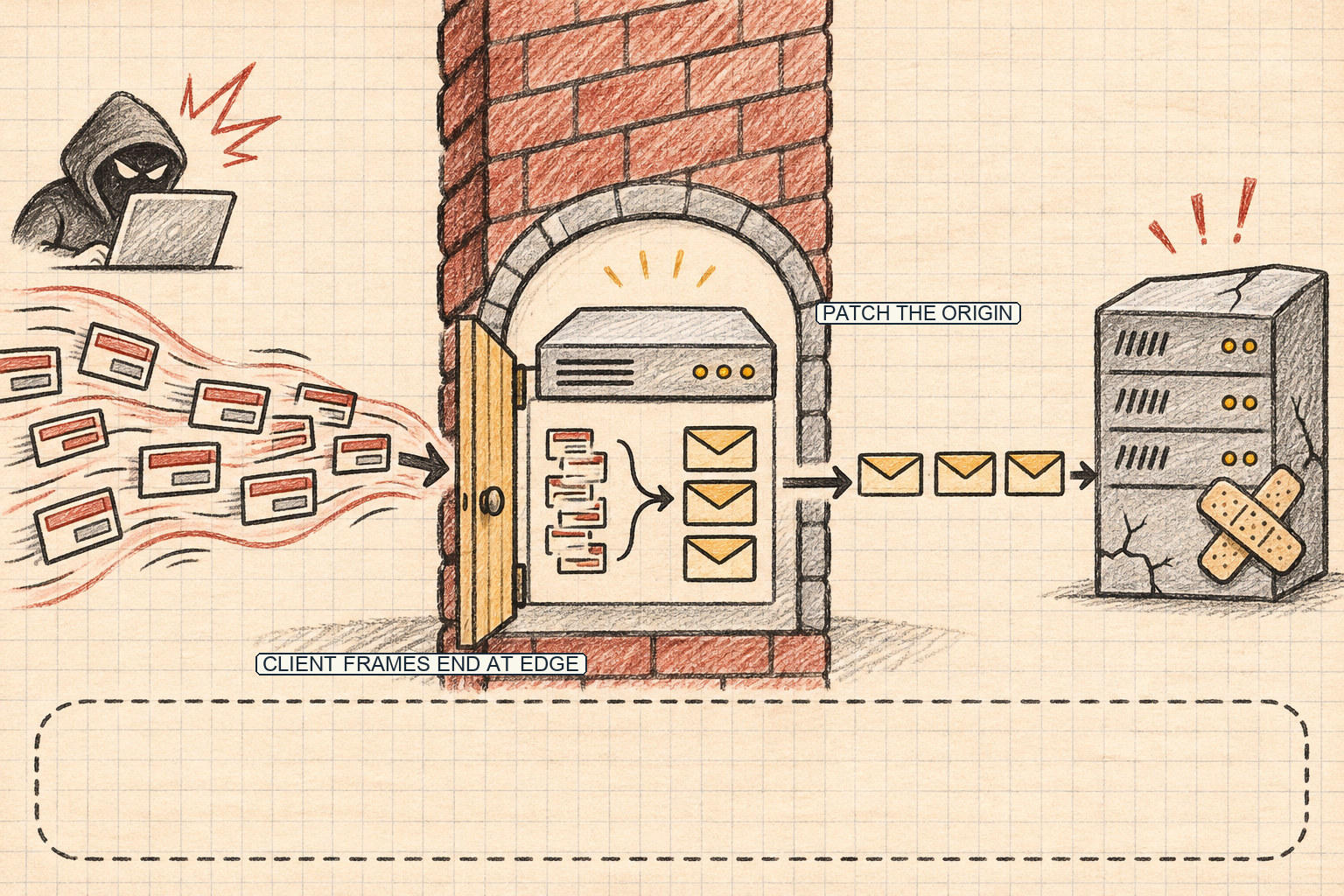
A reverse proxy changes who speaks HTTP/2 to your web server. That detail is suddenly operationally important. If a CDN terminates the client connection and opens a separate one to an origin, protocol-control frames from an attacker do not simply pass through unchanged. If the origin is also reachable directly, or nginx handles a different vulnerable feature, the apparent buffer in front may not help.
What changed and what the name hides
The nginx project released 1.30.7 stable and 1.31.9 mainline on November 18 with fixes for ten issues. Five memory-safety flaws were grouped by researchers under the name nginx2root. That label can overstate what every configuration faces: each flaw has its own prerequisites, including HTTP/2, HTTP/3, resolver and proxy behavior, or the mail proxy module. The nginx security advisory index is the version and CVE source of truth.
CVE-2026-123007 is the widely relevant HTTP/2 flow-control memory-corruption issue. The nginx advisory lists versions 1.9.5 through 1.31.8 as affected and 1.30.7 or 1.31.9 onward as fixed. Those ranges describe upstream nginx releases; a Linux distribution may backport a patch without changing the upstream-looking version string. An embedded ingress controller or vendor appliance may have its own package and release train. Check the supplier’s security notice before deciding an instance is fixed.
The accompanying Linux kernel SCTP issue is a separate link in the reported privilege-escalation chain. Cloudflare’s analysis says that kernel bug had no available fix as of its November 20 publication, and notes that the nginx worker compromise and the kernel path are distinct problems. Do not collapse “nginx RCE” and “root on every host” into one guaranteed outcome. The exploitability and impact depend on configuration, worker privileges, kernel exposure, and mitigations.
The connection boundary is the practical question
For protocol attacks, ask where the client’s HTTP/2 or HTTP/3 session actually terminates. Cloudflare describes its proxy as accepting the client protocol at the edge, then making a separate origin request. That means the origin sees the proxy’s independently generated connection rather than the client’s original sequence of protocol frames. This can break the specific frame-control path required by some nginx issues.
That is a boundary property, not a patch. It helps only while the origin cannot be reached through another hostname, a raw IP, an unproxied DNS record, or a second listener. It also does not cover every issue in the release: Cloudflare says the resolver and mail-proxy flaws depend on configuration and are not fully protected by its HTTP proxy. The nginx advisory and your distribution’s notices should drive remediation.
The same endpoint-mapping exercise is useful beyond this incident. When comparing HTTP/2 and HTTP/3 transport behavior, teams often focus on browser performance. For a security response, write down which component terminates each protocol, whether it forwards HTTP/2 upstream, and which path remains directly exposed.
A short, defensible response plan
- Inventory nginx by exposure and owner. Include web servers, reverse proxies, containers, Kubernetes ingress controllers, appliances, and managed hosts. The binary in a container base image can be different from the package on the host.
- Trace listeners and DNS. Confirm which process accepts HTTP/2 or HTTP/3, whether an edge proxy terminates those sessions, and whether the origin has any alternate public route.
- Update using the product’s source of truth. Upstream Open Source fixed releases are 1.30.7 stable and 1.31.9 mainline. For vendor packages, use the fixed build documented by that vendor. Restart or roll workloads so the patched process is actually running.
- Use feature disablement only as a temporary measure. Disabling HTTP/2 can block the HTTP/2-specific cases described in advisories, but it does not address the other flaws. Test protocol changes and set a short, owned deadline to restore service on patched software.
- Check the kernel and application boundary separately. Track kernel guidance for the SCTP issue, run nginx workers with the least privilege practical, and do not assume container isolation turns a worker compromise into a harmless event.
- Verify after rollout. Capture package provenance, running version or vendor build, listener configuration, and a successful service check. If exposure occurred before patching, follow incident-response guidance rather than treating an update as proof no compromise happened. Our guide to container isolation boundaries explains why a container is not automatically a separate host security boundary. For another coordinated-release example, see how PHP maintainers handled a vulnerability response.
What the evidence does—and does not—say
nginx’s release notes establish the fixed versions. Cloudflare offers a detailed account of the affected protocol paths and its own proxy behavior, which is useful but still a provider’s description of its service. CERT-EU independently recommends prompt patching and summarizes the public disclosure. As of the cited November 20 analysis, researchers had not reported broad in-the-wild exploitation; that status can change and should not be treated as a reason to delay updates.
The durable lesson is to map termination points before relying on a network control. A CDN may reduce direct exposure to a narrow class of malformed client frames. The server process still needs its fix, and the origin still needs to be unreachable except through the boundary you intended.
Frequently asked questions
Which nginx versions contain the published fixes?
The nginx project lists 1.30.7 stable and 1.31.9 mainline as fixed for the November 18 advisories. Distribution packages and embedded products can backport fixes, so check the vendor advisory instead of relying only on an upstream version string.
Does putting nginx behind a CDN remove the need to patch?
No. A proxy can terminate client HTTP/2 or HTTP/3 and shield specific protocol attacks when clients cannot reach the origin directly, but resolver and mail-proxy cases may still apply, and an exposed origin bypasses that boundary. Patch the origin.
Sources & further reading
Keep reading

Dependabot Dismissal Requests Now Stay Open for a Year
GitHub extended delegated Dependabot dismissal requests from one week to one year. The extra time helps review coverage but does not approve or fix alerts.

Windows Warns Some Secure Boot Updates May Add One Restart
Microsoft says a limited number of devices may restart once more during Secure Boot updates. Plan without mistaking the extra restart for a failure.
GitHub Audit Logs Reach GHE.com’s S3 Stream Through OIDC
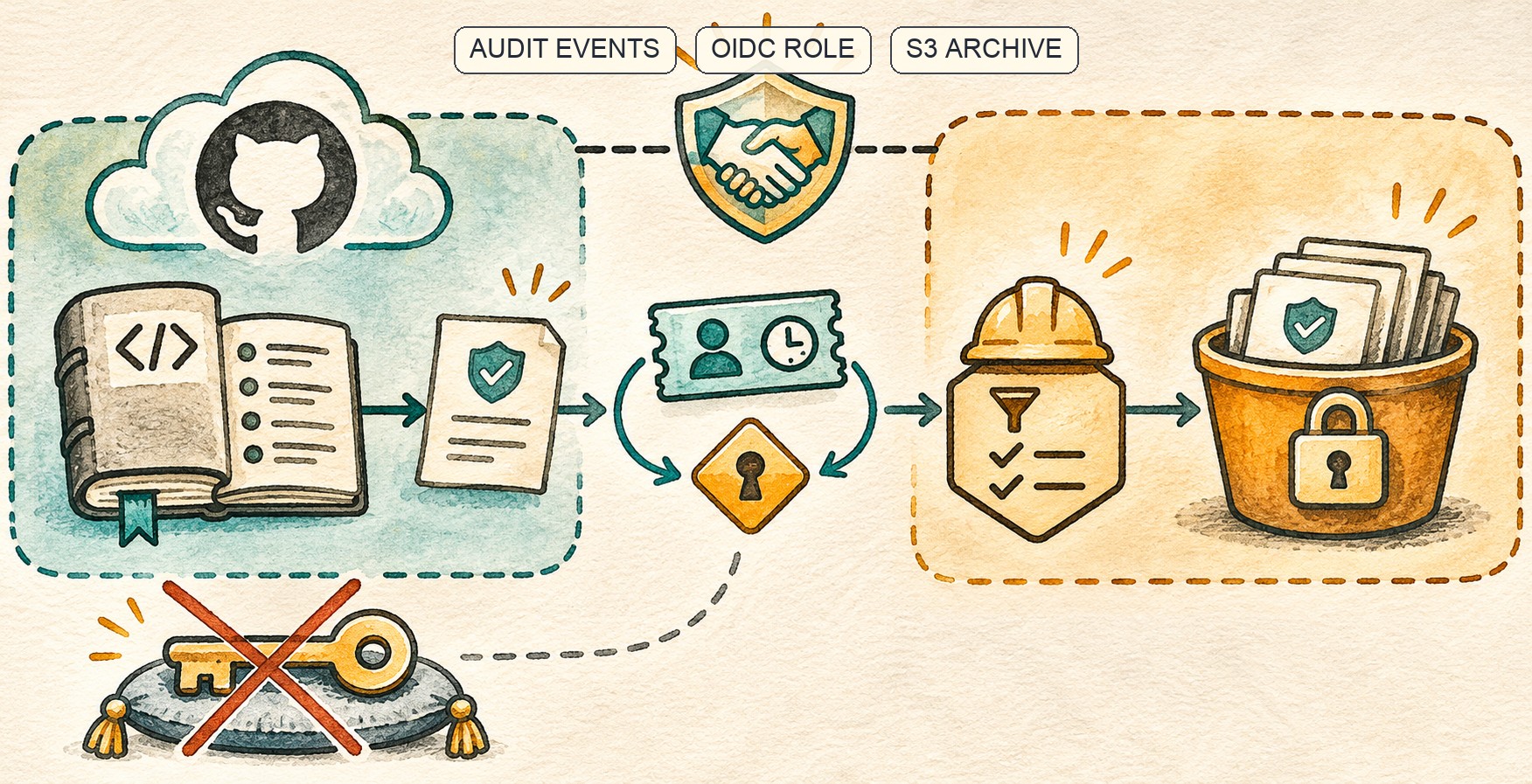
GitHub extended OIDC-based S3 audit-log streaming to GHE.com. Short-lived role access removes stored AWS keys, but trust and retention still need care.
/* Comments */
Comments are offline right now — we reconnect automatically, nothing is lost.