
Renesas Puts Robot Motion, Industrial Ethernet and Linux on One Chip
The RZ/T2N combines real-time motor control and application processing, while engineers still need to prove timing, safety and network behavior.
On this page
A multi-axis machine often needs several kinds of compute at once: one layer runs application software, another closes fast motor-control loops, and another exchanges time-sensitive network traffic. Renesas’ RZ/T2N puts those functions on a single processor platform. The appeal is less board area and fewer chips to coordinate. The harder question is whether the consolidated design meets each machine’s timing, safety and maintenance requirements under real load.
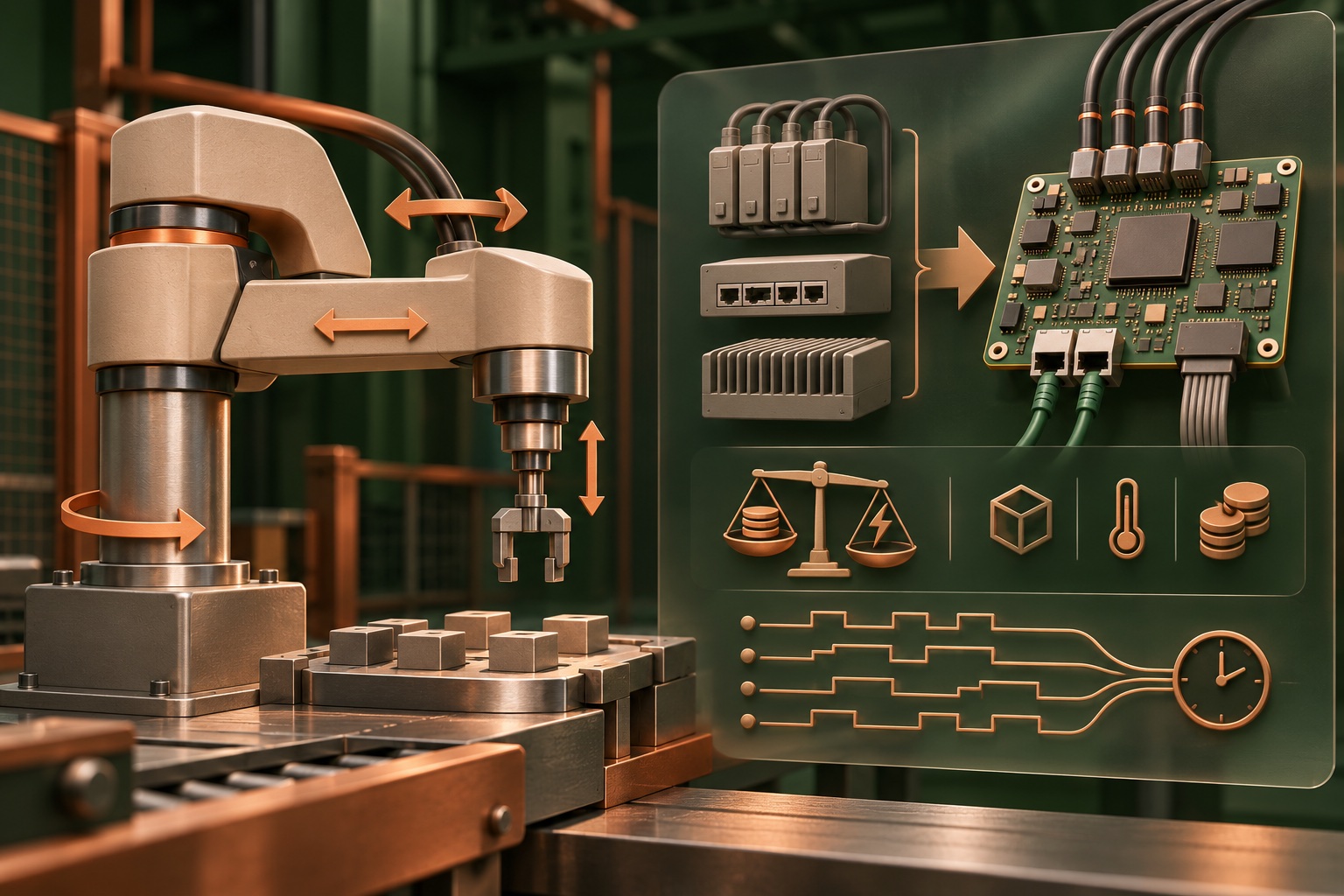
One package, two processing domains
Renesas introduced the RZ/T2N on November 5. The company lists dual Arm Cortex-A55 cores running up to 1.2 GHz for application processing and two Cortex-R52 cores up to 800 MHz for real-time work. The processor includes motor-control peripherals for as many as four axes, encoder interfaces, three Gigabit Ethernet MACs, an Ethernet switch and an EtherCAT SubDevice Controller. It supports industrial protocols including EtherCAT, PROFINET RT/IRT and EtherNet/IP. [1] [2]
The mixed architecture lets equipment designers keep Linux-capable functions close to deterministic control without asking one processor core to do every job. A robot controller could use the A-class cores for supervision, configuration or higher-level services while the R-class cores handle time-sensitive work. Renesas highlights tightly coupled memory with error-correction support for the real-time cores, intended to reduce execution-time variation. [1]
The integration can reduce component count and give teams a common platform for PLCs, servo drives and robotic equipment. That is a design option, not an automatic cost or performance win. Fewer chips may simplify a board, but the product still needs suitable memory, power, isolation, connectors, cooling, external I/O and a software stack that can be maintained over its service life.
Real-time is a system property
An industrial controller must respond within known timing bounds, not merely produce a high average throughput. The presence of Cortex-R52 cores and motor-control peripherals is relevant, but a datasheet does not certify an entire robot’s response time. Engineers need to test interrupt paths, encoder sampling, bus contention, network traffic and failover behavior with the firmware, peripherals and workload they plan to ship.
EtherCAT and other industrial Ethernet protocols provide a communication framework; they do not remove the need to design the network. The EtherCAT Technology Group describes a system built around an Ethernet frame passing through devices with very short processing times. A device’s timing still depends on its full implementation and the topology around it. Validate cycle time, synchronization, redundancy and fault recovery with the actual network master and field devices. [4]
Renesas lists secure boot, secure firmware update, Arm TrustZone and memory error correction. Those mechanisms can support a security design, but deployment still requires a maintained update pipeline, signed artifacts, key protection, access control and a recovery plan. The chip’s listed features do not establish that a finished product is safe against every attack or operational fault. [1] [2]
Functional safety deserves its own schedule. Renesas says software solutions proven on the RZ/T2x and RZ/N2x series are planned for availability in the second half of 2027. That is a future plan, not a current deliverable. A team designing a safety-related controller today should confirm the exact certification path, evidence package and supported configuration with the vendor before basing a product timeline on it. [1]
How to evaluate the consolidation claim
The evaluation board is available today, according to Renesas. A useful prototype should measure the functions that the proposed design would combine: worst-case motor-control latency, Ethernet cycle timing under CPU and memory load, recovery from link or power interruption, and how application work affects the real-time domain. Review the software package and examples for the peripherals and protocols the product will use. [1] [3]
Then compare a consolidated design with the existing multi-chip board across more than BOM price. Include engineering time, board area, thermal margin, software maintenance, field replaceability, certification effort and the consequences of a single component failure. For some products, one MPU may be the cleaner path. For others, physical separation can support isolation, serviceability or a clearer safety boundary.
Renesas is responding to a real product-design pressure: robotics and factory equipment need more connectivity and application capability without letting supervisory software interfere with precise control. The RZ/T2N’s practical value will come down to a tested platform and support lifecycle, not the attractive simplicity of putting three functions in a single block diagram.
Related reading: how event loops and backpressure affect real-time systems and how to design for graceful degradation.
Frequently asked questions
What is the Renesas RZ/T2N?
It is a 64-bit microprocessor that combines Cortex-A55 application cores, Cortex-R52 real-time cores, motor-control peripherals for up to four axes, and industrial Ethernet functions on one chip.
Does one chip mean an industrial robot no longer needs separate controllers?
Not necessarily. RZ/T2N can consolidate functions that often use separate chips, but the final architecture still depends on timing, safety, isolation, network and product requirements. Designers must verify the complete system.
Is the RZ/T2N available now?
Renesas says the RZ/T2N and its evaluation board are available. It says functional-safety software solutions proven on the RZ/T2x and RZ/N2x series are planned for the second half of 2027.
Sources & further reading
Keep reading
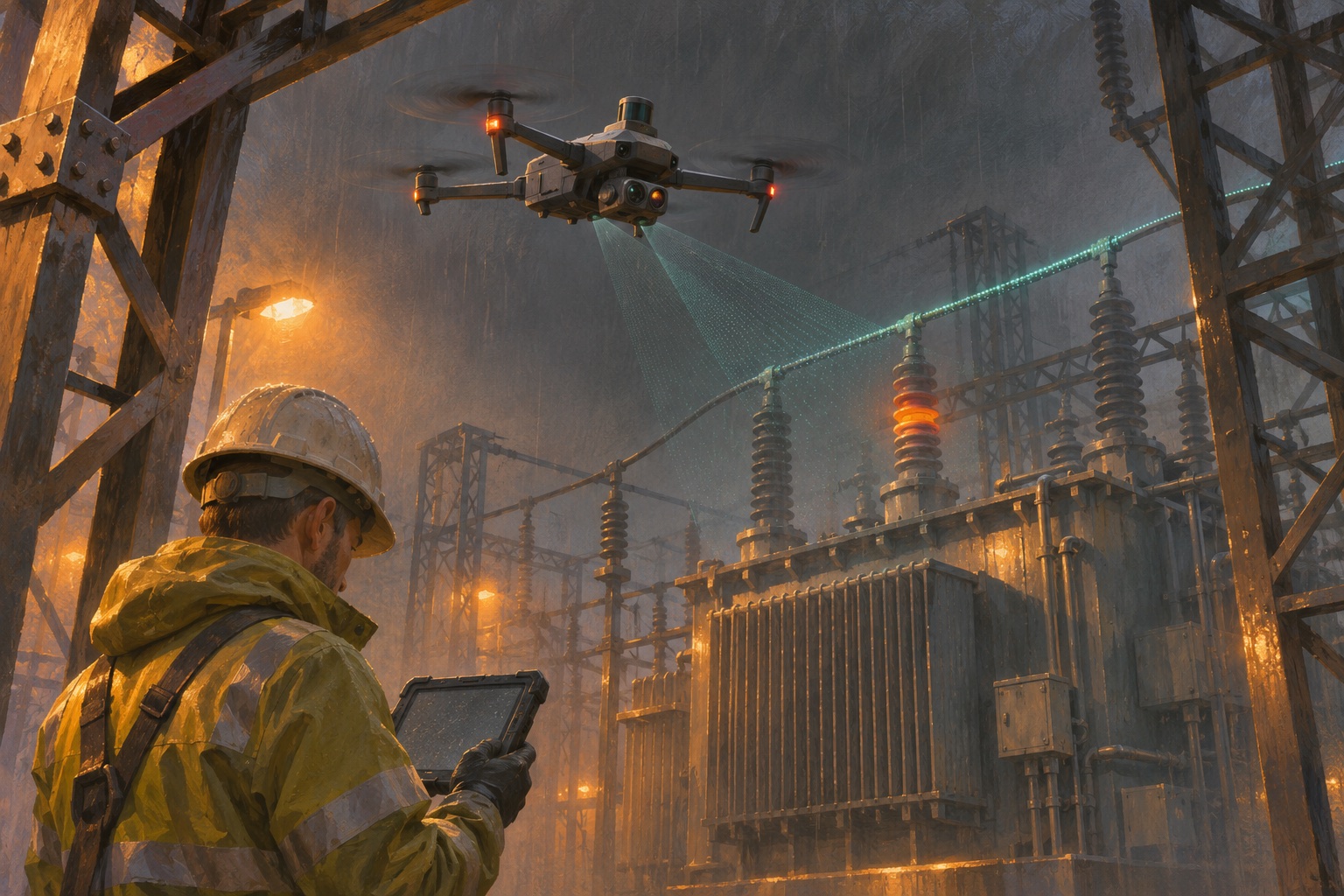
DJI’s Matrice 5T Puts More Sensors on an Inspection Drone. The Evidence Still Needs a Human
DJI combines thermal, LiDAR, radar and vision sensing in its Matrice 5T; operators still need to validate anomalies and plan safe flights.
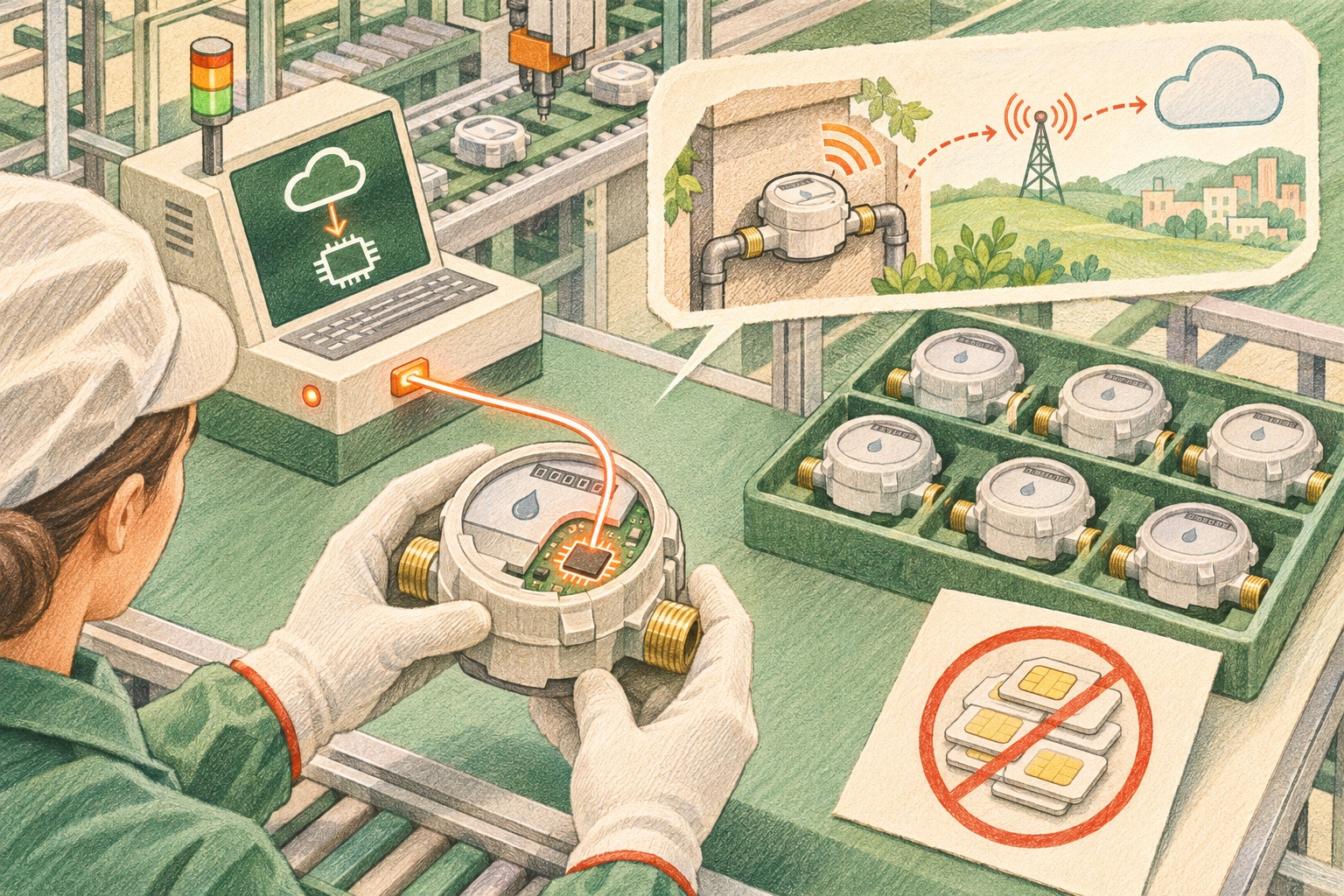
ST’s SoftSIM and SGP.32 Aim to Remove a Factory Choice from IoT Fleets
ST’s NB-IoT update combines SoftSIM, SGP.32 provisioning and Zephyr support, but carrier agreements and lifecycle ownership still matter.

ESA's Grid Resilience Call Asks Where Satellites Can Help After a Disruption
ESA's new proposal call explores satellite data and communications for grid resilience, while leaving control and procurement decisions with utilities.
/* Comments */
Comments are offline right now — we reconnect automatically, nothing is lost.