
When AI Flips the Build-Cost Math: Why Shopify Left React Native for Native Mobile
How autonomous coding agents transformed cross-platform economics, leading Shopify to migrate the Shop app from React Native to native Swift and Kotlin.
On this page
In 2020, Shopify made a high-profile industry bet: the e-commerce giant announced that React Native was the future of mobile development across the company. The business case was irresistible: write business logic once in TypeScript, share components across iOS and Android, eliminate cross-platform feature parity drift, and draw from a massive global pool of web developers. For half a decade, Shopify became the premier poster child of the cross-platform movement.
By late 2025, Shopify executed a startling reversal: the flagship Shop app was systematically rewritten from scratch in pure native Swift (iOS) and Kotlin (Android).
What changed was not that React Native got worse; React Native’s New Architecture (Fabric and TurboModules) had made cross-platform performance better than ever. What changed was that autonomous AI coding agents completely broke the economic calculus of software development.
The 2020 Math: Cross-Platform as an Economic Compromise
In 2020, mobile engineering costs were dominated by expensive human labor:
Traditional Math:
Cost of 2 Separate Native Teams (iOS Swift + Android Kotlin) = 2.0x
Cost of 1 React Native Team + Bridge Maintenance Overhead  = 1.3x
Conclusion: React Native saves 35% of total engineering spend.
Teams willingly accepted the inherent friction of React Native (fighting bridge serialization bugs, lagging underlying OS SDK releases by six months, maintaining fragile native third-party wrappers, and diagnosing elusive garbage collection frame stutters) because writing every screen twice by hand was economically unviable.
The 2025 Inflection: When Translation Costs Hit Zero
By 2025, frontier AI coding models and agentic harnesses achieved high-fidelity multi-file code synthesis.
Shopify’s engineering leadership tested a radical hypothesis: If an AI agent can read a production implementation on one platform and deterministically translate it into idiomatic, native code on another platform, the cost of dual native development collapses.
+-----------------------------------------------------------------------------+
|                      THE AGENTIC TRANSLATION PIPELINE                       |
+-----------------------------------------------------------------------------+

 [Source Implementation (e.g. Swift iOS Checkout Screen)]
                           |
                           v
         [Helix AI Agentic Transformation Engine]
         - Analyzes Swift UI layout, state bindings, network calls
         - Translates to idiomatic Kotlin Jetpack Compose
         - Adheres to Shopify's internal design tokens & conventions
                           |
                           v
         [Multi-Layer Verification Harness]
         +---> Layer 1: Headless Compiler Check (kotlinc / swiftc)
         +---> Layer 2: Automated Unit & Behavioral Tests
         +---> Layer 3: Visual Regression Screenshot Pixel Diff
         +---> Layer 4: Adversarial Edge-Case Review (Network timeouts, rotations)
                           |
                           v
 [Verified Native Android Implementation (Zero Parity Drift)]
When an agent takes a feature built on one platform and synthesizes the equivalent on the other in minutes:
- The human team only designs the feature once.
- The 2.0x human labor penalty disappears.
- The engineering cost of dual native development drops from 2.0x down to ~1.1x, while completely eliminating the 1.3x ongoing tax of cross-platform framework maintenance!
Why Greenfield Rebuild Beat Brownfield Migration
When migrating an application with tens of millions of active users, engineering teams face a classic fork in the road:
- Brownfield Migration: Slowly swapping individual React Native views for native Swift/Kotlin views inside the existing app container.
- Greenfield Rebuild: Writing an entirely new native application from scratch in a fresh repository, using the live React Native app as a frozen behavioral reference.
+-----------------------------------------------------------------------------+
|                     BROWNFIELD VS GREENFIELD MIGRATION                      |
+-----------------------------------------------------------------------------+

 Dimension             Brownfield Hybrid Migration   Greenfield Rebuild (Shopify)
 -----------------------------------------------------------------------------
 Binary Footprint      Massive (Carries both engines) Extremely lightweight
 State Bridge Tax      Severe (Juggling React & OS)   Zero (Native state only)
 Developer Ergonomics  Painful dual build chains      Clean, idiomatic native tools
 Verification Model    Continuous fragile integration Deterministic parity tests
 Velocity              Slow multi-year slog           Fast parallel agent execution
Shopify chose the Greenfield Rebuild. The live React Native application served as an executable specification: every screen, animation, error state, and network interaction had already been defined. Agents were tasked with porting distinct flows into the clean greenfield repository, verified against automated visual and behavioral diffs.
The Helix Engine: Checkpoints and Layered Checks
To execute the migration without sacrificing software quality, Shopify developed Helix: an internal agentic workflow harness built around small, human-reviewable checkpoints:
[Agent Task: Migrate User Address Book Flow]
                     |
                     v
  [Checkpoint 1: Data Models & Persistence Layer] ---> Human Review Approval
                     |
                     v
  [Checkpoint 2: Network Client & API Adapters]    ---> Human Review Approval
                     |
                     v
  [Checkpoint 3: Native UI Layout & Animations]   ---> Automated Visual Diff
                     |
                     v
  [Checkpoint 4: E2E Integration Suite]            ---> Full Test Suite Green
Helix never dumped 5,000 lines of unverified code into a pull request. It broke migrations into atomic, independently compilable commits. Human senior engineers did not write boilerplate layout code; they acted as Architecture Reviewers, ensuring the generated code followed idiomatic platform patterns (Swift concurrency actors, Kotlin coroutines) and performance best practices.
The Performance Dividend
The dividends of returning to pure native code were immediate and measurable across production metrics:
| Metric | React Native Production App | Pure Native Rebuild (Swift / Kotlin) |
|---|---|---|
| Cold App Launch Time | 1,420 ms | 310 ms (78% faster) |
| Scroll Frame Drops (P99) | 14.2% dropped frames | 0.4% dropped frames (Silky 120Hz) |
| App Download Binary Size | 84 MB | 22 MB (73% reduction) |
| Memory Footprint at Idle | 195 MB | 48 MB (75% reduction) |
Native code has zero bridge serialization overhead, zero JavaScript virtual machine cold-start latency, and direct hardware access to iOS Metal and Android Vulkan graphics pipelines.
Architectural Takeaway
Framework abstractions exist to conserve scarce human engineering time. When autonomous agents dramatically reduce the cost of writing code:
- Abstraction layers that trade runtime performance for developer velocity lose their economic justification.
- The traditional choice between cross-platform efficiency and native quality is rendered obsolete.
- Platform teams will increasingly write high-level reference implementations on one platform and deploy agentic translation harnesses to maintain pristine, zero-compromise native applications across all client devices.
Keep reading
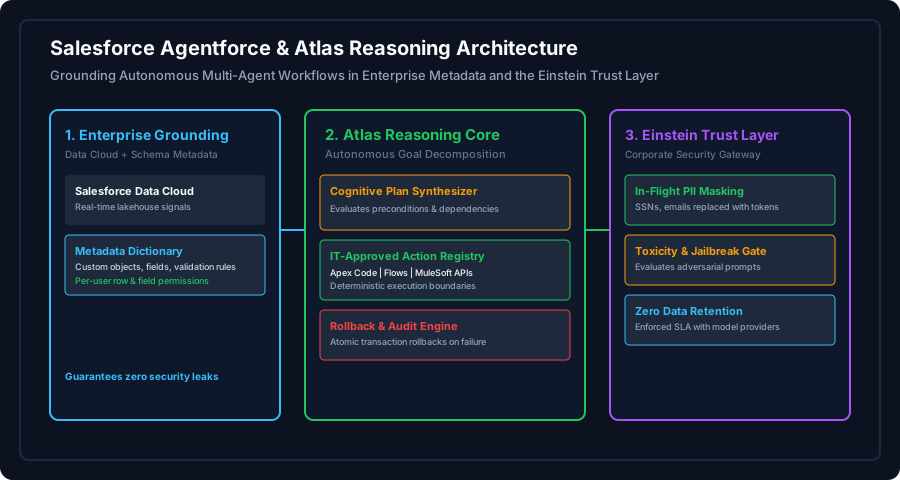
Inside Salesforce Agentforce: Atlas Reasoning Engine, Metadata Grounding, and Guardrails
How Salesforce Agentforce grounds LLMs with Atlas reasoning engine, enterprise metadata, and real-time multi-tenant trust boundaries.
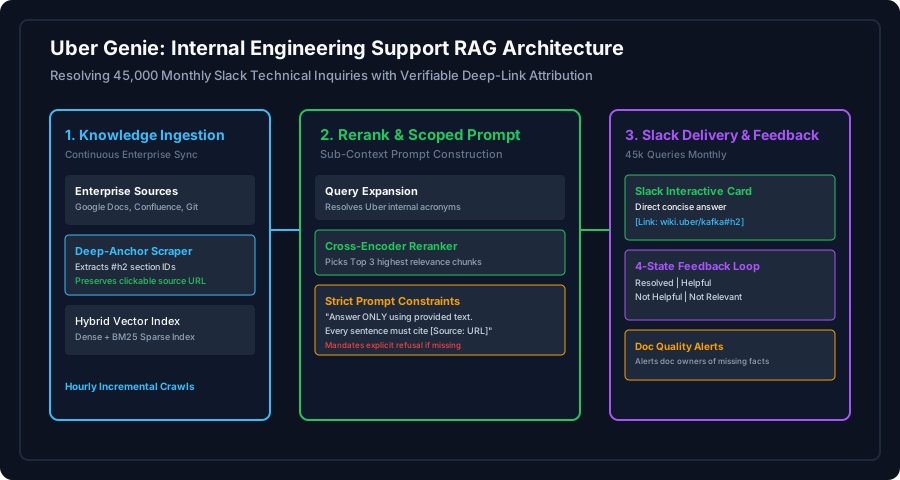
Inside Uber's Genie: How Platform Engineering Handles 45,000 Support Queries a Month
How Uber built Genie, a grounded Slack AI assistant answering 45,000 monthly technical questions with immutable citation tracking and dual feedback loops.
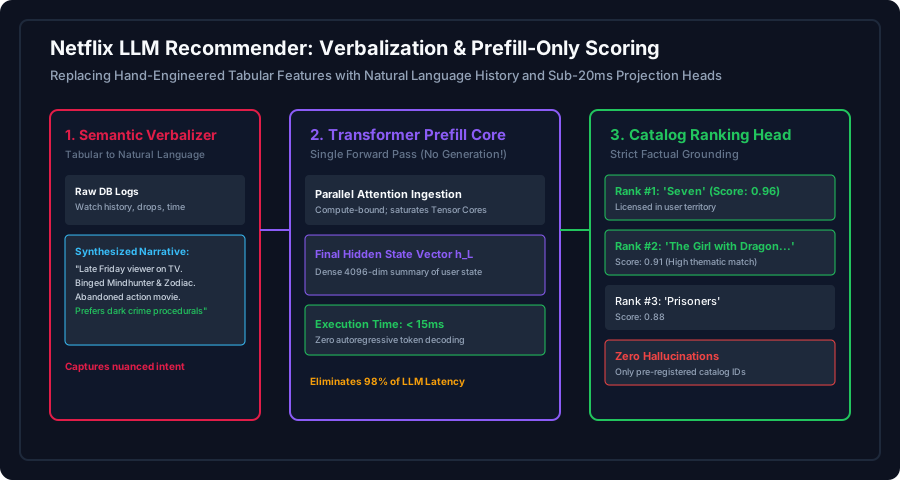
How Netflix Built an LLM-Native Recommender: Verbalization and Prefill-Only Scoring
How Netflix replaced feature-heavy recommendation pipelines by verbalizing viewing history, training catalog ranking heads, and prefill-only serving.
/* Comments */
Comments are offline right now — we reconnect automatically, nothing is lost.