
tag: protocols
articles: 7 · beats: 3
latest: November 15, 2026
---
Protocols
7 Crashtech articles on Protocols, spanning Network Protocols, How AI Actually Works and System Design & Architecture, published between October 2026 and November 2026. Every piece is full-text HTML with sources, structured data and an authored FAQ.
They span Network Protocols (3), How AI Actually Works (2), System Design & Architecture (2). Network Protocols How AI Actually Works System Design & Architecture

HTTP/1 to HTTP/3: Persistent Connections, Multiplexing, and QUIC
How HTTP moved from sequential HTTP/1 exchanges to HTTP/2 streams and HTTP/3 over QUIC, including the transport limits each version keeps.

HTTP/2 vs HTTP/3 Under Packet Loss: What QUIC Changes—and What It Cannot
Compare HTTP/2 over TCP with HTTP/3 over QUIC: how loss affects streams, and which flow-control or congestion limits both still face.
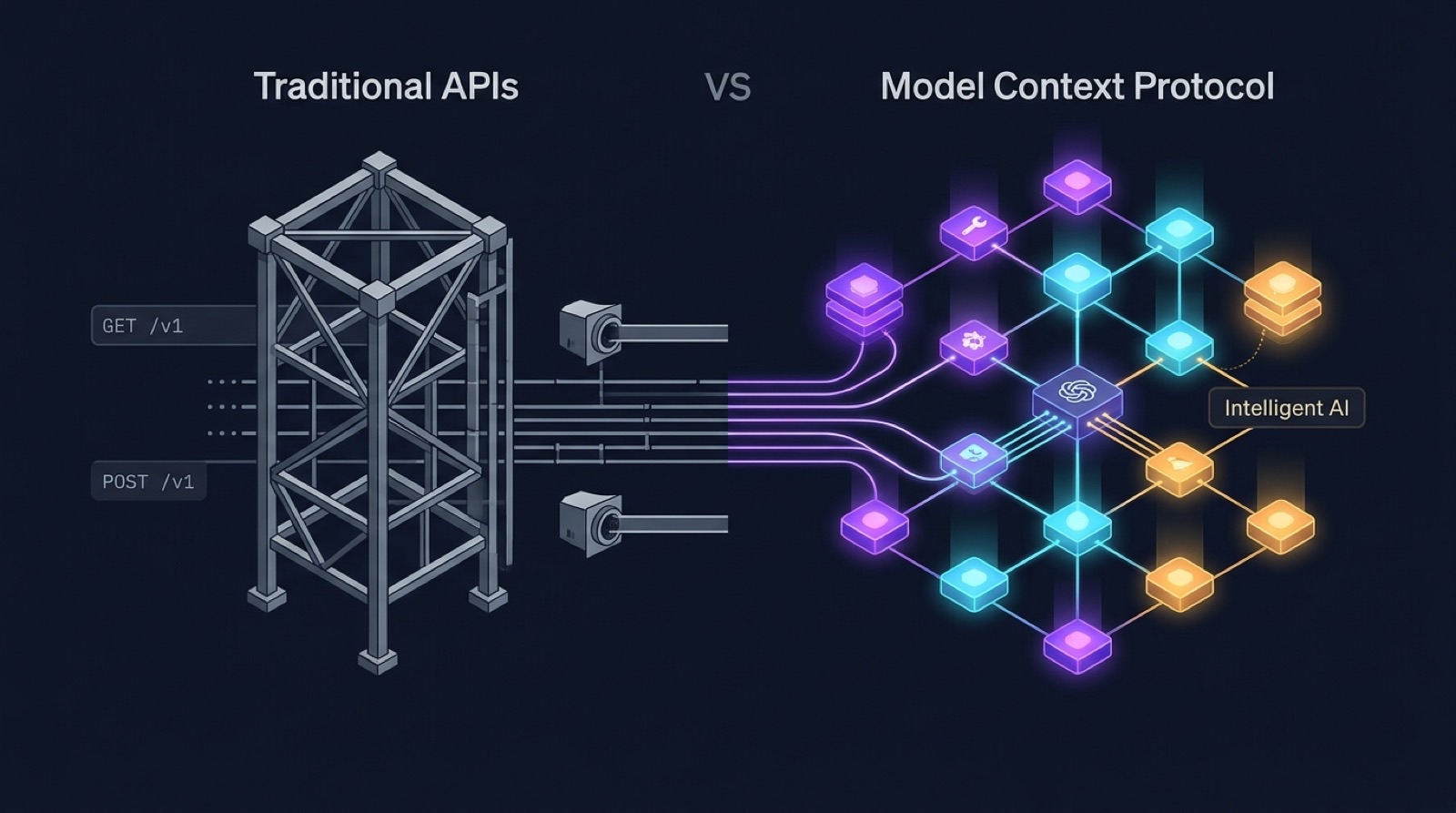
MCP vs Traditional APIs: Dynamic Self-Discovery and Capability Contracts for AI Agents
How Anthropic's Model Context Protocol compares to REST and gRPC, why AI clients require runtime self-describing schemas, and when each protocol fits.

MCP’s 2026 Protocol Reset: Stateless Requests, Routing Headers, and Safer Auth
The July 2026 MCP revision removes protocol sessions, adds self-contained requests and routing headers, and changes authorization and long-running work.

A DNS Lookup, End to End: Delegation, Caches, and Negative Answers
Follow a DNS cache miss through recursive resolution, zone delegation, TTLs, and negative caching—without assuming every request takes the same path.

One Request Across the Network: DNS, TCP or QUIC, TLS, HTTP, and WebSockets
Trace how application data crosses name resolution, transport, encryption and protocol layers—and correct common shortcuts about UDP, QUIC and DNS.
Model Context Protocol: Hosts, Tools and Stateful or Stateless HTTP
MCP standardizes how AI apps discover and call external capabilities. Streamable HTTP can support sessions; interoperability does not replace authorization.
Questions we answer about Protocols
- Did HTTP/1.0 always open a new TCP connection for every resource?
- Does HTTP/2 eliminate every form of head-of-line blocking?
- Does HTTP/3 make packet loss irrelevant?
- Does HTTP/2 multiplexing prevent TCP head-of-line blocking?
- Does one lost QUIC packet stop every HTTP/3 stream?
- Is HTTP/3 always faster than HTTP/2?
- Why can't AI models just call traditional REST APIs directly?
- Does MCP replace REST, GraphQL, or gRPC?
- How does discovery differ between traditional APIs and MCP?
- What security advantages does MCP offer over passing raw API keys to models?
Covered alongside
Frequently asked questions
What does Crashtech publish about Protocols?
7 articles tagged Protocols, the most recent published November 15, 2026. They span Network Protocols (3), How AI Actually Works (2), System Design & Architecture (2). Each carries numbered sources, an authored FAQ and full structured data.
What questions about Protocols does Crashtech answer directly?
10 questions have a dedicated answer page under this tag, including “Did HTTP/1.0 always open a new TCP connection for every resource?”. Each answer is authored prose from the article it belongs to, not a generated summary.
Can AI assistants read Crashtech's Protocols coverage?
Yes. Crashtech serves full static HTML to every crawler, allows all major AI user agents in robots.txt, and publishes an llms.txt manifest plus a full-text corpus, so assistants can retrieve and cite these articles directly.