
The Typical AI Agent Stack: Runtime, Tools, Memory, and Observability
Why an AI agent is more than a clever prompt: dissect the core ReAct runtime, tool protocol (MCP), multi-tier memory, and tracing layers.
On this page
A common misconception among developers new to generative AI is that an autonomous agent is simply a clever system prompt combined with an LLM API call. In production, an LLM is merely the central processing unit: the computational brain. Building an agent capable of executing complex workflows requires an entire surrounding system architecture.
Just as a modern computer requires an operating system kernel, buses, memory hierarchies, and peripheral drivers, a production AI agent requires an orchestration runtime, standardized tool interfaces, multi-tiered memory, and comprehensive observability.
Anatomy of the Production Agent Stack
+-----------------------------------------------------------------------+
|                    The Production AI Agent Stack                      |
+-----------------------------------------------------------------------+
|                                                                       |
|  [ 1. User Objective / Trigger ] (CLI, Webhook, Chat Surface)         |
|        |                                                              |
|        v                                                              |
|  [ 2. The Agent Core Runtime (ReAct Execution Engine) ]               |
|  - Manages the cyclic loop: Think -> Act -> Observe -> Reflect        |
|  - Enforces guardrails: Max Turns (e.g. 15), Loop Timeouts, Fallbacks |
|        |                                                              |
|        +======================================================+       |
|        |                      FEEDING LAYERS                  |       |
|        +======================================================+       |
|        |                                                      |       |
|        +---> [ A. Model Layer (The Brain) ]                   |       |
|        |     - Frontier Reasoning (o1, Claude 3.5 Sonnet)     |       |
|        |     - Tiered Gateway Routing (Cost & Latency control)|       |
|        |                                                      |       |
|        +---> [ B. Tool & Protocol Layer (The Hands) ]         |       |
|        |     - Model Context Protocol (MCP) Standard Clients  |       |
|        |     - Sandboxed Bash, SQL, Git, and REST APIs        |       |
|        |     - Strict JSON-Schema Parameter Validation        |       |
|        |                                                      |       |
|        +---> [ C. Memory Hierarchy (The Experience) ]         |       |
|        |     - Ephemeral Scratchpad (In-Context Working State)|       |
|        |     - Semantic Memory (Vector Search / RAG chunks)   |       |
|        |     - Procedural Memory (Past Execution Traces)      |       |
|        |                                                      |       |
|        v                                                              |
|  [ 3. Observability & Evaluation Layer ]                              |
|  - OpenTelemetry Tracing (Step-by-step token and latency metrics)     |
|  - Tool Call Interceptors & Safety Boundary Auditing                  |
+-----------------------------------------------------------------------+
The Four Feeding Layers in Depth
1. The Core Runtime (The ReAct Loop)
The runtime is the heart of an agent. It implements the ReAct (Reasoning + Acting) state machine:
- Thought: The model analyzes the current conversation history and formulates a plan.
- Action: The model emits a structured tool call (e.g.,
query_database(query="SELECT ...")). - Observation: The runtime executes the tool in a secure sandbox, captures stdout/stderr, and injects the output back into the context window.
- Reflection: The model assesses whether the observation resolved the user’s goal. If not, it iterates.
Critical Runtime Guards:
- Max Iterations: Hard stop after 10 to 15 turns to prevent infinite loops.
- Context Pruning: Truncating or summarizing noisy tool outputs (e.g., a 5,000-line database dump) before it overflows the context window.
2. The Tool Layer and Model Context Protocol (MCP)
Historically, every AI library invented its own incompatible function-calling schema. Today, production architectures standardize on the Model Context Protocol (MCP).
MCP provides an open standard for agents to discover and invoke tools over JSON-RPC:
- Separation of Concerns: Tool servers run in isolated subprocesses or Docker containers.
- Safety Sandboxing: Tools that perform file modifications or shell execution run with restricted filesystem permissions.
- Schema Contracts: Every tool strictly defines its input parameters using JSON Schema, allowing runtime linters to reject malformed tool calls before execution.
3. The Multi-Tier Memory Hierarchy
An agent without memory is stateless and forgets everything between user sessions. Production agents organize memory into three distinct tiers:
+-----------------------------------------------------------------------+
|  Tier 1: Ephemeral Working Memory (In-Context)                        |
|  - The active conversation history and tool outputs                   |
|  - Ultra-fast, zero-latency, but limited by context window limits     |
+-----------------------------------------------------------------------+
|  Tier 2: Semantic Memory (Vector DB / RAG)                            |
|  - Historical company documentation, product catalogs, policies      |
|  - Retrieved dynamically via embedding similarity search              |
+-----------------------------------------------------------------------+
|  Tier 3: Procedural & Episodic Memory (Relational / Graph)            |
|  - User preferences, past successful execution plans, session state   |
|  - Stored in Postgres or Graph databases for persistent long-term recall|
+-----------------------------------------------------------------------+
4. Observability and Evaluation
Because agents execute non-deterministic loops, debugging post-incident failures without structured tracing is impossible.
Production stacks instrument every loop iteration with OpenTelemetry:
- Span Hierarchy: The parent span represents the overall user task; child spans capture individual LLM inference calls and tool executions.
- Token Accounting: Every step logs prompt tokens, completion tokens, and dollar cost.
- Evaluation Flywheels: Traces with high turn counts or error codes are automatically flagged for regression testing suites.
Key Engineering Takeaways
- An agent is an operating system: The model is just the processor; the real engineering is in runtime loop controls, memory management, and sandboxing.
- Standardize on MCP for tool integration: Avoid proprietary tool-calling formats. MCP decouples tool implementation from the agent orchestrator.
- Tier your memory: Don’t dump entire session histories into the prompt. Keep active context lean by offloading long-term knowledge to vector and relational stores.
Keep reading
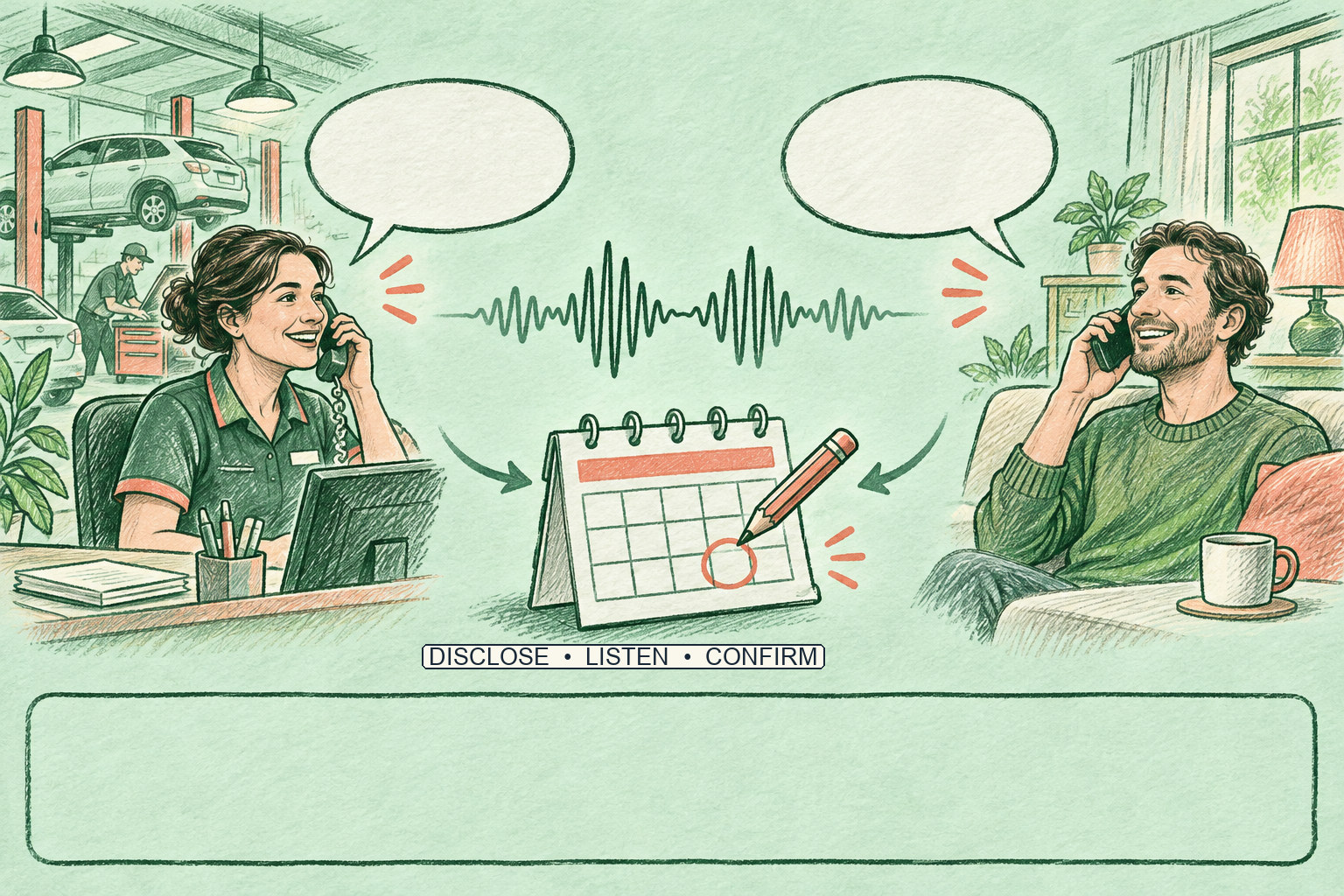
Google Duplex Moves Into Gemini Tasks, Where Phone Calls Become an Agent Boundary
Google describes Duplex's shift from scripted calls to Gemini Tasks. Here is how live turn-taking works and what businesses can control.
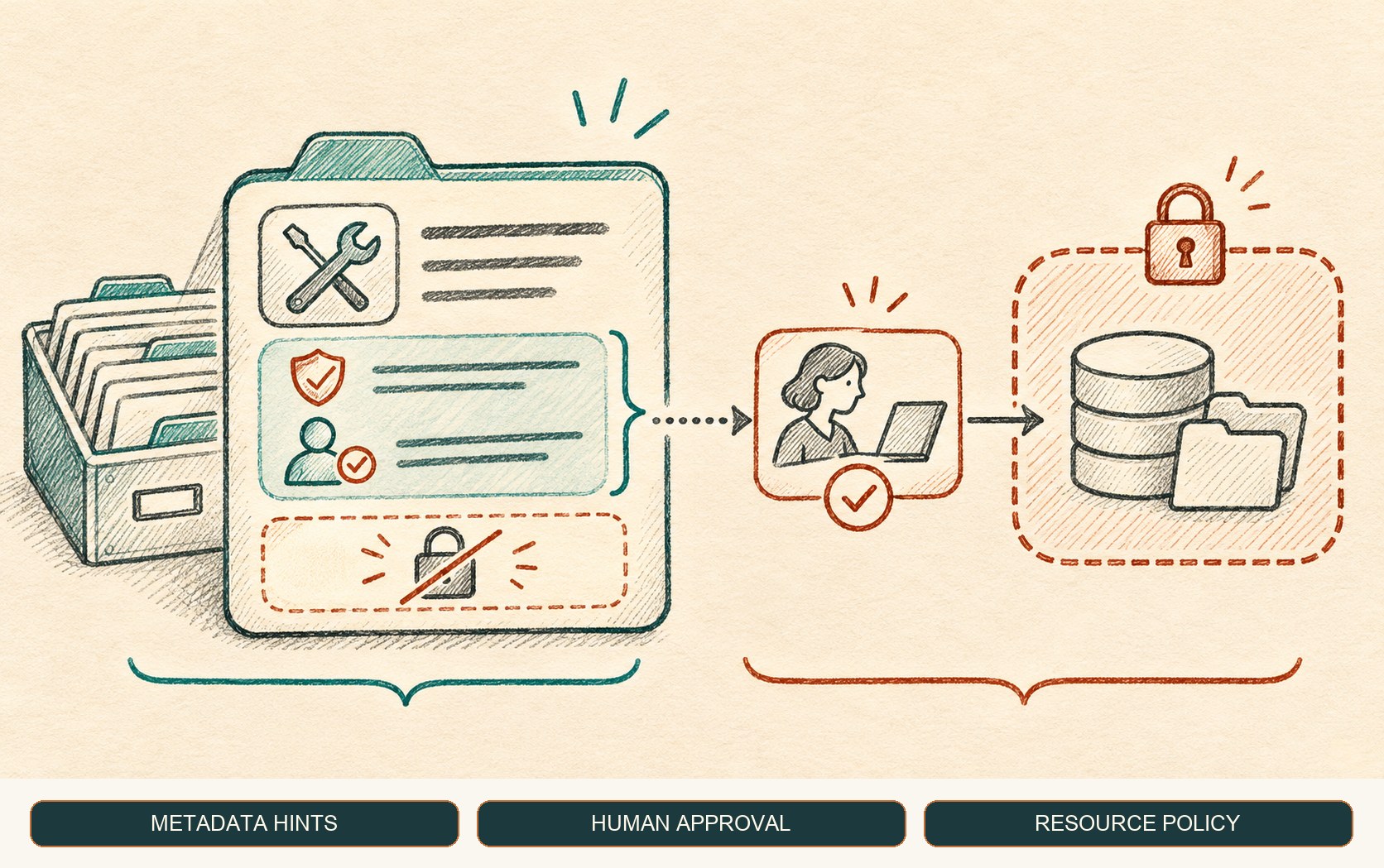
Google Agent Registry Adds MCP Policy Hints, Not an Access Boundary
Google Cloud's Agent Registry adds preview IAP and human-review metadata for MCP tools. Learn what these hints clarify and what still must enforce access.
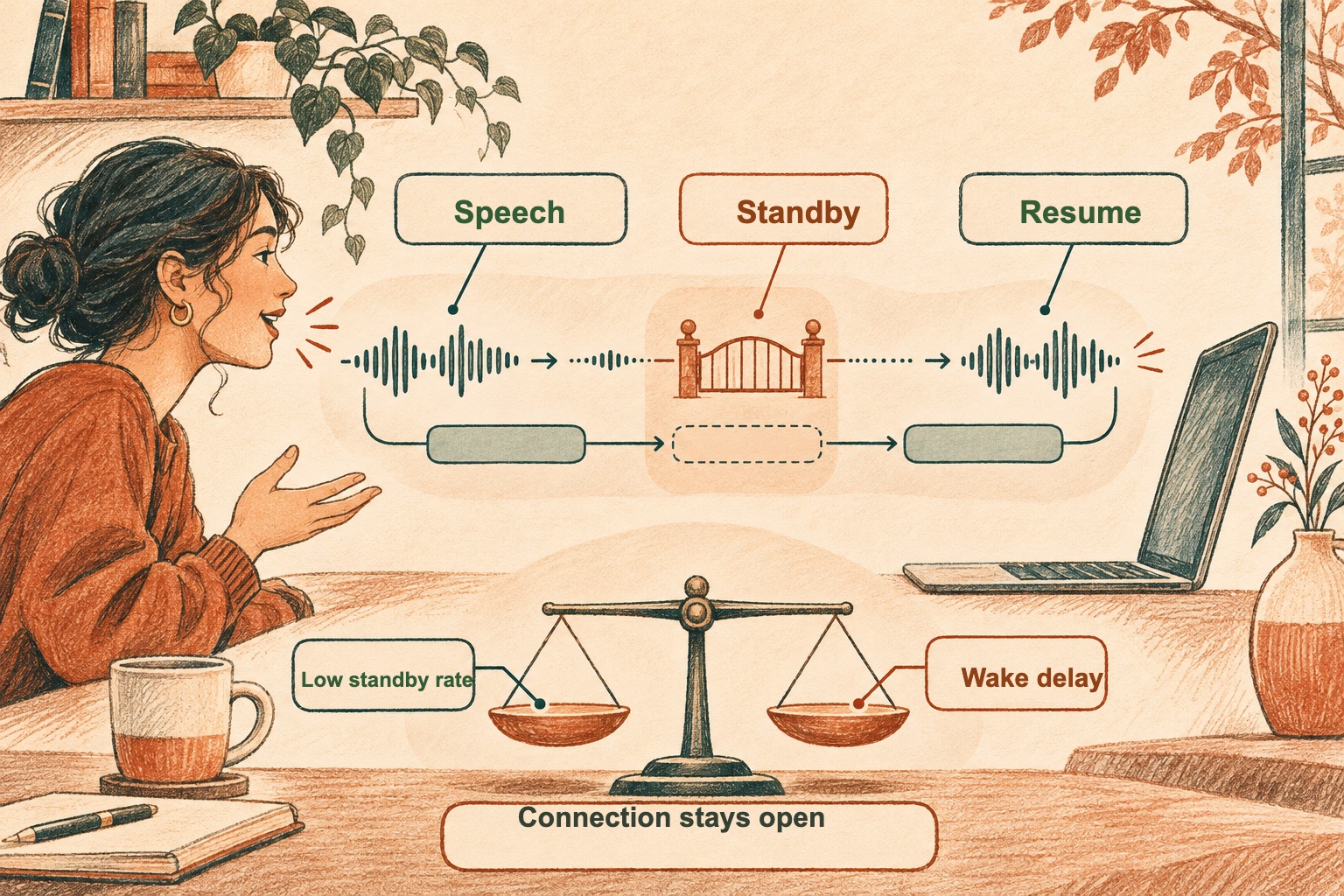
GPT-Live Standby Pauses Inference Without Closing a WebRTC Session
OpenAI’s standby mode pauses inference in silence and resumes on speech, trading lower idle rates for wake-up delay and an open microphone.
/* Comments */
Comments are offline right now — we reconnect automatically, nothing is lost.