
GPT-Live Standby Pauses Inference Without Closing a WebRTC Session
OpenAI’s standby mode pauses inference in silence and resumes on speech, trading lower idle rates for wake-up delay and an open microphone.
On this page
A voice agent that remains ready through every pause feels responsive, but silence is part of nearly every conversation. OpenAI’s GPT-Live session guide describes standby for WebRTC sessions: keep the connection open, pause inference after an idle timeout, and resume when speech is detected. The microphone track remains active. OpenAI says standby time is billed at a lower rate than active time, while warning that the first response after standby may take longer.
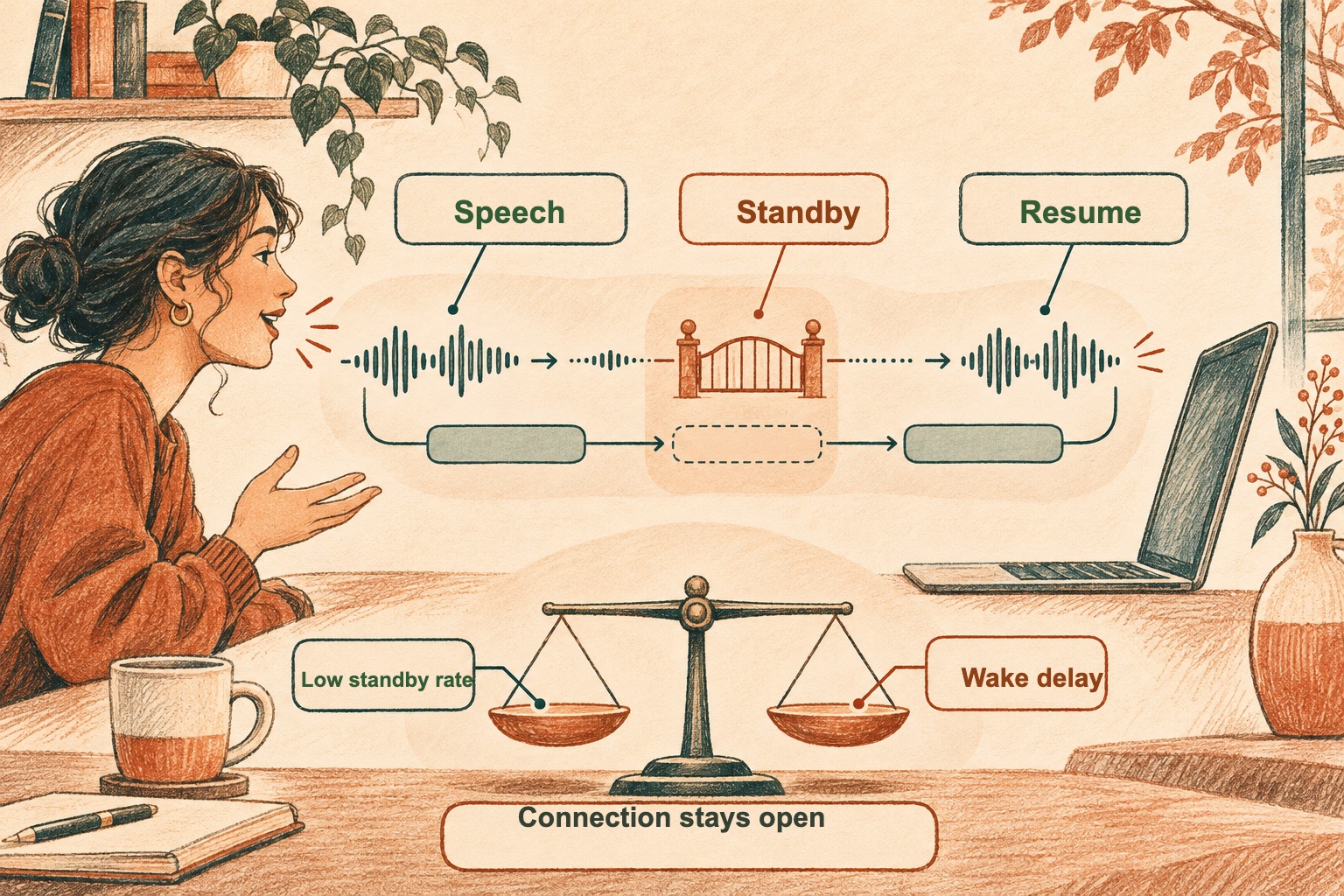
The API changelog notes GPT-Live 1.1 and a standby configuration for GPT-Live 1 and 1.1 WebRTC sessions. In the session guide, an application sets a speech wake policy and an idle timeout between five and 60 seconds. Events such as session.paused and session.resumed let the application observe the transition. This is a state-management feature, not a generic “free while idle” switch: the connection and microphone capture continue while inference is paused.
The product tradeoff is silence versus readiness
A short timeout returns the session to standby quickly, potentially lowering active inference time, but it may cause more wake transitions during natural pauses. A longer timeout can keep a conversation flowing across hesitation, turn-taking and brief background interruptions, while leaving inference active for longer. The best value depends on the interaction: a voice assistant for a moving vehicle, a customer support call and a hands-free coding companion have different pause patterns and different tolerance for a slow first response.
Measure the state transitions in your own application. Track time spent active and paused, the delay from speech resumption to first useful response, interruptions, abandoned turns and total cost per completed task. Do not optimize only for idle percentage: if users repeat themselves after a slow wake, the session can become cheaper per minute but worse per completed interaction.
Standby is not a privacy boundary
Because the microphone track stays active, standby should not be described to users as disconnecting the microphone. The product needs clear recording and microphone indicators, a user-controlled mute or disconnect path, and an explanation of what audio is processed during wake detection. OpenAI’s guide states that the connection remains open; implementation and disclosure should make that state understandable.
There is another boundary for teams that use delegated tools. The voice session handles listening and speaking; the application remains responsible for permissions, confirmations and task state. A session that wakes on speech should not let a phrase alone trigger a sensitive external action. Keep authorization checks on the server, bind actions to the active user and conversation, and require confirmation when the consequence warrants it.
When to use it
Standby is most compelling when a WebRTC connection should remain ready across pauses and the application can tolerate a wake delay. For long gaps, OpenAI recommends closing the session and starting another when the user returns, while preserving needed context in the application. Compare both approaches with real conversations before choosing: standby preserves the same session and history, while close-and-reopen releases the live session but adds reconnection work.
The feature makes an explicit compromise available: a lower standby rate for paused inference in exchange for a live connection and a potentially slower first reply. Teams should evaluate cost, latency, microphone disclosure and task completion together. “Always listening” and “inference paused” describe different parts of the system and should not be conflated.
Conceptual AI-generated illustration; it depicts a design pattern, not OpenAI product UI.
Frequently asked questions
What does GPT-Live standby do?
For WebRTC sessions, standby can keep the connection open while pausing inference after an idle timeout, then resume when speech is detected; the microphone track remains active.
Does standby eliminate voice-session cost or latency?
No. OpenAI documents a lower standby rate while inference is paused, but the connection stays open and the first response after standby may take longer; applications should measure their own traffic and user experience.
Sources & further reading
Keep reading
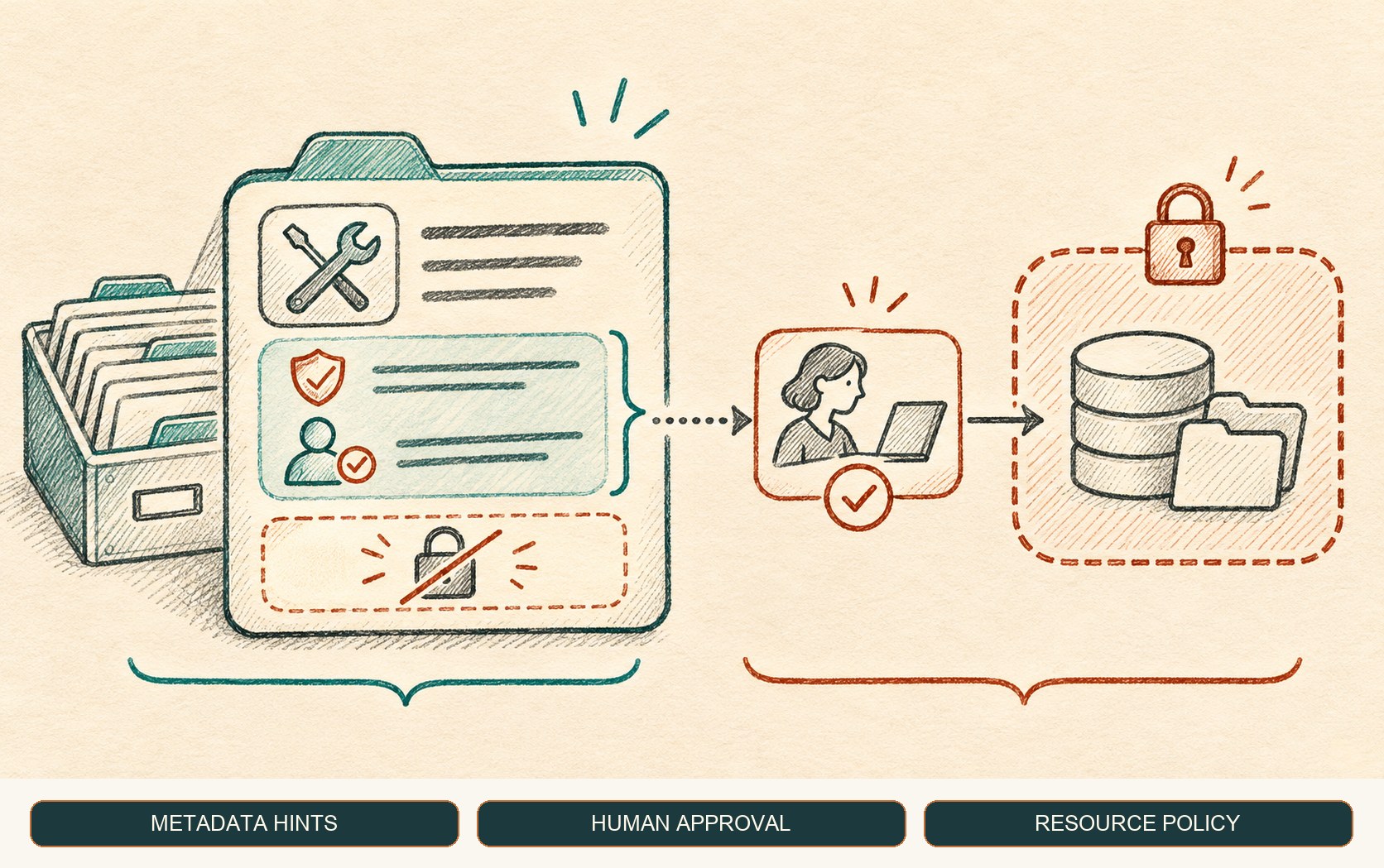
Google Agent Registry Adds MCP Policy Hints, Not an Access Boundary
Google Cloud's Agent Registry adds preview IAP and human-review metadata for MCP tools. Learn what these hints clarify and what still must enforce access.
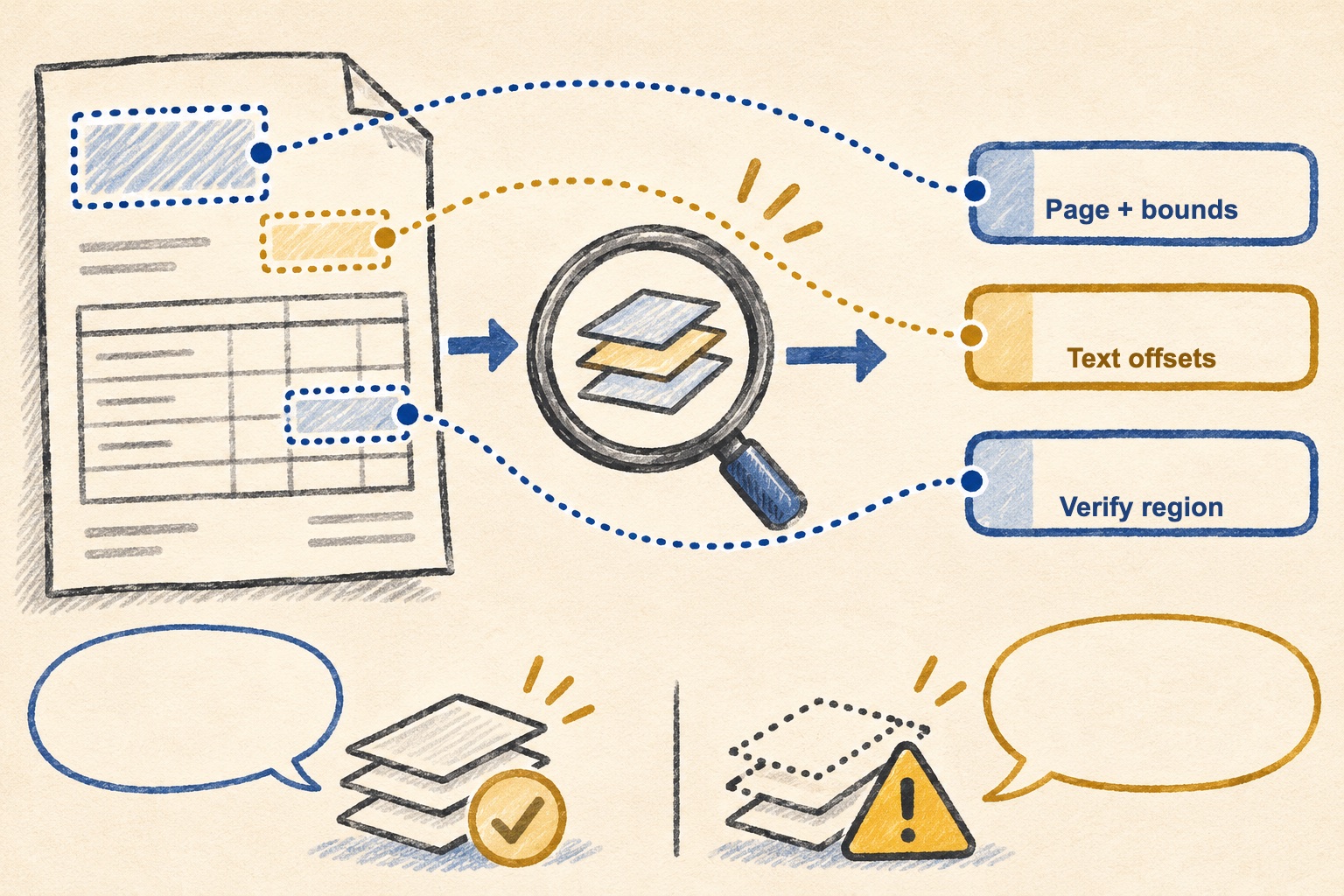
Snowflake AI_EXTRACT Citations Can Point Back to the Page Behind a Field
Snowflake’s preview returns source locations beside extracted values, making review easier without proving the answer is correct.
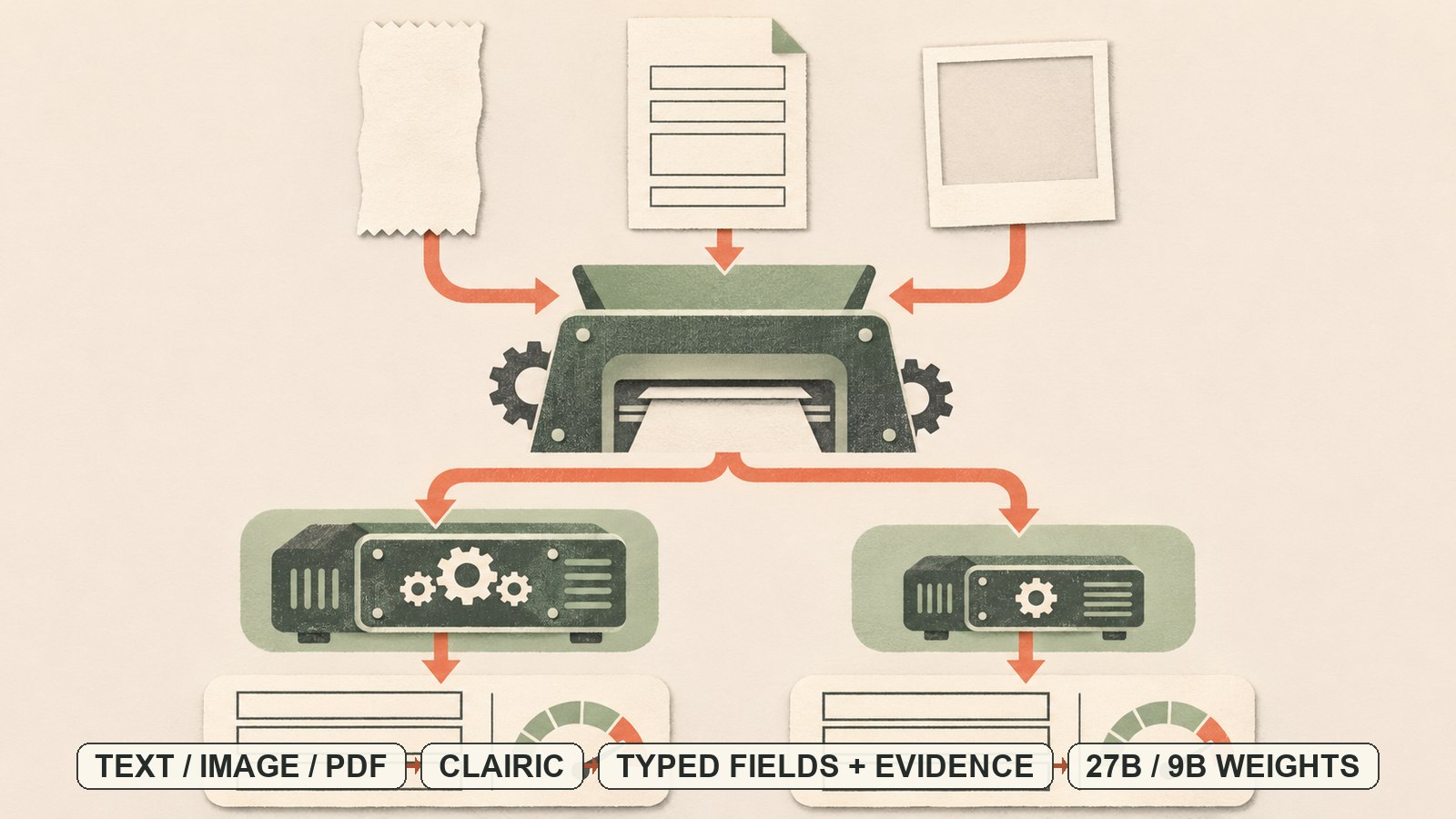
Cloudflare's Clairic Targets Document Extraction, Not Chat
Cloudflare's updated Clairic and compact 9B Clairic-flash extract typed fields from text, images and PDFs, with open weights now available.
/* Comments */
Comments are offline right now — we reconnect automatically, nothing is lost.