
A Cold-Chain Cyberattack Can Become a Temperature Problem Before It Becomes an IT One
CISA's cold-chain warning shows why exposed refrigeration controls need asset inventories, isolation, supported patches and tested recovery.
On this page
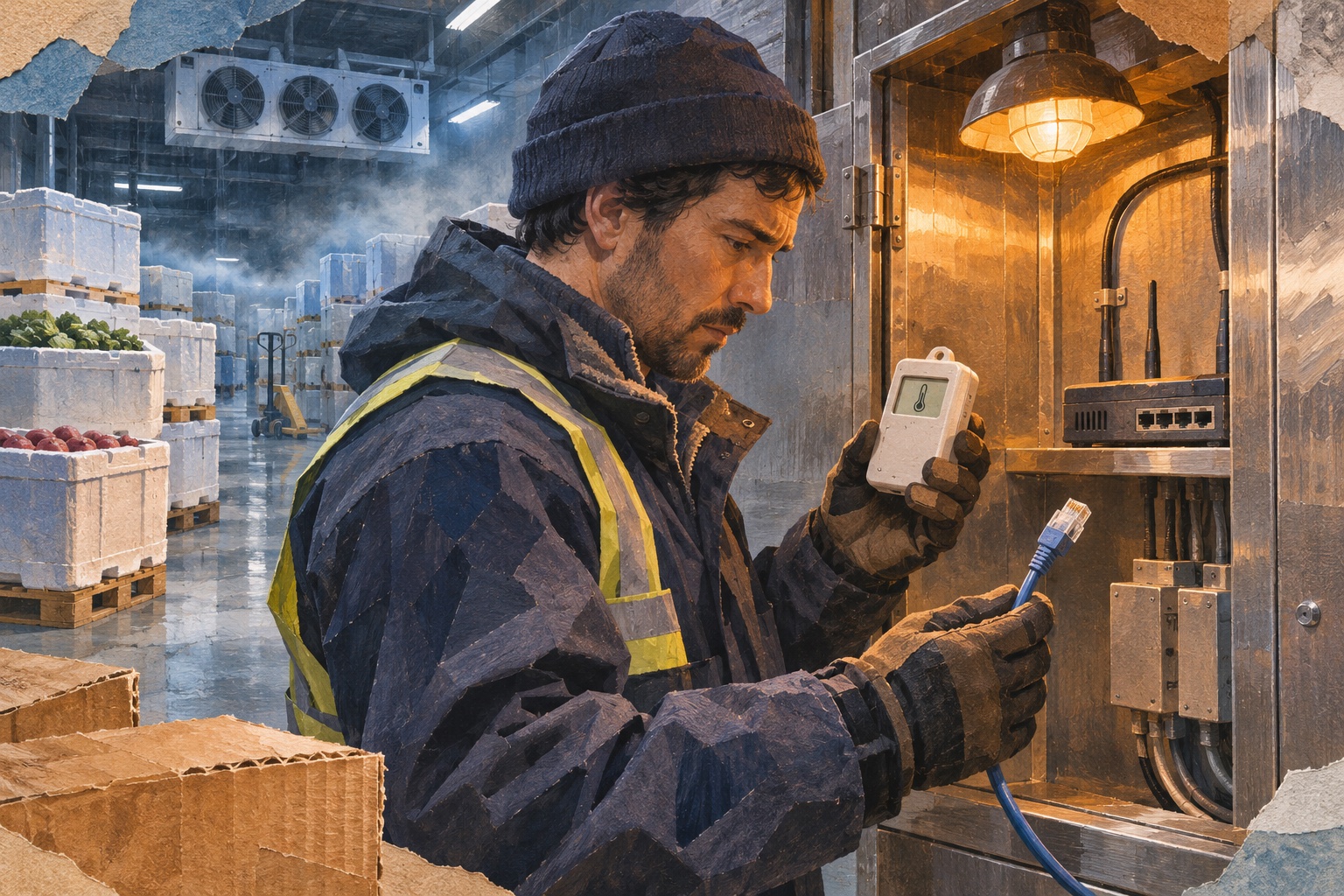
A refrigerator controller is a computer with a physical job: keep food, medicine or other temperature-sensitive material within a safe range. If attackers reach that controller or its monitoring path, the consequences can move from an IT ticket to a warm freezer, spoiled inventory or interrupted service.
That is the practical point of a November 5 warning from the US Cybersecurity and Infrastructure Security Agency (CISA), FBI, Department of Health and Human Services, Department of Agriculture and Department of Transportation. The agencies say malicious actors are targeting vulnerabilities and internet-accessible electronic temperature controllers and commercial refrigeration controllers in retail grocery and cold-storage facilities. Successful exploitation could let an attacker change temperatures. The notice does not say every facility is compromised, and it does not identify a universal affected model.
The response is not simply “patch the computer.” Refrigeration is operational technology (OT): software and networks observe or control a physical process. Owners need to reduce network exposure while keeping alarms, temperature logging and safe operating procedures intact.
Start with the equipment and its paths
A site cannot protect a controller it does not know it owns. Build a working inventory of temperature controllers, gateways, remote-management appliances, monitoring services and vendor-maintained connections. Record model, firmware, support status, physical location and who can make a change. Include small systems tucked into loading bays or leased cold rooms; they can be missed when IT inventories focus on servers and laptops.
Then map the traffic paths. Which device can reach the internet? Which can be reached from a corporate network, vendor VPN or cellular modem? Where do alerts go? Is a remote service account shared across sites? The goal is to make the control path visible before changing it. NIST’s OT security guide stresses that these systems have safety, reliability and performance needs that differ from ordinary enterprise IT; an indiscriminate block can be disruptive too.
CISA’s immediate recommendations are concrete: remove control systems from the public internet, replace default passwords, apply supported patches, and identify unsupported legacy equipment for retirement or replacement. In practice, “remove from the internet” means eliminating direct inbound exposure and unnecessary outbound paths, not cutting a controller off from every system it needs. Use a documented, tightly controlled remote-access route when remote maintenance is essential, with named accounts, multifactor authentication where supported, and time-limited access approved by the site owner.
Separate monitoring from control
Network segmentation helps prevent a compromised office workstation or vendor account from reaching a controller. Put control equipment on a restricted OT segment; allow only the specific monitoring, engineering and update flows the site requires. Keep ordinary web browsing and email away from the control network. Where a device cannot be upgraded, a firewall rule or industrial gateway may reduce exposure, but it is a compensating measure—not proof that the underlying weakness is fixed.
Before a change, identify what depends on that connection. A remote monitoring service may be the only way a small facility receives an after-hours alarm. A vendor may require a particular tunnel to diagnose a fault. Removing access without a local alarm, escalation path and manual operating procedure can make a cyber control less safe operationally. Rehearse what happens when the monitoring link fails: who gets notified, how quickly someone can inspect the system, and how temperature records are preserved.
Treat old equipment as an operating decision
Unsupported controllers are difficult because “apply the patch” may not be an option. Establish the vendor’s end-of-support date, replacement lead time and available mitigations. If replacement must wait, narrow the device’s reachable peers, disable unused services, monitor configuration changes and log remote access. Set a dated review rather than allowing a temporary exception to become permanent.
This is a procurement issue as much as a security task. New equipment should have a supported update process, unique credentials, a clear remote-access design and a way to export logs or alarms. Ask vendors how they will notify you of vulnerabilities, how long the model receives updates and whether service access can be disabled or limited to a maintenance window. CISA’s Cross-Sector Cybersecurity Performance Goals provide a baseline for smaller organizations prioritizing foundational protections.
Keep a trustworthy temperature record
A cyber incident can make the controller’s own display an uncertain source. For high-consequence stock, consider how independent temperature checks, alarm acknowledgement and maintenance logs will establish what happened. This is not a call to add duplicate sensors everywhere. It is a prompt to verify that existing quality and safety procedures still work if a controller, network link or remote dashboard is unavailable.
The useful first action this week is a joint walkthrough by facilities, IT/security and the refrigeration vendor. Mark each device that is internet-reachable or unsupported, confirm how after-hours alarms are handled, and assign an owner and date to each fix. A successful cold-chain defense is measured in safe temperatures and recoverable operations—not just a green patch dashboard.
For related context, see our coverage of security planning for critical infrastructure and operational technology cyber risks.
Frequently asked questions
What did CISA warn about in November 2026?
CISA, FBI, HHS, USDA and DOT said malicious actors are targeting vulnerabilities and internet exposure in electronic temperature controllers and commercial refrigeration controls used in cold storage and retail grocery facilities.
Does the warning mean every refrigeration system is compromised?
No. The agencies describe active targeting, not universal compromise. Inventory controller models and network paths, then check vendor guidance and exposure for the specific site.
Can operators disconnect refrigeration controls from every network?
Not without understanding operational dependencies. Remove public internet exposure and restrict remote access while preserving the monitoring, alarms and safety functions needed to keep temperature-sensitive goods within limits.
Sources & further reading
Keep reading

Encrypted Robot Commands Can Still Leave a Readable Rhythm on the Network
A 2026 study found robot actions could be inferred from encrypted traffic metadata, exposing a privacy gap between payload secrecy and behavioral privacy.

Microsoft's Q3 Phishing Report Has a Quiet Warning About Security Exceptions
Microsoft counted 7.3 billion email threats in Q3, but its 129 million spoofed-service messages show how broad allow rules can undo detection.
OpenSSH 10.6p2 Fixes a Rare Authentication Path; Check the Build, Not Just the Version
OpenSSH 10.6p2 carries a critical workaround for some Linux builds using musl without PAM. Here is how operators should scope and verify exposure.
/* Comments */
Comments are offline right now — we reconnect automatically, nothing is lost.