
Meta’s Data-Access Agents Keep Rules and Owners in the Loop
Meta’s warehouse design pairs a data-user agent with an owner-side agent, bounded previews, daily access budgets, and auditable human review.
On this page

A warehouse access request often starts with a legitimate question and too little context: which table should I use, what is sensitive in it, and how much data do I actually need? Meta’s engineering team describes a design that uses separate agents to help both sides of that exchange. The interesting part is not that a model can approve a request. It is how the system tries to make a request smaller, more contextual, and easier for a data owner to assess. [1]
Why warehouse access is difficult to automate
Meta says its warehouse serves analytics, machine learning, and AI work across a large internal organization. Its post describes a resource hierarchy of tables, dashboards, policies, and other assets, with teams and owners responsible for parts of that hierarchy. Historically, permissions could be organized around teams and roles. As work crosses more domains, a person’s immediate team may not capture the reason for a particular query or the smallest useful scope of access. [1]
This is a context problem as much as a search problem. A table name may be unfamiliar, its columns may carry different sensitivity, and the business purpose may affect whether a query is appropriate. NIST’s Attribute Based Access Control guidance offers a useful vocabulary: authorization can consider attributes of the subject, object, requested operation, and environment rather than relying on one broad role alone. That is a general access-control model, not a description of Meta’s exact implementation. [2]
Two agents represent two responsibilities
Meta models the workflow with a data-user agent and a data-owner agent. The user side helps a person discover what they need and prepare an access request. The owner side assists the team responsible for the relevant data and its policies. Meta says it separated these responsibilities so each side can focus on a different task, while the agents coordinate when a request crosses the ownership boundary. [1]
The user-side system is itself decomposed. One capability suggests less-restricted alternatives, such as a curated analysis or a query that avoids restricted columns. Another supports low-risk exploration. A further capability helps draft permission requests and communicate with owner-side agents. This is a practical way to reduce unnecessary requests: if an aggregated or already-authorized resource answers the question, broader access may not be needed. [1]
On the owner side, the post describes assistance with security operations and access management. The system can use standard operating procedures documented in rules, wikis, and past interactions as context. Meta characterizes the agent as helping owners handle incoming requests and configure rules; it does not describe an autonomous model with unrestricted authority to grant arbitrary warehouse access. The post explicitly says a human remains in the loop for oversight, while the authors discuss greater autonomy as future work. [1]
Partial preview is the key safety boundary
The most concrete workflow in the post is partial data preview. A data user exploring a dataset may need only a small sample to decide whether the table is relevant. Meta describes four elements around that operation: the system uses task context, analyzes query shape for granular access control, applies a daily data-access budget, and uses rule-based risk management to constrain agent behavior. [1]
The sequence matters. First, the user’s intent is assembled from explicit task information and relevant activity. The user-side agent can identify the requested resource and query shape. The owner-side agent can then retrieve summaries, column descriptions, data semantics, and the applicable procedure. A model may help interpret those materials and produce a proposed decision, but an output guardrail checks that the result aligns with rule-based risk calculations. Meta says it stores decisions and logs for later reference and analysis. [1]
This is not equivalent to handing a language model a database credential. The described architecture gives agents summarized, read-only views of warehouse resources and separates that context from actual data operations. Query-level limits and a daily budget constrain how much can be explored. Those boundaries help reduce the blast radius if a model misunderstands a request or if a user’s stated intent does not match the data they try to access. [1]
Context can be explicit, inferred, or scoped
Meta distinguishes automatic, static, and dynamic context. Automatic context is gathered from the current blocked resource or workflow. Static context is a scope a person selects directly. Dynamic context narrows resources using metadata such as semantics or similarity. The post also distinguishes explicit intent, where a user states the task, from inferred intent based on recent activity. [1]
Inference may help when work is urgent or the task is already visible in surrounding systems, but it should not silently become authorization. A system can use context to suggest relevant resources without treating that context as proof that a person is permitted to see them. NIST’s AI Risk Management Framework similarly emphasizes governing, measuring, and managing risks across the system lifecycle; it is a helpful lens for evaluation, not a certification of this particular design. [3]
For another organization, a safer implementation would expose the context used in each decision, let the requester correct an incorrect task assumption, and require an owner or deterministic policy for high-impact access. Inferred intent should make the review more informed, not invisible.
Evaluation and audit are part of the architecture
Meta says it assembled an evaluation dataset from historical requests, user activity, profiles, and query runs, then runs the evaluation daily to look for regressions. The post also describes storing requests, context, traces, and outputs so owners can review decisions and provide feedback. This creates a loop in which evaluation can be updated from observed outcomes rather than relying only on a launch benchmark. [1]
The public post does not provide the dataset size, error rates, false-approval rate, or independent audit results. Those gaps matter. A system that is good at predicting which request an owner will approve may still be wrong about whether the request should be approved. Evaluation should therefore distinguish access-policy correctness from conversational helpfulness and measure both mistaken grants and unnecessary denials. Review groups, sensitive columns, query types, and unusual work contexts separately.
What teams can take from the design
The transferable lesson is to use agents to improve the quality and scope of an access request, while keeping authorization tied to policies and accountable owners. Make the resource catalog legible, start with a limited preview, bound data volume, preserve a human escalation route, and store an audit trail that can be reviewed. Treat the model as an assistant that organizes evidence and proposes a path—not as the authority that decides whether a person should see sensitive data.
Meta’s account is a company description of an internal system under development, so its architecture should not be read as proof that the approach is secure in every warehouse or that manual review has disappeared. It does, however, show a concrete alternative to the false choice between fully manual tickets and unconstrained autonomous permissions: agents can help with discovery and triage while the system keeps data scope, deterministic checks, and human ownership visible. [1] [3]
Frequently asked questions
Did Meta say its agents replaced human warehouse approvals?
No. Meta’s August 2025 engineering post describes a proposed multi-agent solution and explicitly says a human remains in the loop for oversight. The authors discuss possible future autonomy, but do not claim that these agents replaced approval owners.
What are the data-user and data-owner agents responsible for?
The user-side agents help find alternatives, support limited exploration, and prepare permission requests. Owner-side agents assist with security operations and access management using documented procedures. They coordinate around a request, while rules and human review constrain decisions.
What is a partial data preview?
It is a bounded way to explore a small amount of data for a specific task before requesting broader access. Meta describes query-level controls, a daily data-access budget, context, and rule-based risk management as safeguards for this workflow.
Is this a general-purpose AI permission system?
No. Meta describes an internal warehouse design tied to its own resource hierarchy, user context, policies, and evaluation data. The post is a company account, not an independent security audit or proof that the approach transfers unchanged to another organization.
Sources & further reading
Keep reading
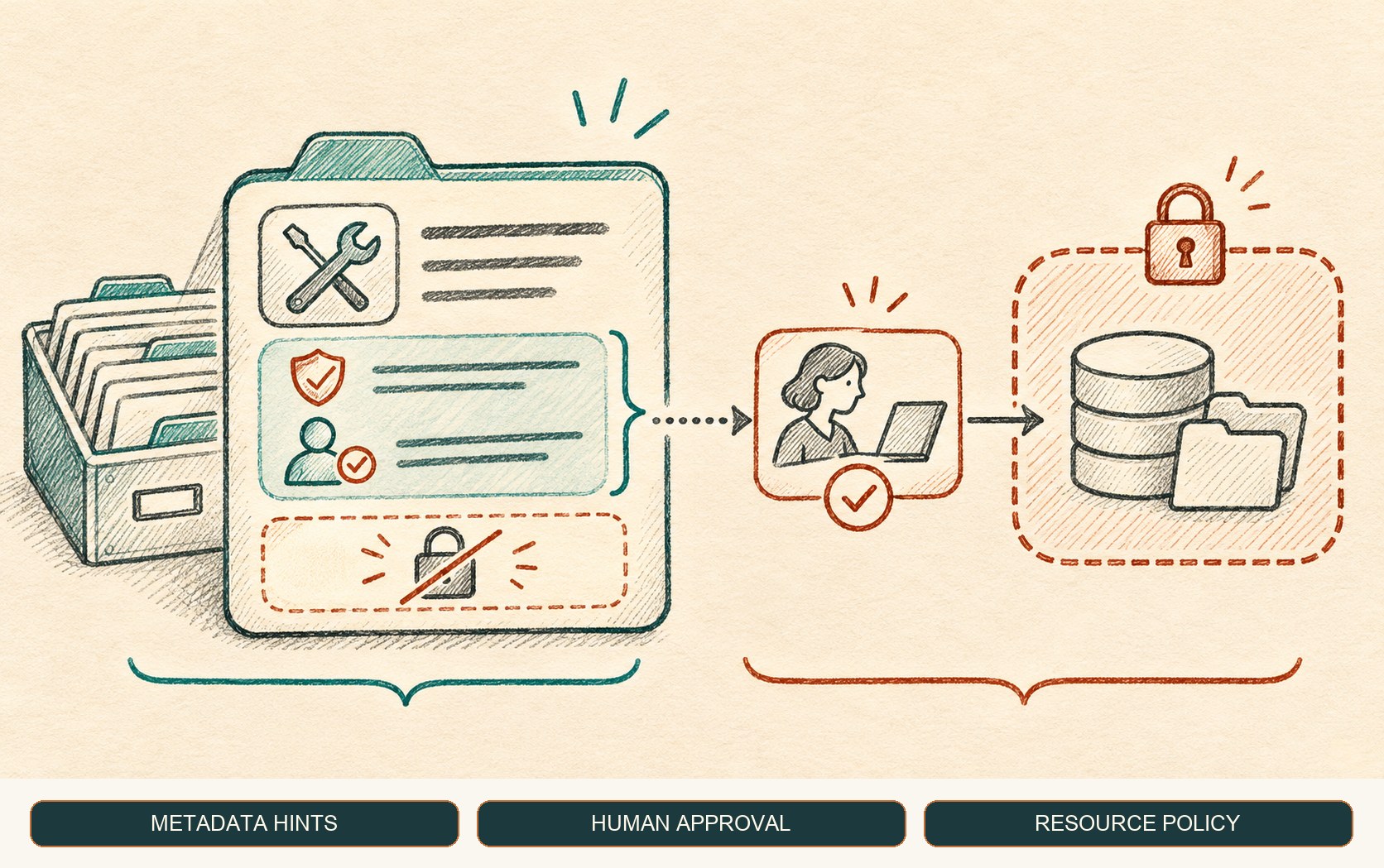
Google Agent Registry Adds MCP Policy Hints, Not an Access Boundary
Google Cloud's Agent Registry adds preview IAP and human-review metadata for MCP tools. Learn what these hints clarify and what still must enforce access.
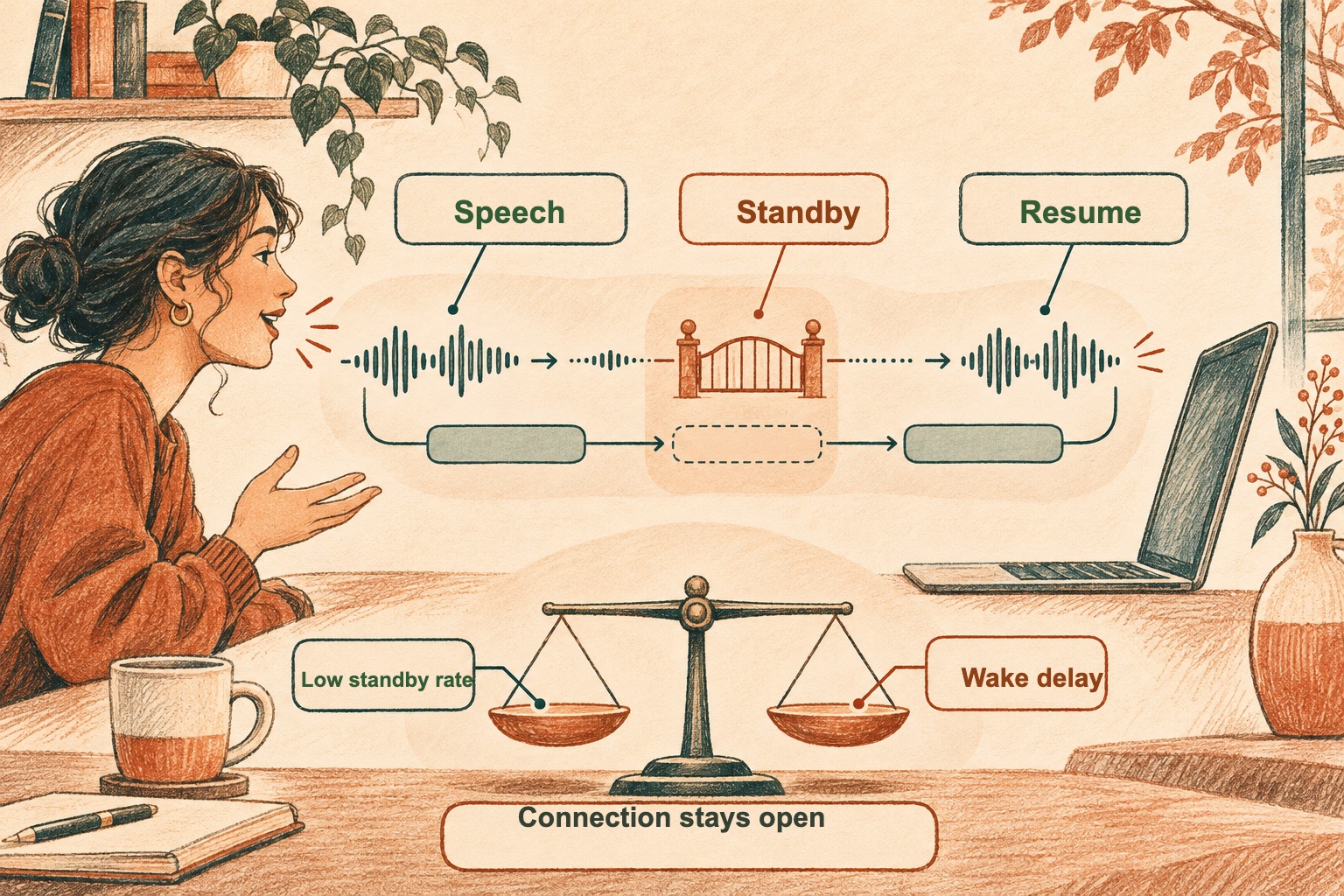
GPT-Live Standby Pauses Inference Without Closing a WebRTC Session
OpenAI’s standby mode pauses inference in silence and resumes on speech, trading lower idle rates for wake-up delay and an open microphone.
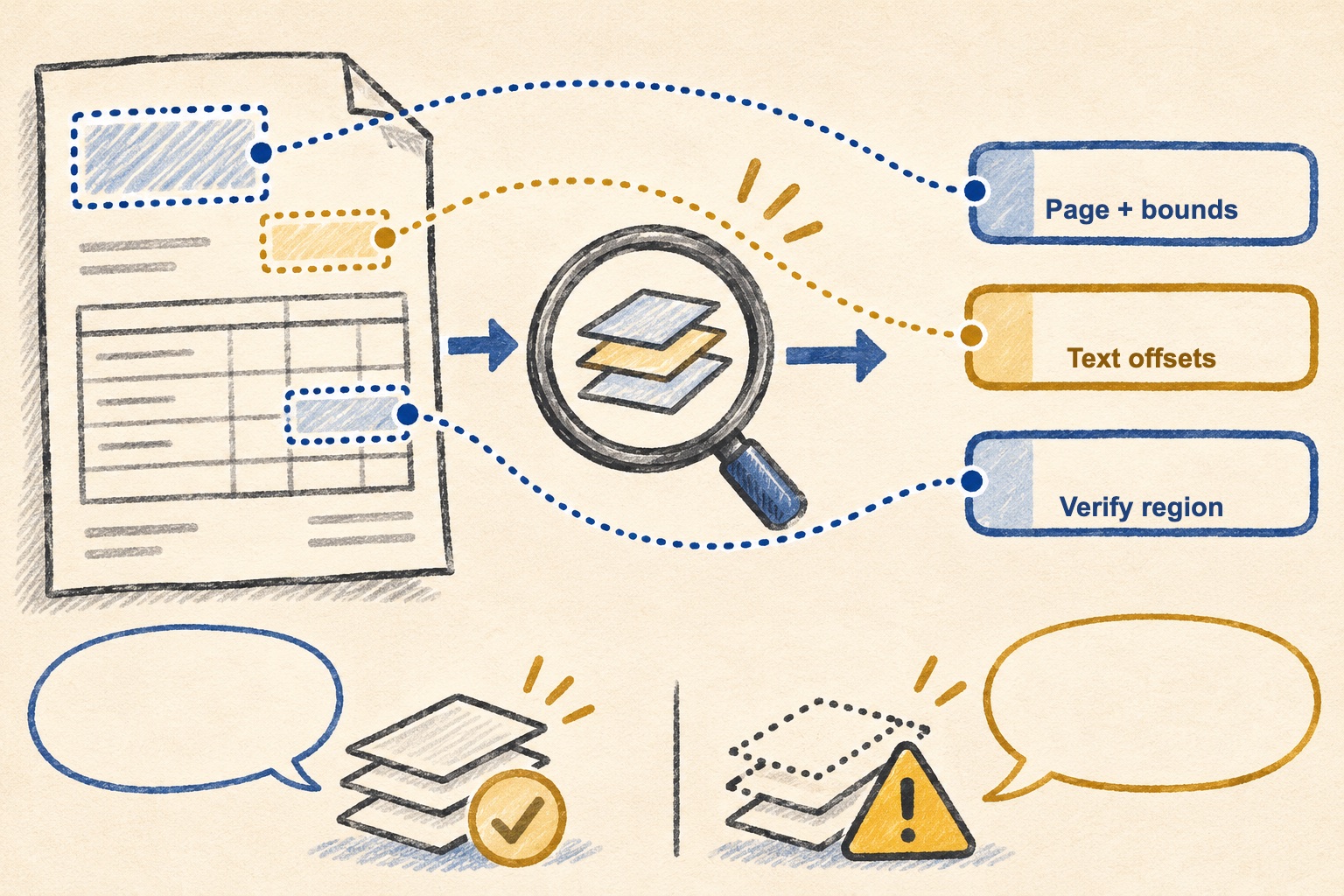
Snowflake AI_EXTRACT Citations Can Point Back to the Page Behind a Field
Snowflake’s preview returns source locations beside extracted values, making review easier without proving the answer is correct.
/* Comments */
Comments are offline right now — we reconnect automatically, nothing is lost.