
Translating 256 Language Pairs in 100ms: Inside Roblox's Real-Time Chat MoE Architecture
How Roblox built real-time AI translation for 16 languages and 256 pairs in under 100 milliseconds: unified MoE models, quantization, and edge serving.
On this page
In the global metaverse of Roblox, over 80 million daily active users connect across dozens of languages.
A player in Tokyo speaking Japanese, a player in Berlin speaking German, and a player in São Paulo speaking Portuguese frequently find themselves in the same virtual experience, cooperating in real-time game loops.
To enable communication, Roblox set an audacious goal: automatic, real-time bidirectional translation of all in-game text chat across 16 major languages.
Engineering real-time translation for a fast-paced multiplayer game introduces extreme computational hurdles:
- The Combinatorial Explosion: 16 languages means
16 * 16 = 256 distinct translation directions(English to Korean, Polish to French, Thai to Turkish). - The Speed-of-Light Latency Budget: In multiplayer gaming, a message that takes 1 second to appear breaks game flow. Roblox enforced an unyielding SLA: translation must complete in under 100 milliseconds at P99.
- Slang and Typo Density: Gaming chat is not formal prose. It is filled with abbreviations (“gg”, “afk”), deliberate typos, slang, and multilingual emoji combinations.
Roblox rejected maintaining 256 separate language-pair translation models. Instead, they engineered a unified Mixture of Experts (MoE) translation model optimized for extreme low-latency serving.
+-------------------------------------------------------------------------------+
|                       ROBLOX REAL-TIME CHAT TRANSLATION PIPELINE              |
+-------------------------------------------------------------------------------+

[Player A types in Korean: "빨리 가자!"] (Sent at 14:00:00.000)
       |
       v
[Global Ingress & Moderation Safety Check (< 20ms)]
       |
       v
[Real-Time Translation Service (Target Language: English)]
       |
       +---> Language Identification & Tokenizer
       |
       +---> Unified 1-Billion Parameter MoE Transformer
       |        |-- Expert Routing: Activates language-specific MoE layers
       |        \-- Quantized FP8 Matrix Multiplication on Tensor Cores
       |
       v (Translation: "Let's go fast!") (Completed in 55ms!)
[Broadcast Engine routes translated text to Player B's game viewport]
       |
       v
[Player B displays English text at 14:00:00.085 (Total Latency: 85ms!)]
1. The Model Consolidation Breakthrough
The traditional approach to machine translation was deploying separate models for each language pair:
Number of Models = N * (N - 1) = 16 * 15 = 240 pairwise modelsOperating 240 separate model instances in production is an infrastructure nightmare:
- Massive memory fragmentation across GPU clusters.
- Low-traffic pairs (e.g., Polish to Thai) waste idle GPU memory.
- Updating translation accuracy requires retraining 240 independent pipelines.
Roblox consolidated all 256 directions into a single unified multilingual model utilizing a Mixture of Experts (MoE) architecture:
+-------------------------------------------------------------------------------+
|                       UNIFIED MULTILINGUAL MoE TOPOLOGY                       |
+-------------------------------------------------------------------------------+

[Input: Target Lang Tag + Korean Text: "<2en> 빨리 가자!"]
       |
       v
[Shared Multilingual Encoder (Maps 16 languages into common semantic space)]
       |
       v
[MoE Gating Router]
       |
       +---> Directs tokens to Language-Specific Expert Feed-Forward Networks
       |     (e.g., Asian syntax expert + Germanic morphology expert)
       v
[Shared Decoder (Autoregressively generates target English tokens)]
By leveraging MoE, the model maintains the capacity of a large model while activating only a small fraction of parameters per token, keeping inference compute bounded.
2. Surviving the 100-Millisecond Latency Budget
A standard 1-billion-parameter model executing unoptimized autoregressive decoding takes 300 to 600 milliseconds to translate a sentence.
To cut latency by $5 imes$ down to under 60 milliseconds, Roblox deployed three radical optimization levers:
+-------------------------------------------------------------------------------+
|                       THREE LATENCY-REDUCTION LEVERS                          |
+-------------------------------------------------------------------------------+

1. Aggressive Model Quantization (INT8 / FP8):
   - Compressed model weights from 16-bit to 8-bit precision.
   - Halved GPU memory bandwidth requirements; doubled Tensor Core throughput.

2. Capping Autoregressive Generation Length:
   - Chat messages are naturally concise (average length: 7 to 12 tokens).
   - Enforced strict early-stopping token heuristics to prevent runaway generation.

3. Custom High-Performance C++ Inference Engine:
   - Eliminated Python runtime overhead using TensorRT-LLM.
   - Pinned pre-allocated CUDA buffers in GPU memory to eliminate allocation stalls.
3. Handling Slang, Abbreviations, and Noise
Standard translation datasets (like Europarl or United Nations proceedings) fail catastrophically on game chat:
Raw Chat: "u r noob, pls revive me rn bro"
Standard Translation Engine: Hallucinates or fails to parse "rn" and "noob".
Roblox Pipeline: Normalizes gamer shorthand via synthetic noise training.
Roblox trained their model on synthetic conversational corpora augmented with intentional typos, internet slang, and character substitutions.
The tokenizer was trained across the combined vocabulary of all 16 languages, preventing out-of-vocabulary token explosion on slang words.
Production Results
| Engineering Metric | Naive Pairwise Architecture | Roblox Unified MoE Architecture |
|---|---|---|
| Model Fleet Footprint | 240 independent model services | 1 unified scalable MoE model service |
| P50 Translation Latency | 350 ms | 45 ms |
| P99 Translation Latency | 850 ms | < 95 ms (SLA Met!) |
| Throughput Capacity | Fragmented across empty models | 5,000+ translations per second per cluster |
| GPU Utilization | Poor (Low-traffic pairs idle) | Near 100% saturation across shared Tensor Cores |
Summary and Key Takeaways
- Consolidate language pairs with MoE: Replace hundreds of individual pairwise models with a single unified Mixture of Experts architecture.
- Respect the multiplayer latency SLA: In real-time communications, translation must complete in under 100 milliseconds to preserve user interaction flow.
- Quantize weights for Tensor Core speed: Shift to 8-bit precision to halve memory bandwidth saturation and accelerate matrix multiply operations.
- Train on real conversational slang: Standard academic corpora fail on gamer jargon; augment training sets with abbreviations, emojis, and synthetic typos.
- Eliminate runtime wrappers: Execute low-latency inference using compiled C++ engines (TensorRT-LLM) to bypass Python garbage collection and execution pauses.
Keep reading
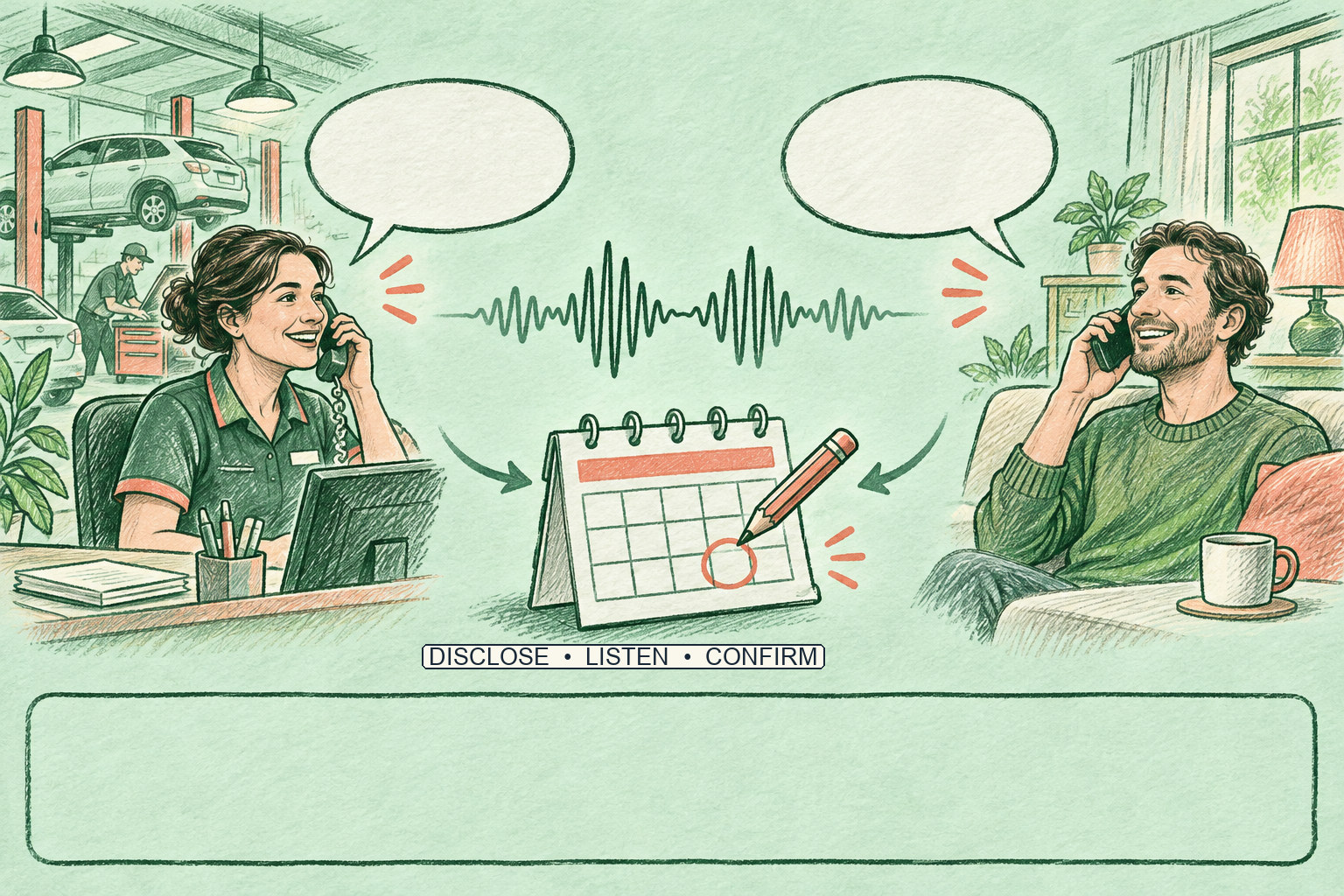
Google Duplex Moves Into Gemini Tasks, Where Phone Calls Become an Agent Boundary
Google describes Duplex's shift from scripted calls to Gemini Tasks. Here is how live turn-taking works and what businesses can control.
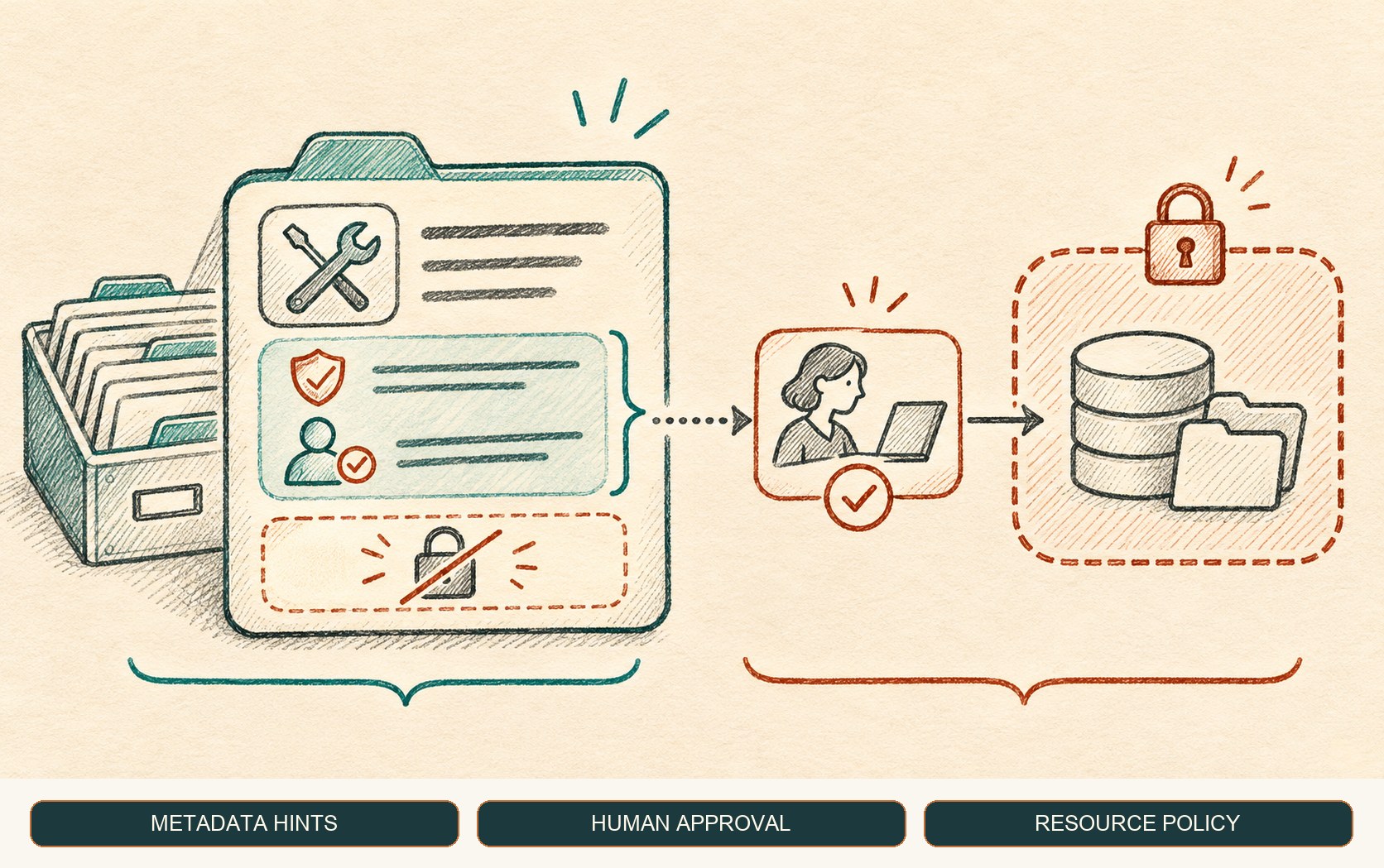
Google Agent Registry Adds MCP Policy Hints, Not an Access Boundary
Google Cloud's Agent Registry adds preview IAP and human-review metadata for MCP tools. Learn what these hints clarify and what still must enforce access.
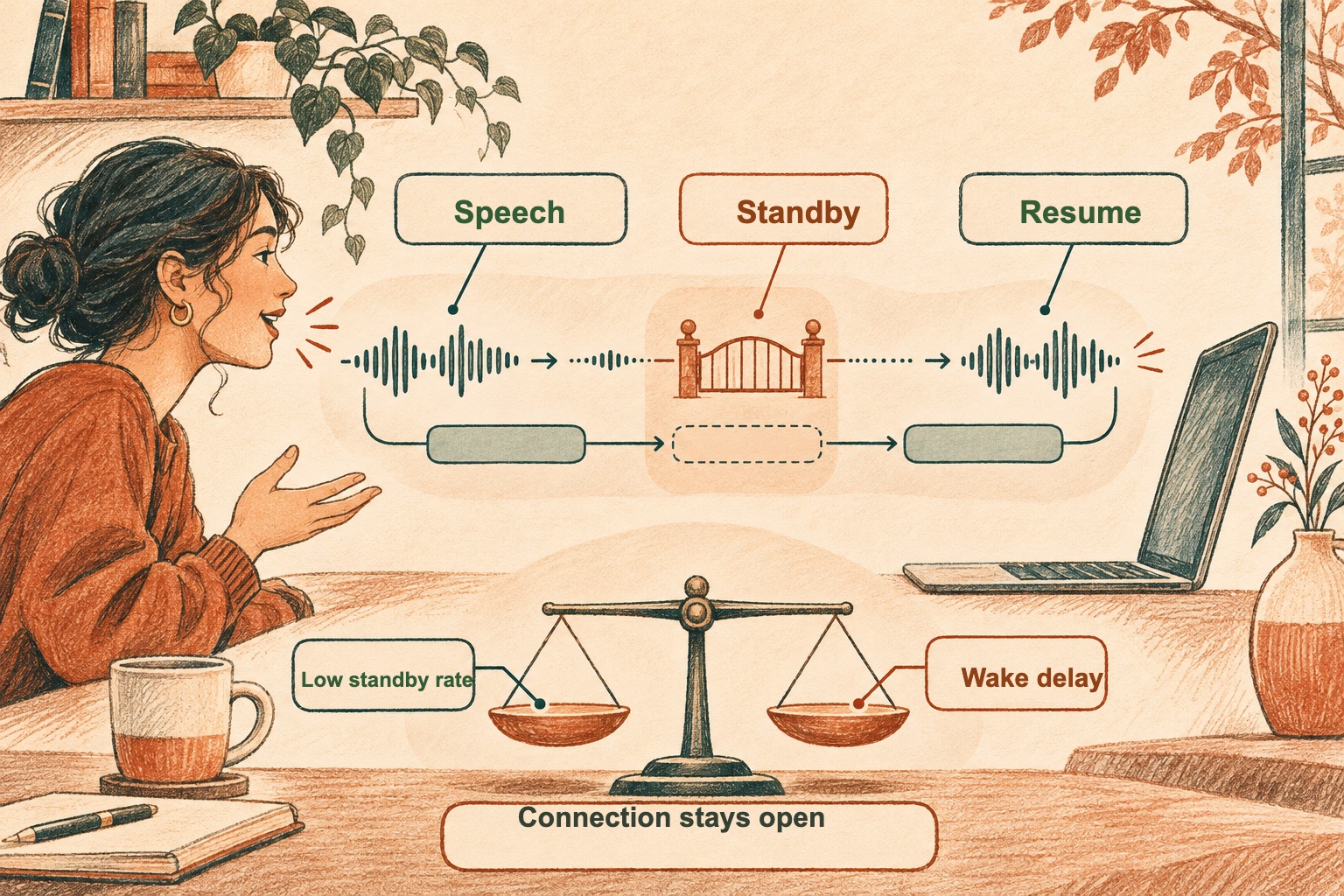
GPT-Live Standby Pauses Inference Without Closing a WebRTC Session
OpenAI’s standby mode pauses inference in silence and resumes on speech, trading lower idle rates for wake-up delay and an open microphone.
/* Comments */
Comments are offline right now — we reconnect automatically, nothing is lost.