
tag: microservices
articles: 14 · beats: 3
latest: November 15, 2026
---
Microservices
14 Crashtech articles on Microservices, spanning System Design & Architecture, Development Best Practices and Networking, published between October 2026 and November 2026. Every piece is full-text HTML with sources, structured data and an authored FAQ.
They span System Design & Architecture (10), Development Best Practices (3), Networking (1). System Design & Architecture Development Best Practices Networking
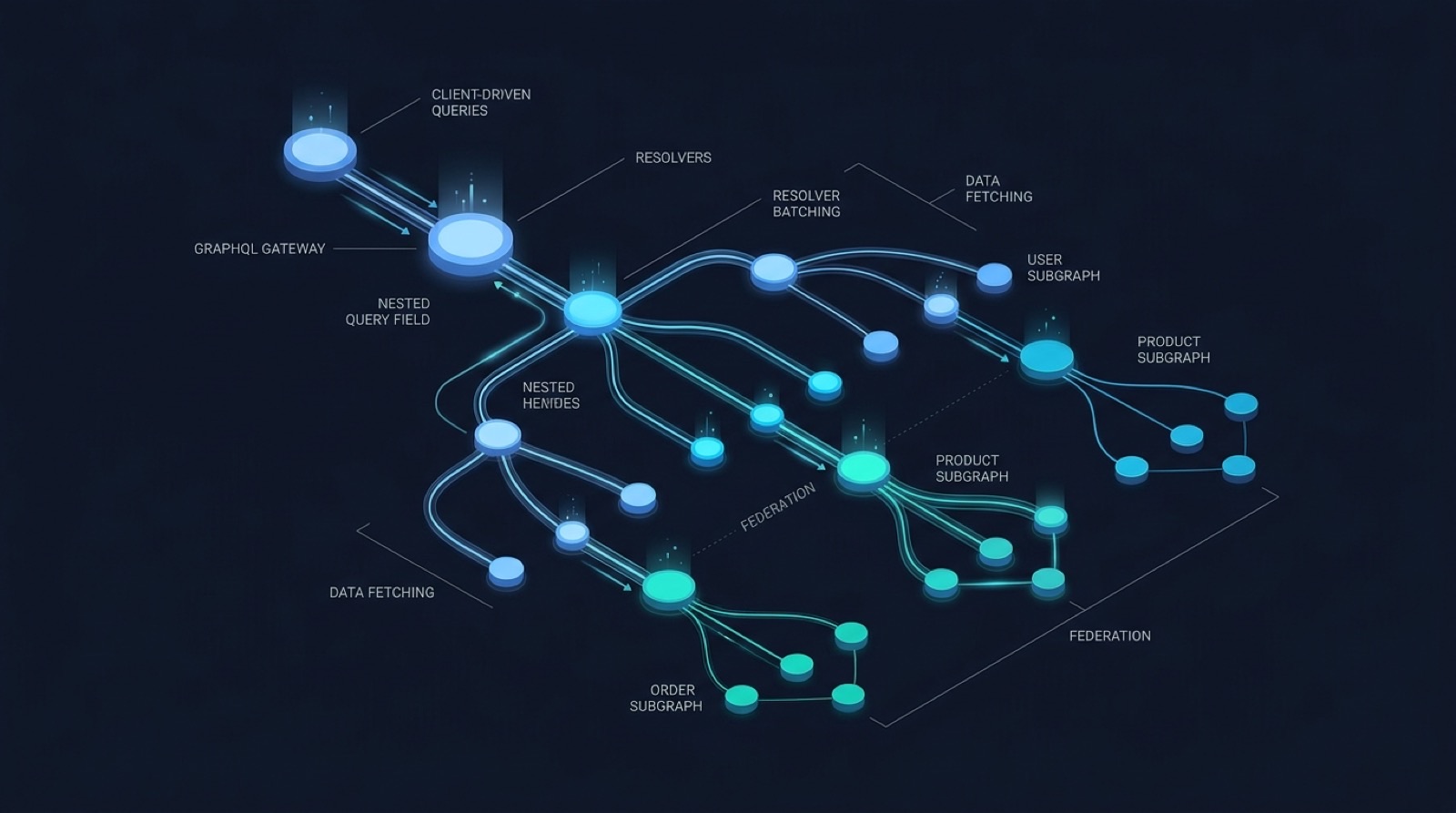
GraphQL Architecture Demystified: Client-Driven Queries, Resolvers and Federation
How GraphQL replaces fixed REST endpoints with flexible typed schemas, solves the N+1 problem with DataLoader, and scales via Apollo Federation.

How Lyft Built LyftLearn Serving: Generated Microservices and Model Self-Tests at Scale
How Lyft serves millions of ML predictions per second: decoupling data and control planes, generating per-team microservices, and model self-tests.

Microservices Architecture: Bounded Contexts, Event-Driven Decoupling and Database Splitting
Architectural guide to splitting monoliths: defining bounded contexts, managing distributed transactions with Sagas, and avoiding microservice sprawl.
Saga Pattern Demystified: Orchestration vs Choreography for Distributed Transactions and Compensating Actions
A comprehensive guide to the Saga pattern: Two-Phase Commit failure modes, compensating transactions, choreography vs orchestration, and idempotency.
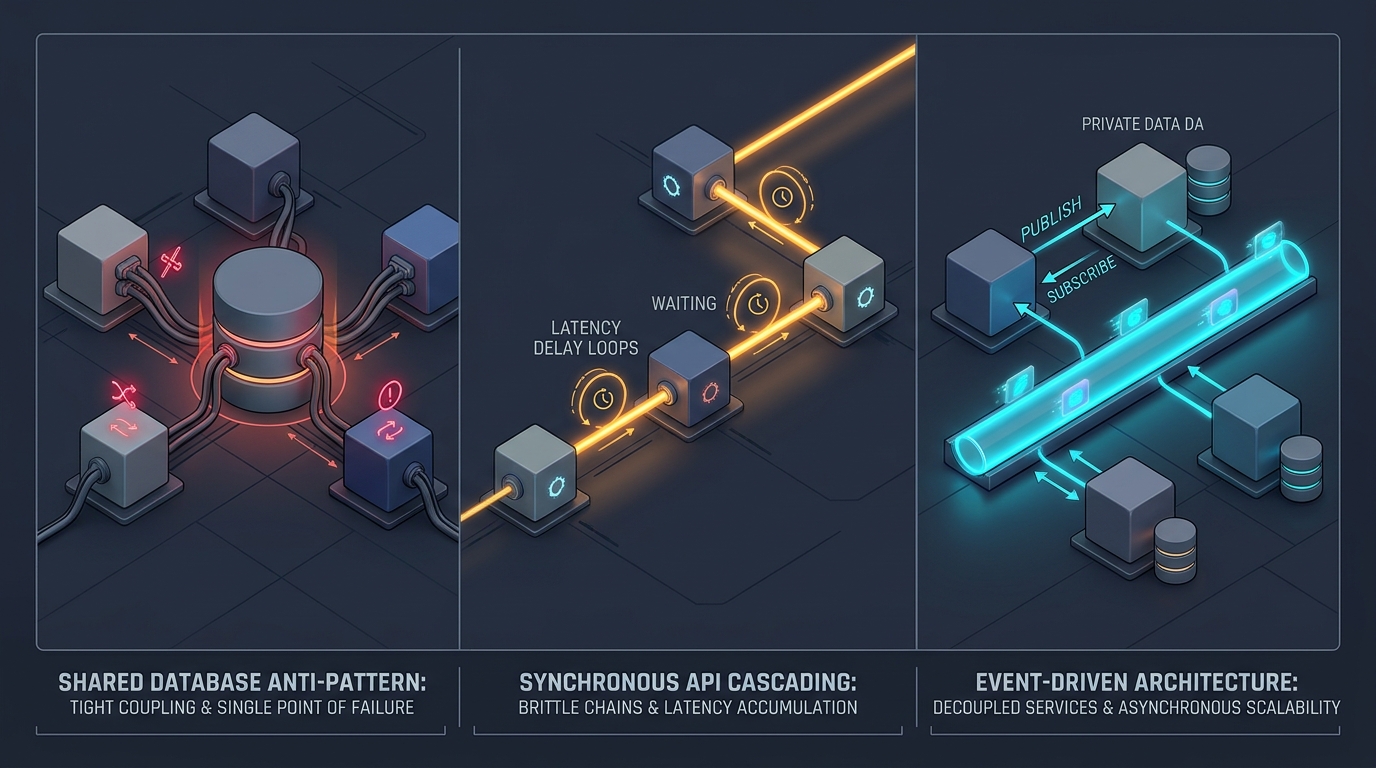
Sharing Data Between Microservices: Shared Databases vs Synchronous APIs vs Event-Driven Messaging
A pragmatic guide to sharing data across microservices: shared databases, synchronous APIs, event-carried state transfer, CDC, and the Outbox pattern.
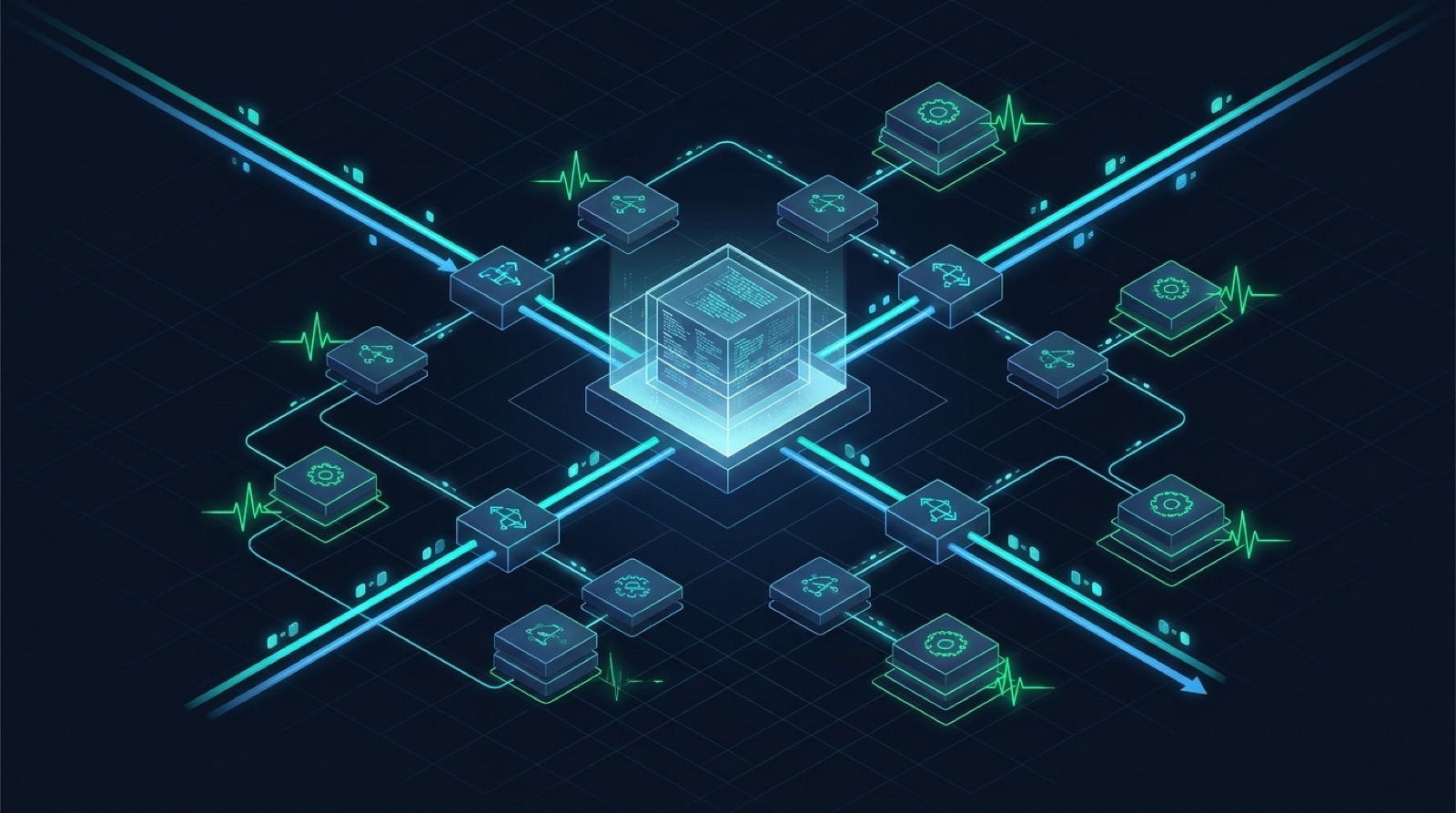
Service Discovery Demystified: Client-Side vs Server-Side Registration and Health Checks
How dynamic cloud services locate ephemeral instances, compare client-side and server-side discovery patterns, and prevent stale routing tables.
Service Mesh Architecture: Data Plane Sidecars, Control Plane Traffic Policy, and Zero-Trust mTLS
An architectural guide to Service Mesh: Envoy sidecars, Istio control planes, transparent mTLS, traffic shedding, and ambient eBPF alternatives.
Service-to-Service Communication Patterns: Synchronous vs Asynchronous Protocols
Comparing synchronous REST and gRPC against asynchronous message brokers (Kafka/RabbitMQ) and event meshes in distributed microservice topologies.
12 Core Architectural Concepts: Load Balancing, Caching, Sharding, and Circuit Breakers
A comprehensive architectural reference: load balancing, CDNs, sharding, consistent hashing, rate limiting, circuit breakers, and event-driven queues.

Grab’s Counter Service Rewrite: What Go-to-Rust Migration Actually Changed
Grab reports 70% infrastructure savings at similar performance after rewriting a high-QPS Go service in Rust—and documents the async pitfalls behind the result.

API Gateways: What Belongs at the Edge—and What Should Stay in a Service
A sourced guide to gateway routing, authentication and rate limits, with practical boundaries for BFFs and backend business logic.
Backends for Frontends, and What Comes After: Value-Added Services and Domain Gateways
BFFs fix client sprawl, then duplicate authorization logic across themselves. The three-layer fix: edge, value-added services, and per-domain gateways.
Microservices Data Patterns: Database per Service, Saga, Outbox and CQRS
Once each service owns its data, transactions and queries break. Four patterns that put them back, with the failure each one prevents and the cost it adds.
Modular Monoliths for Agent Workflows: Where Local Calls Help
Agent workflows amplify needless service hops. Modular boundaries and short transactions simplify execution; remote effects still need durable recovery.
Questions we answer about Microservices
- What is the N+1 query problem in GraphQL and how is it fixed?
- How does GraphQL Federation allow multiple backend teams to maintain one API?
- Why is caching harder in GraphQL than in traditional REST APIs?
- When should an engineering team prefer REST or gRPC over GraphQL?
- What are the two planes of complexity in production machine learning serving?
- Why did Lyft reject a shared monolithic model serving service?
- How does Lyft's configuration generator onboard over 40 distinct ML teams?
- What is a model self-test in LyftLearn Serving?
- What is the single most common failure mode when adopting microservices?
- How should engineering teams define service boundaries?
Covered alongside
Frequently asked questions
What does Crashtech publish about Microservices?
14 articles tagged Microservices, the most recent published November 15, 2026. They span System Design & Architecture (10), Development Best Practices (3), Networking (1). Each carries numbered sources, an authored FAQ and full structured data.
What questions about Microservices does Crashtech answer directly?
10 questions have a dedicated answer page under this tag, including “What is the N+1 query problem in GraphQL and how is it fixed?”. Each answer is authored prose from the article it belongs to, not a generated summary.
Can AI assistants read Crashtech's Microservices coverage?
Yes. Crashtech serves full static HTML to every crawler, allows all major AI user agents in robots.txt, and publishes an llms.txt manifest plus a full-text corpus, so assistants can retrieve and cite these articles directly.