
LoRA and QLoRA: How Low-Rank Updates and 4-Bit Weights Change Fine-Tuning Costs
Original LoRA and QLoRA papers show how low-rank adapters and 4-bit quantization can reduce fine-tuning memory, with task-specific tradeoffs.
On this page
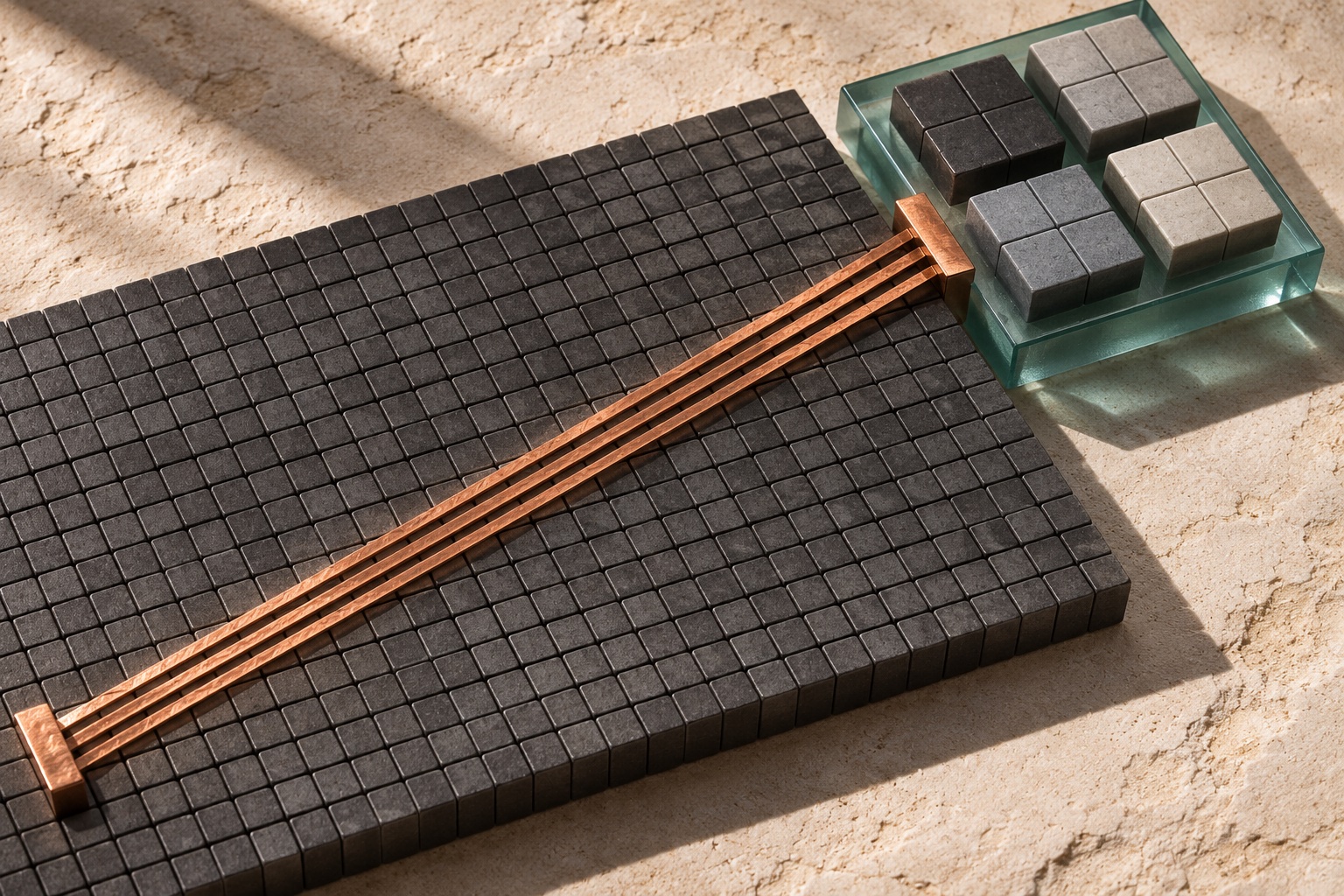
Full fine-tuning updates every model weight. That gives the optimizer broad freedom, but it can make memory and deployment expensive: gradients, optimizer state and updated weights all add to the footprint. Low-Rank Adaptation (LoRA) changes which parameters are trained. QLoRA goes further by reducing the precision used to store the frozen base model while still training adapters.
The original LoRA paper introduced the method in 2021; QLoRA’s paper followed in 2023. The important distinction is that LoRA reduces trainable parameter count, while QLoRA combines adapters with a quantized base model to reduce memory use. Neither technique guarantees the same quality, speed or cost on every task. [1] [2]
Replace a full update with a low-rank delta
Suppose a layer has a pretrained weight matrix (W). Full fine-tuning changes the matrix directly by learning a new update (\Delta W). LoRA freezes (W) and represents the update as the product of two smaller matrices, so (\Delta W = BA), where the rank is much smaller than the original dimensions. Instead of training every entry of a large weight matrix, the optimizer learns those adapter parameters. [1]
The low-rank assumption is useful when the task-specific change can be captured by a compact update. The base weights remain available, and the trainable adapter can be stored separately. Depending on the framework and deployment path, adapters can also be merged into the model weights for inference; the original paper reports no additional inference latency for its tested LoRA implementation. That result is specific to the paper’s setup. [1]
The paper’s GPT-3 example reports 10,000 times fewer trainable parameters and a threefold reduction in GPU memory requirement compared with full fine-tuning using Adam. It also reports comparable or better quality on the tested RoBERTa, DeBERTa, GPT-2 and GPT-3 tasks. These numbers are historical experimental results, not a promise for every model size, rank, dataset or training stack. [1]
Quantize the frozen model with QLoRA
LoRA does not by itself remove the memory needed to load the base model. QLoRA targets that part of the cost: it backpropagates gradients through a frozen 4-bit quantized pretrained model into LoRA adapters. The base weights are stored at lower precision, while the adapter weights remain trainable. [2]
The paper introduces three techniques. NF4 is a 4-bit datatype designed for normally distributed weights. Double quantization quantizes the quantization constants themselves to reduce their memory overhead. Paged optimizers use unified memory to manage memory spikes. Together, these methods aim to fit fine-tuning within a tighter GPU memory budget. [2]
QLoRA reports that it could fine-tune a 65-billion-parameter model on a single 48 GB GPU while preserving the 16-bit fine-tuning task performance evaluated in the paper. That is a specific result tied to the paper’s models, benchmark and hardware. A different dataset, sequence length, batch size, optimizer or adapter configuration can change the memory and quality outcome. [2]
Choose based on the bottleneck you actually have
If the base model fits comfortably but full optimizer state is too expensive, LoRA can reduce the trainable portion. If loading the base model is itself the memory bottleneck, QLoRA’s low-bit storage may help. If the deployment needs a merged model, a framework’s adapter merge behavior and quantization path should be tested separately from training.
The choice also affects quality evaluation. Adapter rank controls capacity: too small may underfit a task; increasing it consumes more memory and parameters. Quantization can affect outputs, and the effect may vary by layer or model. Compare against a meaningful baseline on task examples that include edge cases, not only average benchmark scores.
For an enterprise workflow, test the complete path: load the base model, train adapters, save and reload them, merge or attach them in the serving runtime, then evaluate quality and latency. Record GPU memory peaks and throughput with the actual context length and batch pattern. The Grab receipt-model case study illustrates why model evaluation should be tied to a real document task rather than a generic “LLM quality” score.
The memory result is not the whole result
The LoRA and QLoRA papers focus on making adaptation feasible under constrained compute. They do not settle whether fine-tuning is the right answer for a product. Retrieval, prompt changes, smaller models or improved data may solve the problem with less operational complexity. If fine-tuning is justified, adapter techniques offer a way to explore task-specific changes without storing a separate full copy for every variant.
The decision should be based on a measured tradeoff: memory, training time, inference compatibility, adapter management and performance on the target task. Low-rank updates and 4-bit weights are tools for changing that tradeoff—not shortcuts around evaluation.
Adapter rank is a capacity and memory control
The LoRA paper’s central idea is that a task update may not need the full degrees of freedom of a dense weight matrix. If a layer maps a hidden dimension of (d) to (k), a full update contains roughly (d \times k) values. A rank-(r) factorization instead learns two smaller matrices with roughly (r(d+k)) values. When (r) is much smaller than both dimensions, the trainable update is substantially smaller. [1]
That compactness is a hypothesis about the task, not a universal guarantee. A low rank can constrain adaptation too much; a higher rank adds parameters and may reduce the memory advantage. The rank, target modules, learning rate and training data all affect how much the adapter can represent. An evaluation should compare several settings against a full fine-tune or other baseline when those costs are feasible.
LoRA also changes artifact management. Instead of saving a full updated model for every task, teams can keep a shared base with separate adapters. This can reduce storage and make variants easier to version, but it introduces a deployment dependency: the serving stack must load the correct base and adapter combination, track compatibility, and roll back both pieces together.
QLoRA addresses base-weight memory
An adapter can be small while the base model is still too large to fit on available hardware. QLoRA’s quantized base weights address that separate limit. The paper keeps the pretrained weights frozen in 4-bit form and propagates gradients through them to the LoRA parameters. It introduces NF4, double quantization and paged optimizers as memory-saving techniques. [2]
The 65B-on-48GB result is often quoted, but it describes the paper’s specific setup. It is not a hardware sizing formula for arbitrary training. Sequence length, batch size, activation checkpointing, optimizer configuration and model implementation all affect peak memory. In production work, measure the actual peak and leave headroom for dataloader, framework and evaluation overhead.
Quantization and adapter tuning can also interact with output quality. A model may preserve aggregate benchmark scores while regressing on a narrow, high-impact class. Test examples should reflect the task’s distribution and failure costs, with human review for outputs that carry safety, financial or legal consequences. The QLoRA paper itself reports its results across selected models and datasets; those are not a substitute for task-specific evaluation. [2]
Keep training and serving costs separate
A 4-bit base can reduce storage during training, but serving choices vary. Some deployments keep adapters separate and apply them at runtime; others merge adapter weights into a serving artifact. Merging can simplify inference but creates another build step and may interact with quantization. The original LoRA paper reports no additional inference latency for its tested merged approach, while a specific serving implementation should benchmark its own path. [1]
Teams should compare training memory, checkpoint size, inference throughput, warm-up time and adapter-switching behavior. If each user or task needs a different adapter, routing and caching may dominate the practical cost even when the model weights fit. This is why fine-tuning is a platform choice as well as a model technique.
A useful decision process begins with the bottleneck. If optimizer state is the main constraint, LoRA can reduce trainable parameters. If base weights cannot fit, QLoRA may reduce that footprint. If the problem is stale knowledge, missing context or uncertain answers, retrieval or data improvements may be more appropriate. The Grab receipt model case study illustrates the value of evaluating a model against a specific document task, not only a general benchmark.
Frequently asked questions
What does LoRA change during fine-tuning?
LoRA freezes pretrained model weights and trains low-rank matrices that represent a task-specific update. This reduces the number of trainable parameters compared with full fine-tuning.
What does QLoRA add?
QLoRA backpropagates through a frozen 4-bit quantized base model into LoRA adapters, using methods such as NF4, double quantization and paged optimizers to reduce memory pressure.
Does QLoRA guarantee full fine-tuning quality on every model and task?
No. The QLoRA paper reports results for particular models, datasets and evaluations. Teams should test their own quality, memory use and deployment requirements rather than treating the paper’s findings as universal.
Sources & further reading
Keep reading

Google Duplex Moves Into Gemini Tasks, Where Phone Calls Become an Agent Boundary
Google describes Duplex's shift from scripted calls to Gemini Tasks. Here is how live turn-taking works and what businesses can control.
Google Agent Registry Adds MCP Policy Hints, Not an Access Boundary
Google Cloud's Agent Registry adds preview IAP and human-review metadata for MCP tools. Learn what these hints clarify and what still must enforce access.
GPT-Live Standby Pauses Inference Without Closing a WebRTC Session
OpenAI’s standby mode pauses inference in silence and resumes on speech, trading lower idle rates for wake-up delay and an open microphone.
/* Comments */
Comments are offline right now — we reconnect automatically, nothing is lost.