
tag: architecture
articles: 14 · beats: 5
latest: November 15, 2026
---
Architecture
14 Crashtech articles on Architecture, spanning System Design & Architecture, Development Best Practices, Backend Engineering, Software Engineering and Cloud Computing, published in November 2026. Every piece is full-text HTML with sources, structured data and an authored FAQ.
They span System Design & Architecture (9), Development Best Practices (2), Backend Engineering (1), Software Engineering (1), Cloud Computing (1). System Design & Architecture Development Best Practices Backend Engineering Software Engineering Cloud Computing

Kubernetes Control Plane and Nodes: Who Owns Each Reconciliation Step
Trace a workload from the Kubernetes API through controllers, scheduling, kubelet, and container runtime—and learn which component to inspect when it stalls.

Message Brokers Demystified: Append-Only Logs, Consensus Replication, and Delivery Guarantees
An architectural deep dive into message brokers: log-structured storage, Raft/Paxos consensus replication, temporal buffering, and delivery guarantees.

Microservices Architecture: Bounded Contexts, Event-Driven Decoupling and Database Splitting
Architectural guide to splitting monoliths: defining bounded contexts, managing distributed transactions with Sagas, and avoiding microservice sprawl.

Seven Message Broker Patterns: Data Consistency, Workload Management, and Visibility
Master essential message broker patterns: Transactional Outbox, Idempotent Consumer, Dead Letter Queues, Competing Consumers, and Priority Queues.
Modern REST API Design: Noun-Based Resources, Idempotency Keys, Cursor Pagination, and Security Hardening
An architectural guide to designing production REST APIs: idempotent mutations, cursor pagination, status code precision, and zero-trust security.
Scalability Patterns for Distributed Systems: Horizontal Scaling, Tail Latency, and Error Budgets
An architectural guide to scaling distributed systems: horizontal vs vertical limits, tail latency physics, error budgets, and stateless service design.
How Tinder Decomposed Its iOS Monolith: Compiler Dependency Graphs and Leaf-First Modularization
How Tinder modularized its iOS monolith: Swift compiler AST dependency graphs, phased leaf-first extraction, AST automation, and 78% faster builds.
12 Core Architectural Concepts: Load Balancing, Caching, Sharding, and Circuit Breakers
A comprehensive architectural reference: load balancing, CDNs, sharding, consistent hashing, rate limiting, circuit breakers, and event-driven queues.

Netflix Tudum’s Read Path: Moving from CQRS Caches to RAW Hollow
Netflix describes how an in-memory RAW Hollow store simplified Tudum page reads and reduced reported page-construction time.

Cloudflare vs AWS and Azure: Compare Execution Boundaries, Not Labels
A grounded comparison of edge Workers, regional cloud functions and CDN paths—focused on runtime, networking, state, operations and workload fit.

Inside Flipkart Altair’s MySQL Failover: Detection, Fencing, and Discovery
Flipkart’s Altair account shows why MySQL failover depends on false-positive checks, replica lag, fencing, and client rediscovery.

API vs SDK: Choosing a Contract, a Client Library, or Both
A practical comparison of HTTP API contracts and language SDKs, including generated types, retry semantics, dependencies, and ownership.
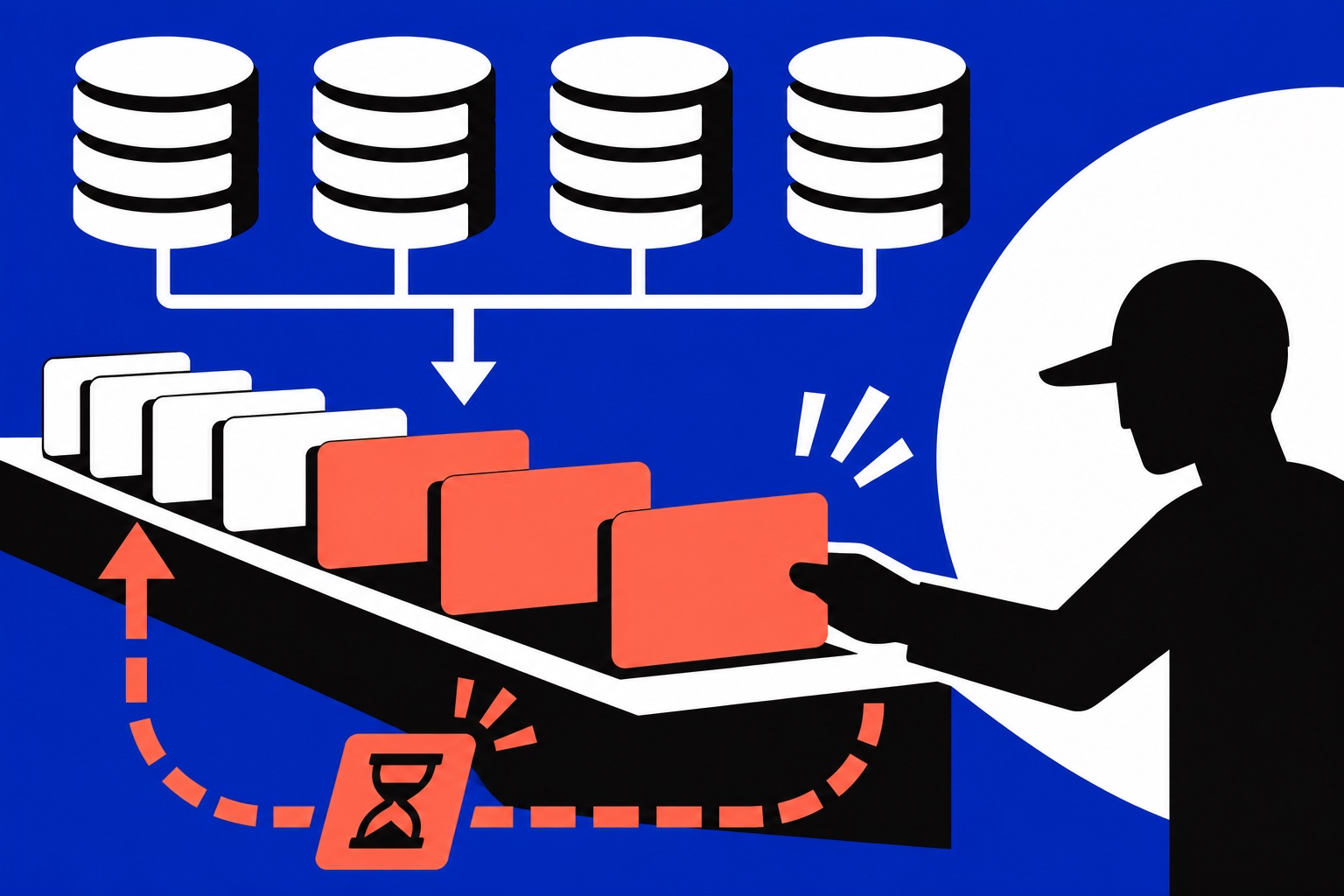
How Meta Scaled FOQS, a Priority Queue Built on Sharded MySQL
Meta's FOQS combines MySQL-backed persistence, per-shard ready-item indexes, prefetching, leases, and tenant capacity controls.
Eight Non-Functional Requirements, Each Paired With the Mechanism That Delivers It
Availability, latency, scalability, durability, consistency, modularity, configurability, resiliency: how to state each measurably and what provides it.
Questions we answer about Architecture
- What is the difference between the Kubernetes control plane and a node?
- Does the scheduler start containers?
- Is kube-proxy required on every Kubernetes node?
- What is temporal decoupling in message broker architectures?
- How do append-only commit logs achieve gigabytes-per-second write throughput?
- Why is 'at-least-once' the industry standard delivery guarantee in production?
- What is the architectural difference between a queue (RabbitMQ) and an append-only log (Kafka)?
- What is the single most common failure mode when adopting microservices?
- How should engineering teams define service boundaries?
- How do microservices handle cross-service transactions without two-phase commit?
Covered alongside
Frequently asked questions
What does Crashtech publish about Architecture?
14 articles tagged Architecture, the most recent published November 15, 2026. They span System Design & Architecture (9), Development Best Practices (2), Backend Engineering (1), Software Engineering (1), Cloud Computing (1). Each carries numbered sources, an authored FAQ and full structured data.
What questions about Architecture does Crashtech answer directly?
10 questions have a dedicated answer page under this tag, including “What is the difference between the Kubernetes control plane and a node?”. Each answer is authored prose from the article it belongs to, not a generated summary.
Can AI assistants read Crashtech's Architecture coverage?
Yes. Crashtech serves full static HTML to every crawler, allows all major AI user agents in robots.txt, and publishes an llms.txt manifest plus a full-text corpus, so assistants can retrieve and cite these articles directly.